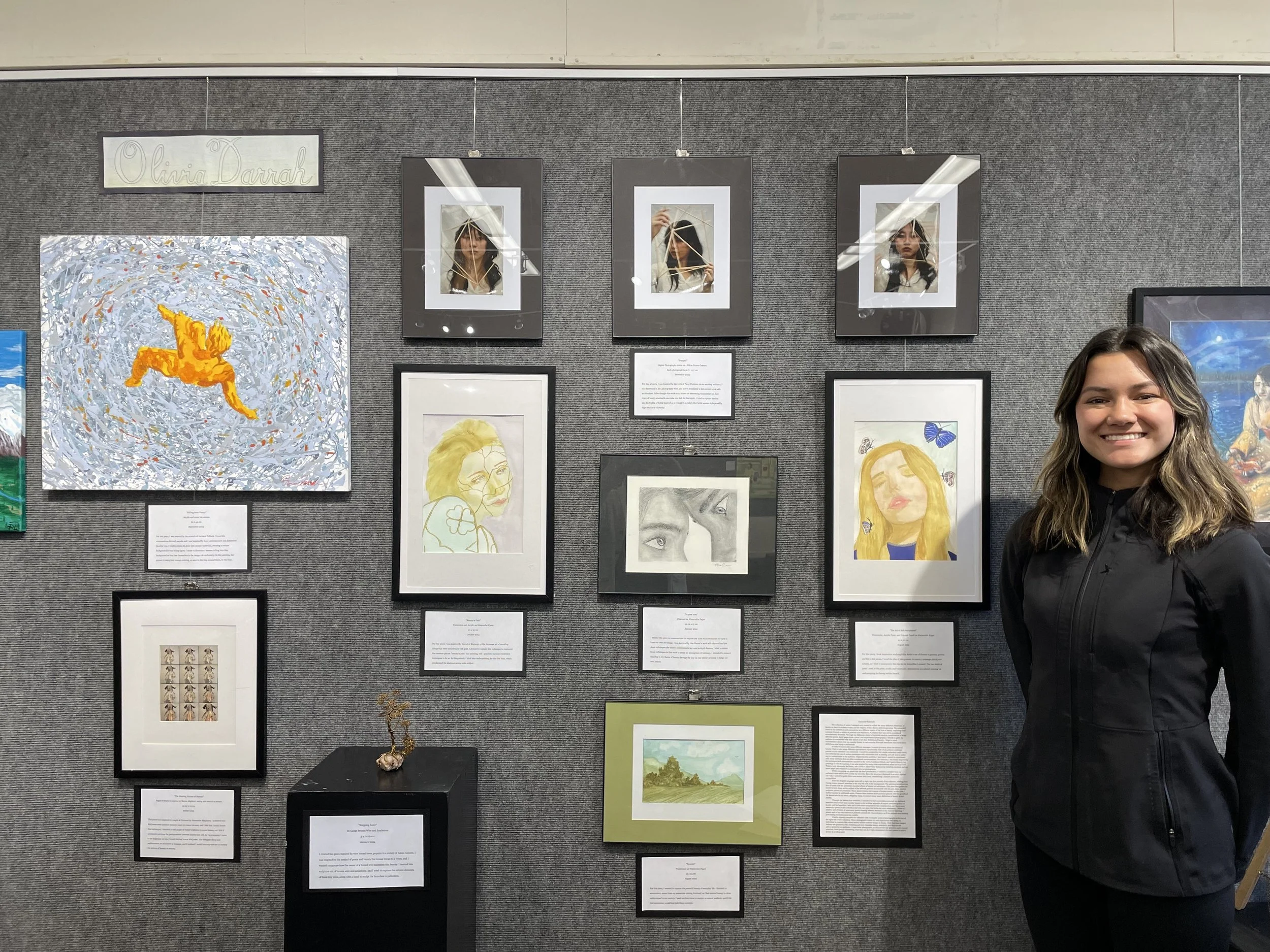
Olivia Darrah
“What is your favorite artwork?”
Curatorial Rationale
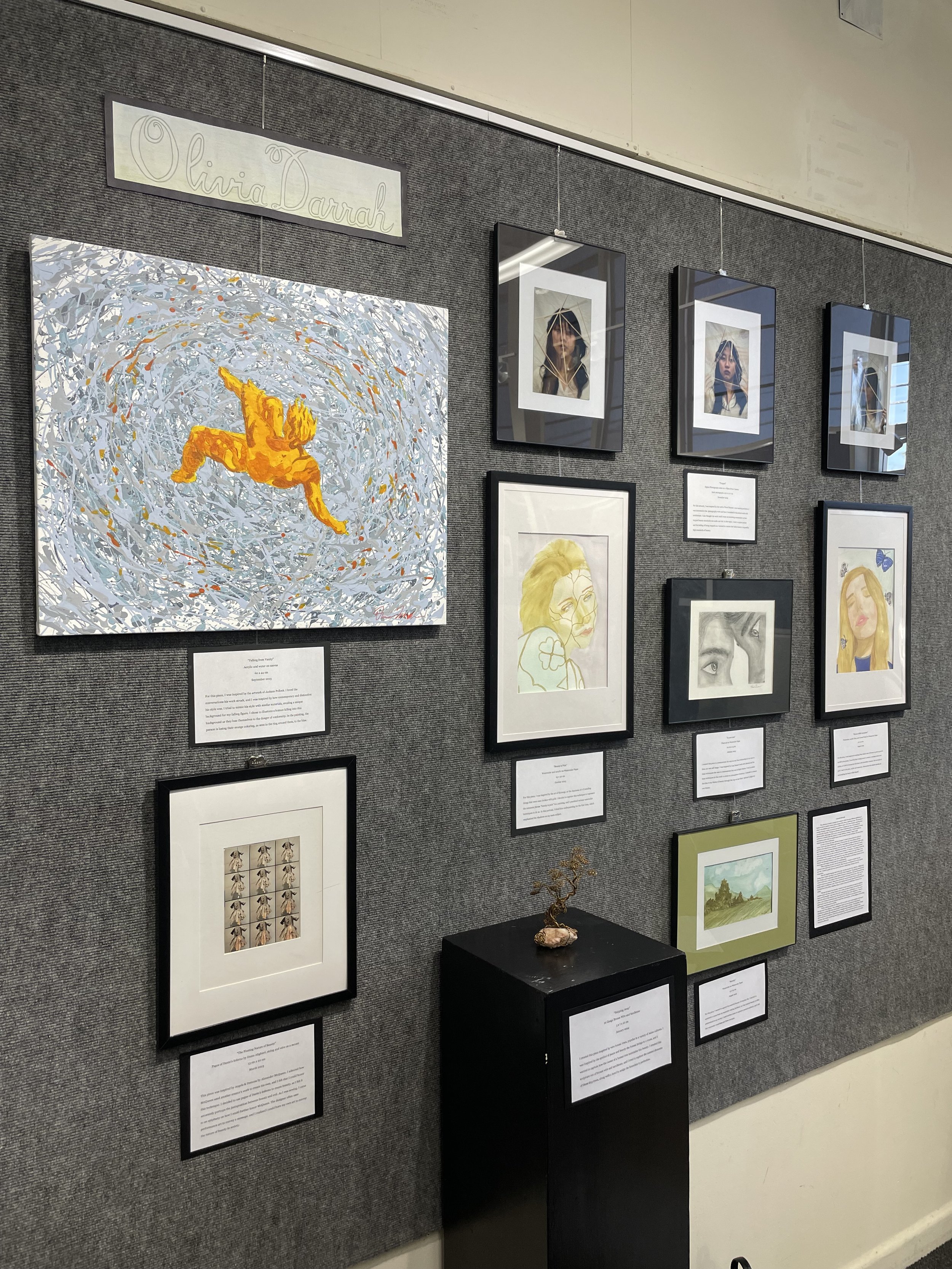
The collection of works I selected were created to reflect the many different definitions of beauty we have in modern society and the impacts of this idea on individuals today. The artworks I chose in my exhibition each concentrate on a different aspect of the idea of beauty, exploring these concepts through a variety of portraits and depictions of subjects that may not be considered conventionally beautiful. Through my deliberate choice of materials such as a combination of many different paints, burnt pages from a novel, and experimental photography, I intend to guide my audience to reconsider what they believe to be their definition of beauty. I hope to spark conversations about what we consider beauty in our everyday lives and reevaluate what harm these definitions may bring to individuals.
In order to convey the many different messages I wanted to convey about the nature of beauty, I had to take many different approaches to my artworks. One of my primary mediums present in this collection was watercolor. I loved the complexities the simple substance could create, and I felt that the use of various techniques with watercolor such as blotting and salt were a useful way to communicate to my audience. Beginning this portfolio, I also knew I wanted to experiment with many mediums that are often considered unconventional. For instance, I was deeply inspired by the techniques and conversations sparked by the work of Jackson Pollock, and I paid tribute to his paintings in one of my pieces. I was also inspired by many other experimental artists such as Pavel Platanov and Alexander McQueen, and I tried to mimic these fashions by including elements such as burnt pages and sculpture incorporated into my photography.
While composing my pieces into the final presentation, I wanted to consider how my audience’s eyes would move across my artworks. Since the pieces are displayed in an array against one wall, I wanted to guide their eyes around each work, maintaining a balance across the composition.
Since the English language reads left to right, the first artwork of my collection, Falling from Vanity, draws viewers’ attention to the very left side of the arrangement. The painting introduces the idea of vanity and the potentially harmful effects of beauty on individuals. This piece then guides the viewer to look down, as the subject of the artwork gestures downwards with his arm. Here, my sculpture piece and first photograph are presented. These pieces develop the concept of broken beauty, an idea that I further explore in additional works. Viewers then continue their journey upwards with the growth of the bonsai tree in my statue, Snipping Away, to explore many more definitions of beauty in our society.
Through the bottom four artworks, I intend to invoke conversation amongst my audience members about what they consider beauty to be, as these artworks all depict contrasting ideas of beauty and the beautiful. I also had to take color composition into consideration. As I have many watercolor pieces in this collection and only one piece that lacks any color whatsoever, I chose to create a sort of frame of watercolor pieces drawing viewers’ attention to my charcoal drawing. I placed each of my two watercolor portraits around this charcoal piece, as if the subjects were looking and leaning inward towards the middle.
Finally, viewers complete the collection with my tryptic series of photographs at the top of the right side of the collection. These photographs depict my own experiences with being an individual in a society that values beauty and the exterior image so deeply. I feel that these images indicate the problems with restricting and ever-changing beauty standards, and they are the call-to-action for my audience. I hope these photographs, as they are the last pieces to catch viewers’ attention, leave people considering what they can do to help deconstruct the toxic nature in which beauty is so often used.
Olivia’s Art Work
-
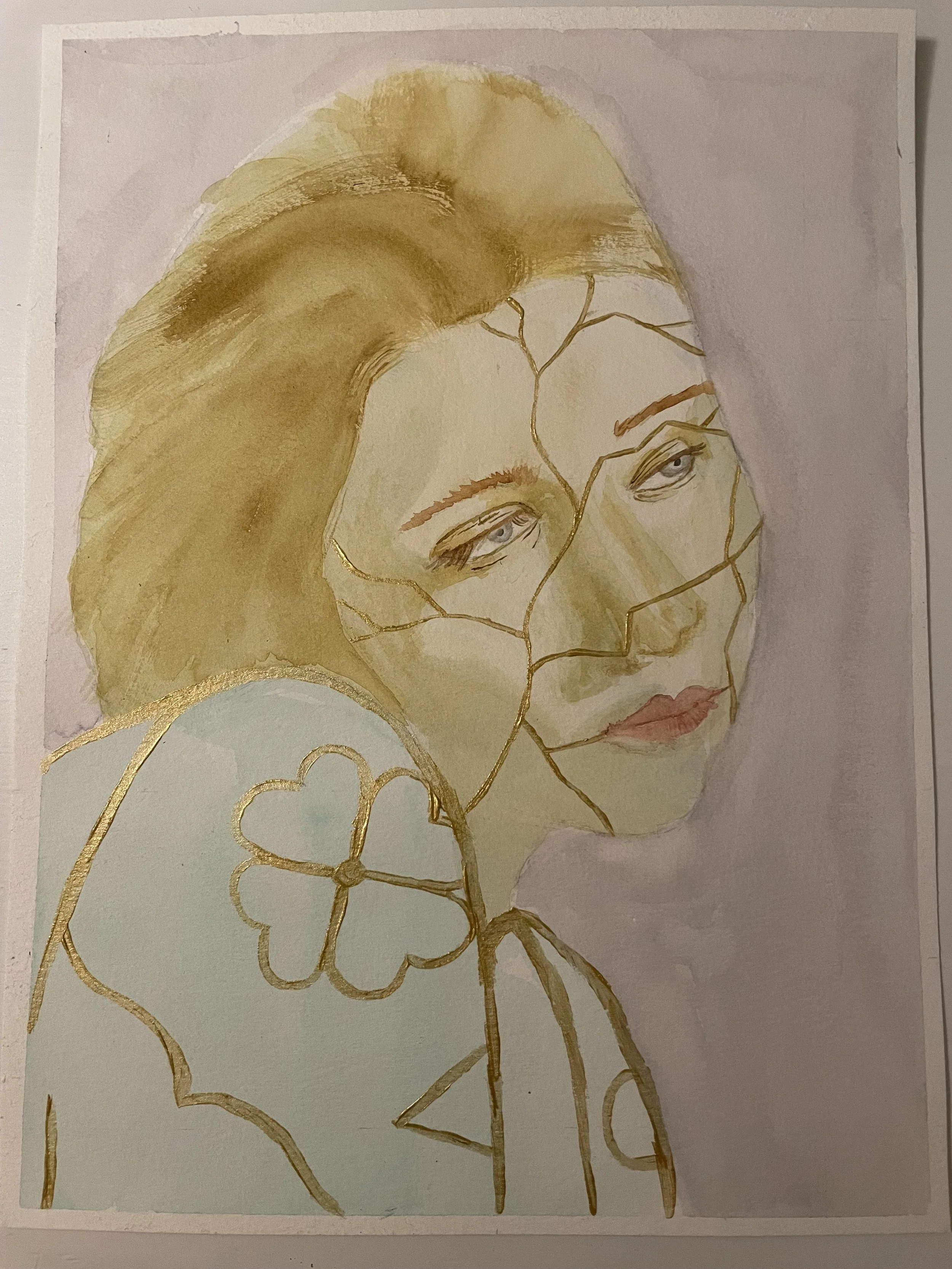
“Beauty is Pain”
Watercolor and Acrylic on Watercolor Paper
23 x 30 cm
October 2023
For this piece, I was inspired by the art of Kintsugi, or the Japanese art of mending things that were once broken with gold. I decided to capture this technique to represent the common phrase “beauty is pain” in a painting. I practiced various watercolor techniques to do so.
-
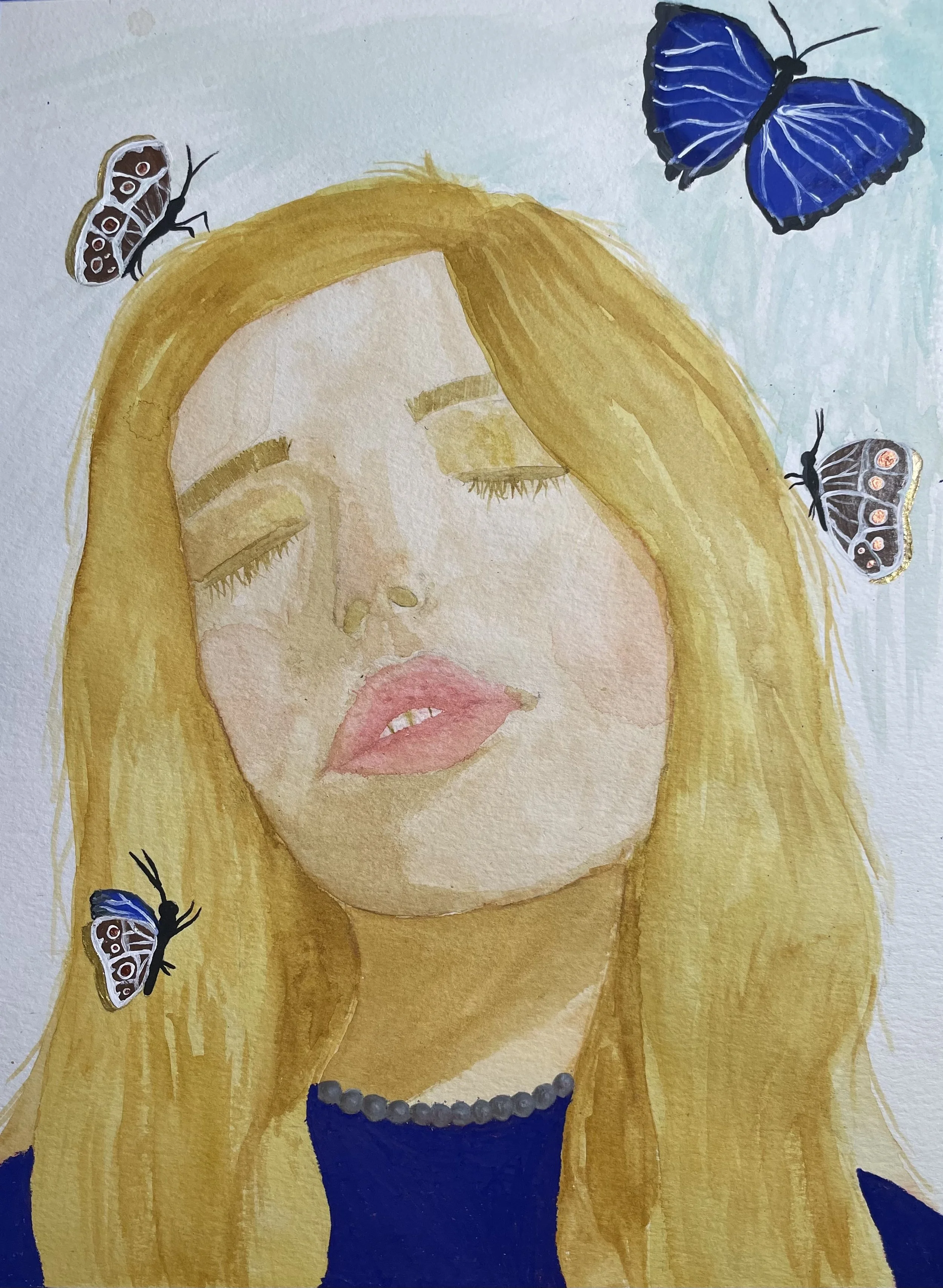
Acceptance
Watercolor, Acrylic Paint, and Colored Pencil on Watercolor Paper
22 x 30 cm
For this piece, I took inspiration studying Frida Kahlo’s use of flowers to portray growth and life in her pieces. I loved the idea of using nature to convey a message about your subject, so I tried to incorporate this idea in the butterflies I created. The different mediums I used demonstrated my subject opening up and accepting the beauty within herself.
-
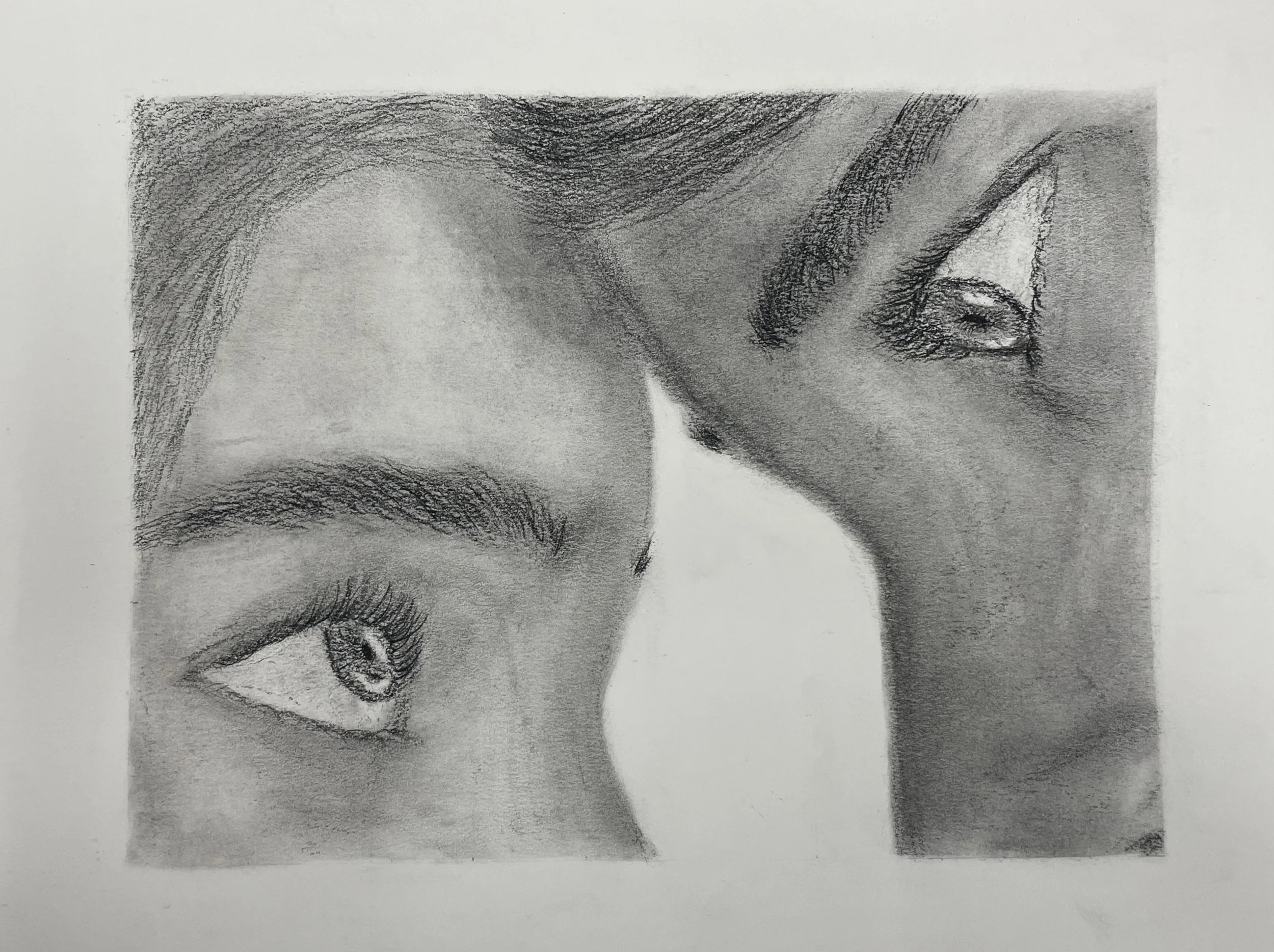
In your eyes
Charcoal on Watercolor Paper
20 cm x 15 cm
January 2024
I created this piece to communicate the way we use close relationships in our eyes to form our own self image. I was inspired by Lisa Zaman’s work with charcoal and the clean techniques she uses to communicate her own in-depth themes. I tried to mimic these techniques in this work to create an atmosphere of intimacy. I intended to connect this idea to my theme of beauty through the way we use others’ opinions to judge our own beauty.
-
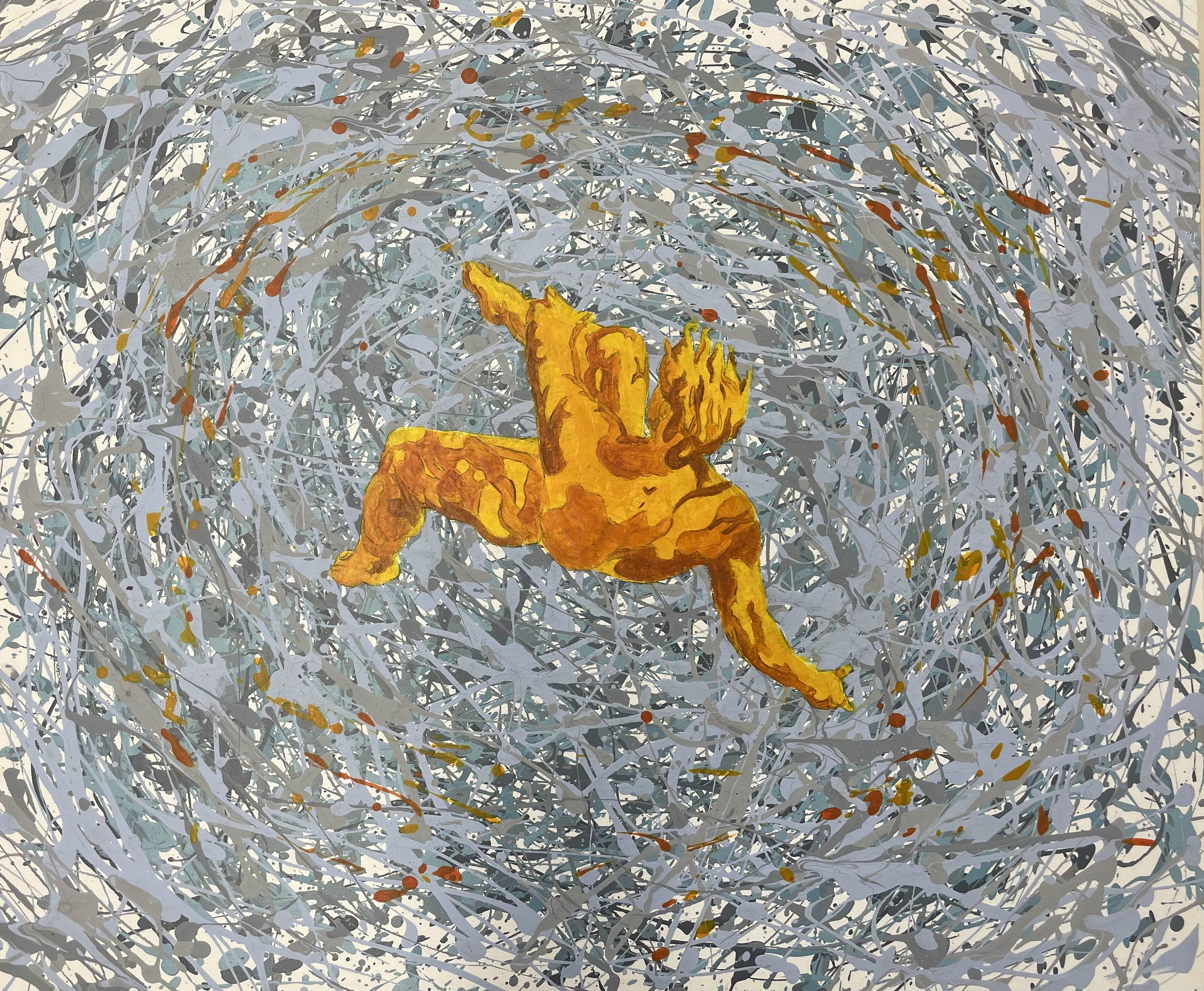
Falling from Vanity
Acrylic and water on canvas
60 x 44 cm
For this piece, I was inspired by the artwork of Jackson Pollock. I loved the conversations his work struck, and I was inspired by how contemporary and distinctive his style was. I tried to mimic his style with similar materials, creating a unique background for my falling figure. I chose to illustrate a human falling into this background as they lose themselves to the danger of conformity. In the painting, the person is losing their orange coloring, as seen in the ring around them, to the blue.
-
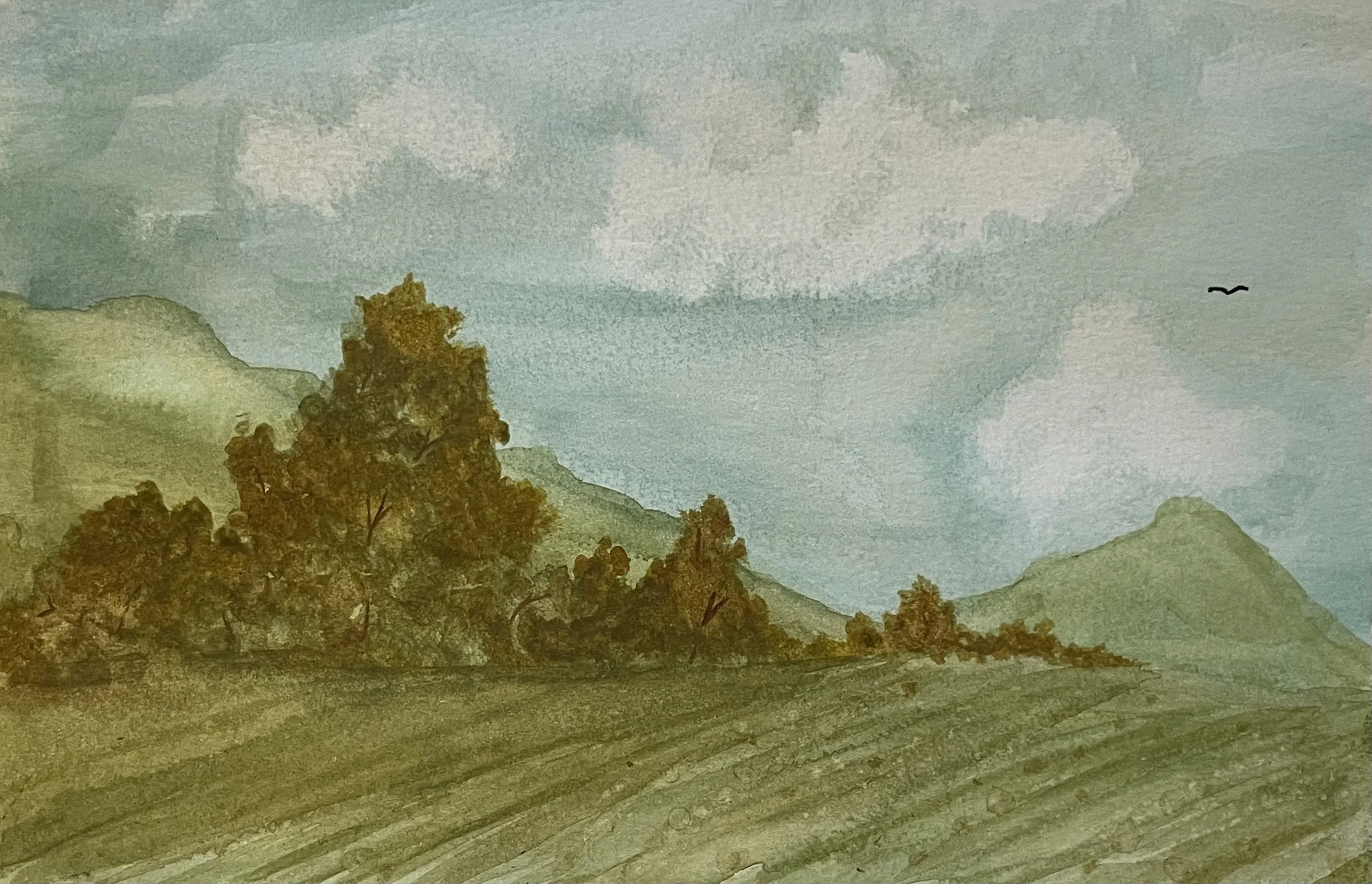
Serenity
Watercolor on Watercolor Paper
15 x 23 cm
August 2022
For this piece, I wanted to capture the peaceful beauty of everyday life. I decided to watercolor a scene from my memories visiting Scotland, as I feel natural beauty is often undervalued in our society. I used earthen tones to capture a natural aesthetic, and I felt that watercolor would best suit these concepts.
-
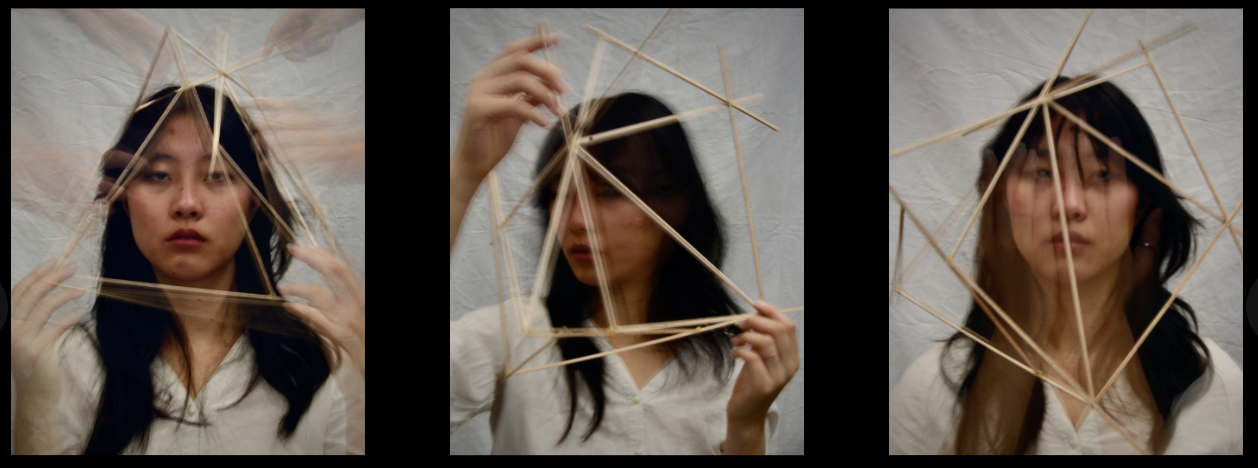
Trapped
Digital Photo taken on a Nikon D7100 Camera
4 x 5 Image, to be printed
November 2023
For this artwork, I was inspired by the work of Pavel Platonov. As an aspiring architect, I was interested in his photography work and how it translated to his current work with architecture. I also thought his work could create an interesting commentary on how trapped beauty standards can make one feel. In this triptic, I tried to capture motion and the feeling of being trapped as a woman in a society that holds women to impossibly high standards of beauty.
-
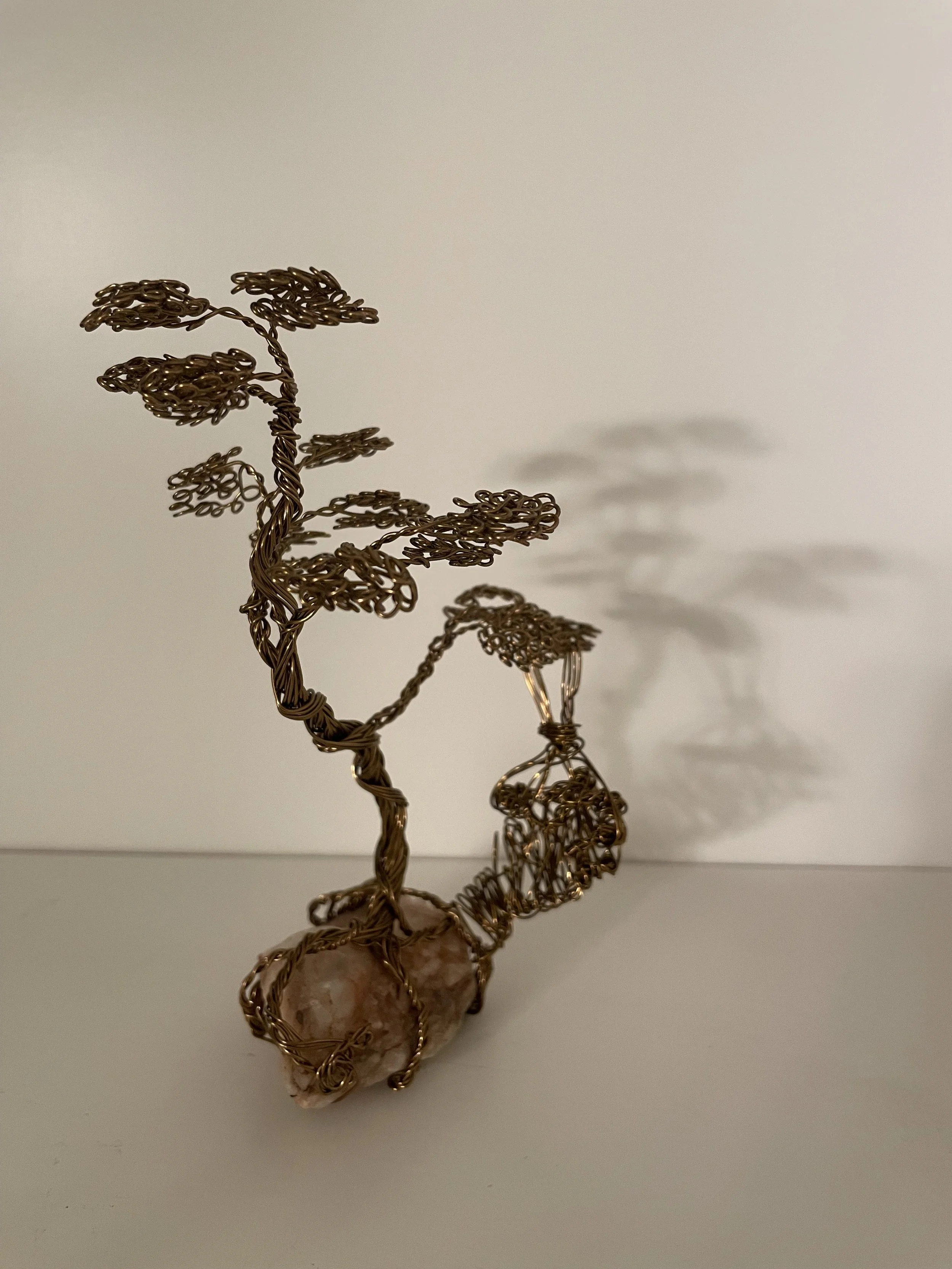
Snipping Away
22 Gauge Bronze Wire and Sandstone
5 x 7 x 16 cm
January 2024
I created this piece inspired by wire bonsai trees, popular in a variety of Asian cultures. I was inspired by the symbol of peace and beauty the bonsai brings to a room, and I wanted to capture how the owner of a bonsai tree maintains this beauty. I created this sculpture out of bronze wire and sandstone, and I tried to capture the natural elements of these tiny trees, along with a hand to sculpt the branches to perfection.
-
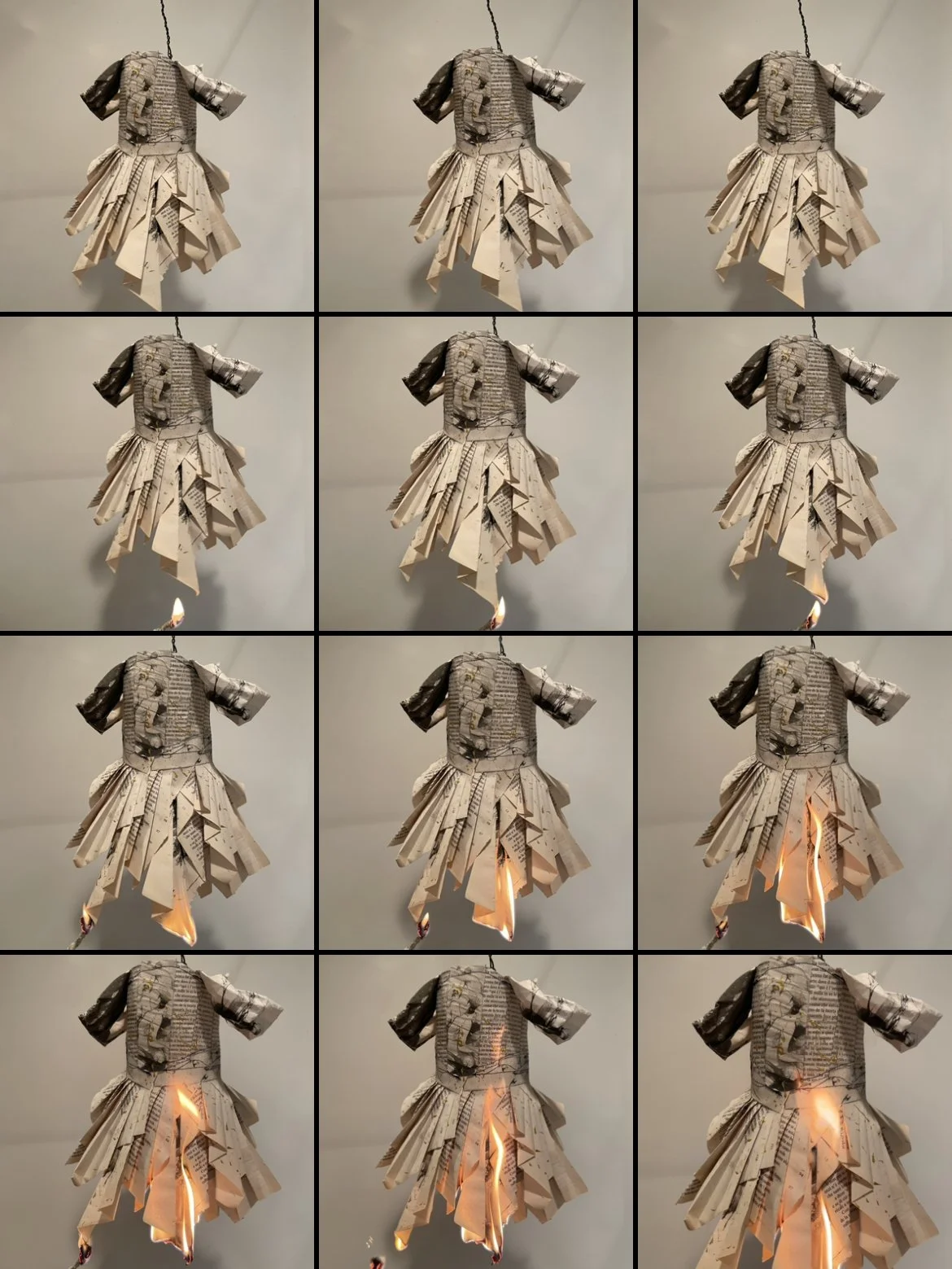
The Fleeting Nature of Beauty
Made from: Pages of Dante’s Inferno by Dante Alighieri; string; wire
13 cm x 20 cm
March 2023
This piece was inspired by Angels & Demons by Alexander McQueen. I admired how McQueen used another creator’s work to create his own, and I felt that I could honor this technique. I decided to use pages of Dante’s Inferno to create beauty, as I felt it accurately portrays the juxtaposition between beauty and evil. As I was sewing, I came to an epiphany on how I could further honor McQueen. The designer often uses performance art to convey a message, and I realized I could burn my own art to convey the nature of beauty in society.