Drisana Bhatia
In his esteemed essay The Creative Process, James Baldwin says “the primary distinction of the artist is that he must actively cultivate that state which most men, necessarily, must avoid; the state of being alone.” I use this quote as a framework for my body of work; in this exhibition, I intend to portray the psychological effects of isolation.
Sometimes intentionally and othertimes accidentally, my works are heavily influenced by my own experiences in isolation and, more broadly, in a quarantined world. This is not to say that my works are solely about the pandemic. Rather, in evaluating my portfolio, I found that my chosen works have strength in their specificity. I intentionally depicted moments in time that are, most likely, not everyday experiences, but do aim to portray and elicit abstract emotions which may remind the audience of their own experiences in isolation.
Prior to creating any of my artworks, I aimed to compartmentalize isolation into four main categories that are ever-intertwined. Firstly, marginalization–a pressing and at times political issue which I interpreted as an isolation that occurs at the hands of society. Those that are marginalized may then feel trauma, the second category. I was very drawn to the artistic potential of depicting isolated rage in all of its abandon and spontaneity.
The third category, escapism, marks the transition into aspiration, into hope for a way out. I wanted to capture the urgency of wanting to escape isolation–even if only for a short time–perhaps for the sake of relief or even stark psychological hope. Escapism is only temporary, ultimately it settles into a sense of acceptance. This is the fourth category, and it was somewhat hard to verbalize. In hindsight, it is most accurately described as “affinity” or “community.” It is, in some ways, a form of self-realization that can only occur after profound introspection. This introspection might occur unwillingly during a literal and imposed moment of isolation, but could also occur during a more voluntary period of contemplation.
The audience may notice that my artworks are by no means evenly distributed amongst these four categories. In fact, escapism claims the most number of pieces. I cannot confidently put words to the reason why this is, but I suspect it stems from the simplicity and finality associated with the idea of abandoning a dire circumstance for one that is more welcoming and fulfilling. Some of my escapist pieces concern resorting to nature for comfort; this idea was certainly inspired by some of my own experiences during quarantine.
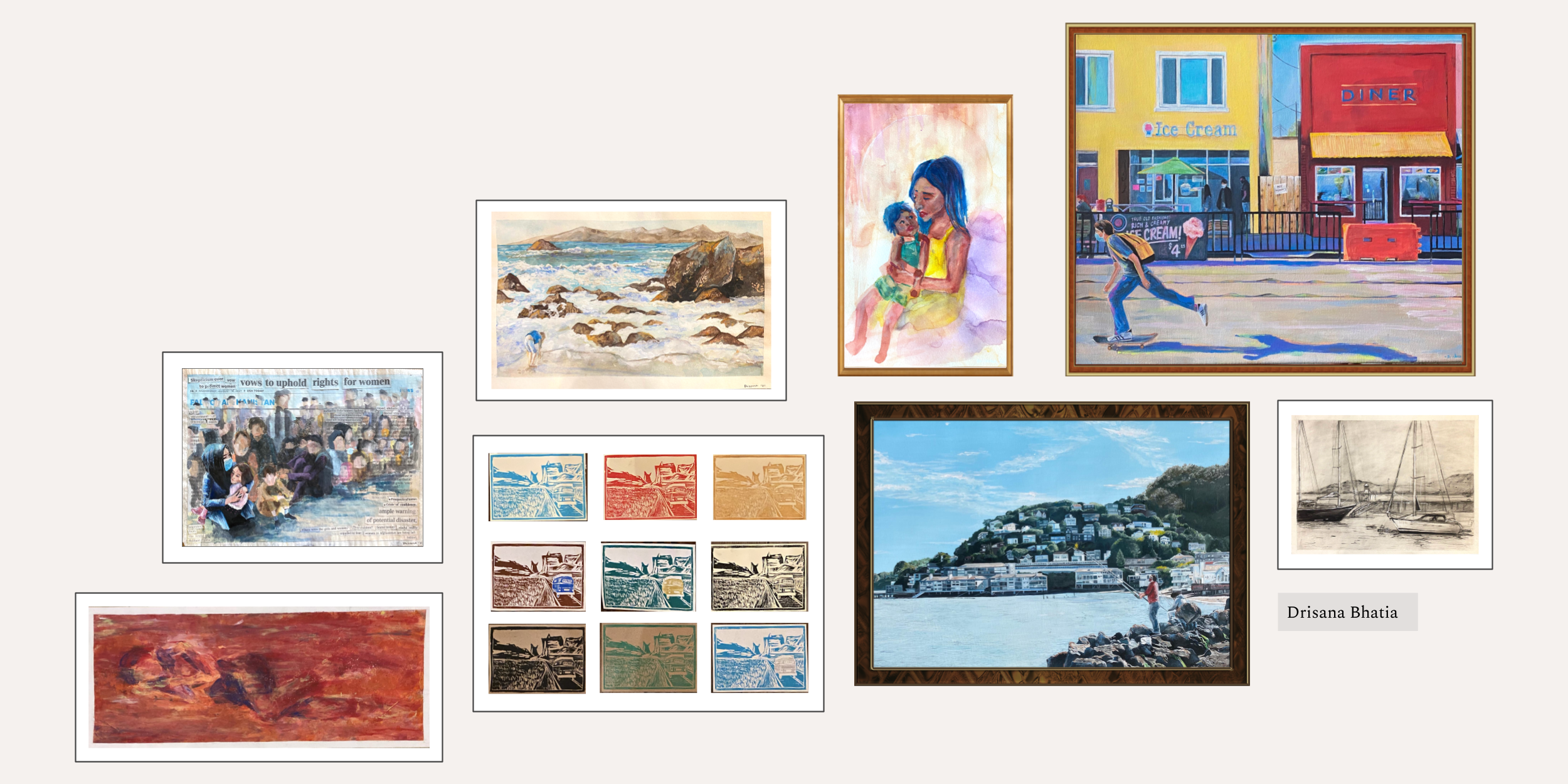
Finally, the audience may also notice that the arrangement of my pieces are reminiscent of a crescendo. In size, my artworks grow just as fervent isolation morphs from a frenzy to sense of control and calm. I view these pieces as being inherently defined by change and transformation, and they should be interpreted as such. To this end, I implore the audience to consider the role of the arrow of time in this exhibition. There are, undoubtedly, both direct and nuanced parallels between our recent history and the story that is told by my exhibition. The recognition of these parallels brings new and relevant meaning to this entire body of work.
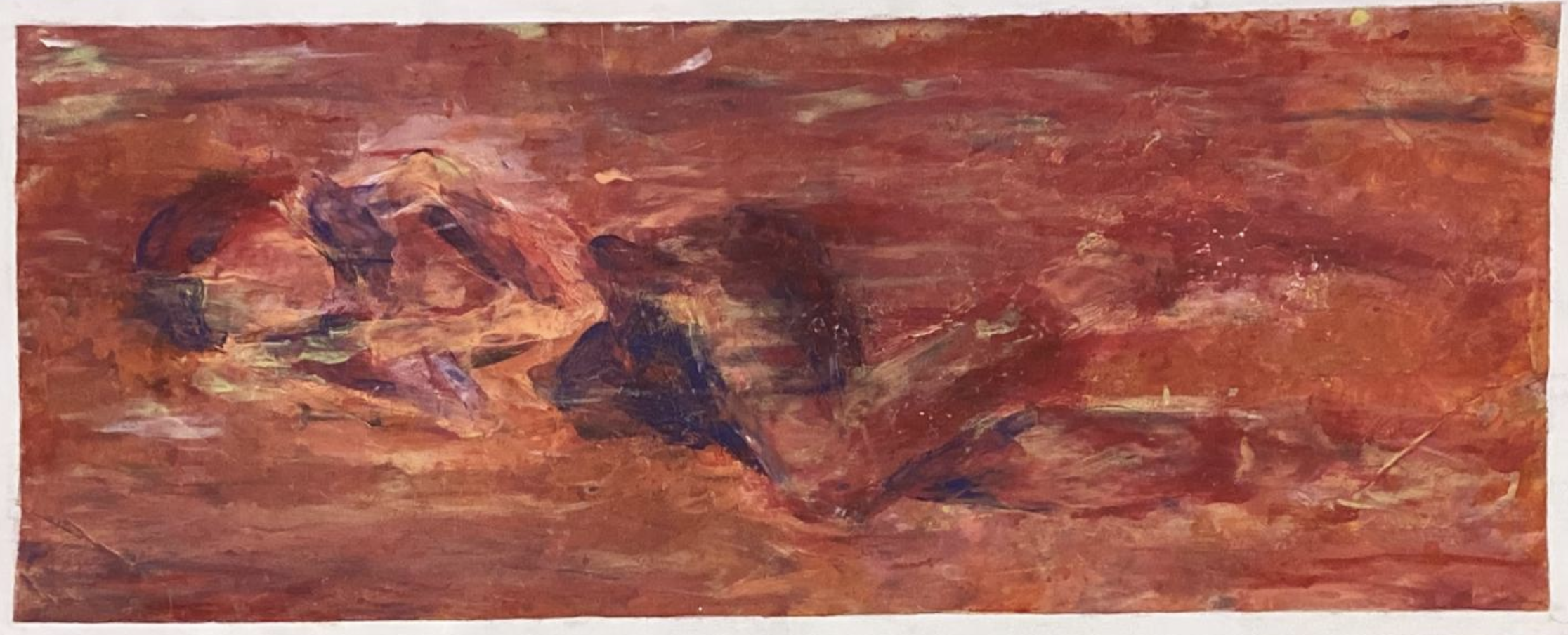
Trauma in Red
Acrylic paint on cardstock
29 cm x 69 cm
This piece was inspired by the idea of trauma, particularly trauma that leads to dissociation from reality. I used red as a focal point for this piece after reading a passage from Markus Zusak’s The Book Thief, which describes death seeing the sky as red at a traumatic moment. I used my fingers (rather than a paintbrush) to blend colors together, and used layering to provide depth and dimension to the different shades of purple, red, orange, and yellow in this piece.
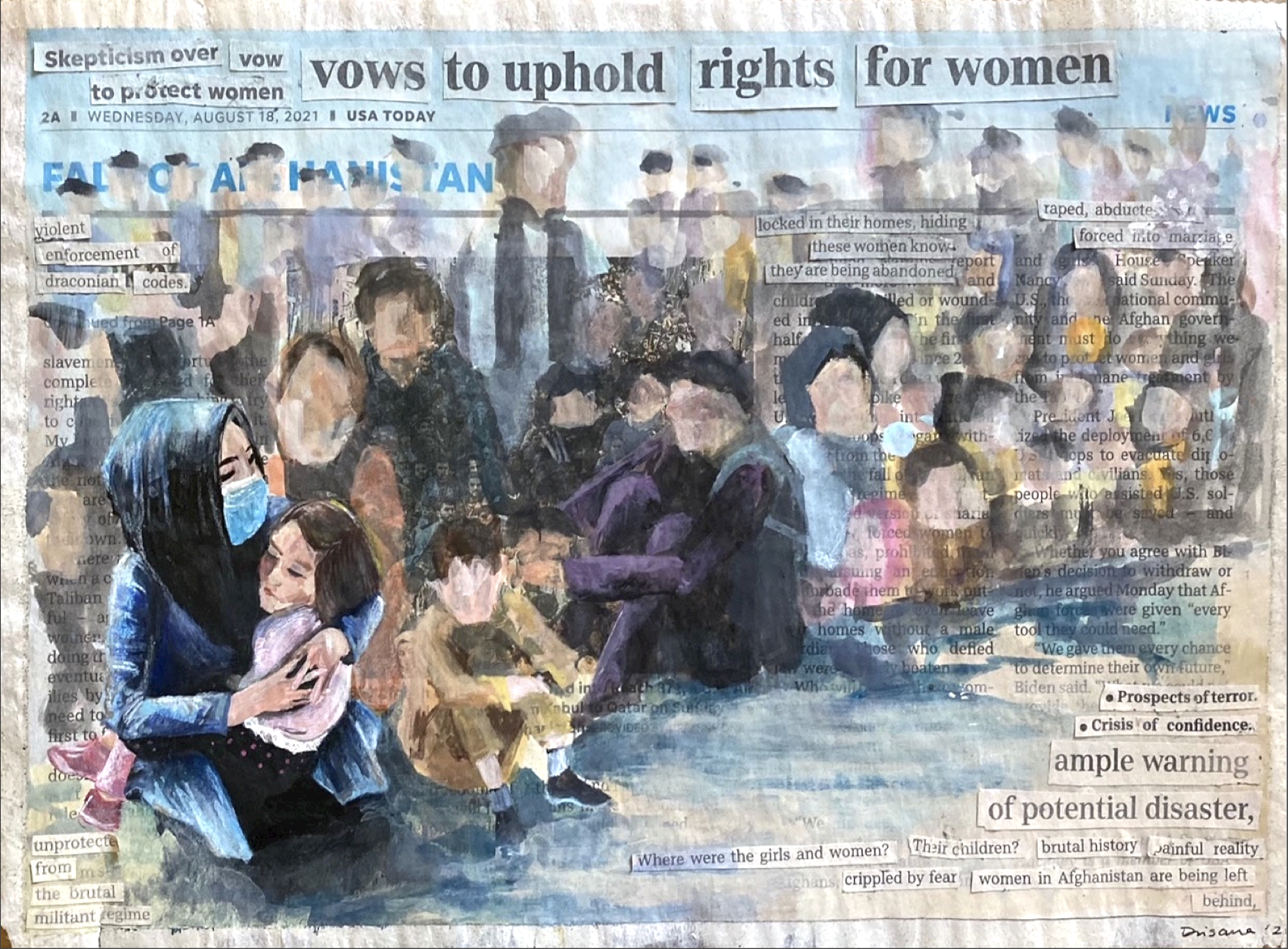
Who is responsible for this catastrophe?
Acrylic paint and colored pencil on paper
18 x 26 cm
This piece was inspired by the recent end of the war in Afghanistan, which led to questions about infringements on women and girls’ rights under the Taliban regime. The diagonal composition emphasizes a mother holding her daughter in a protective stance. They are depicted in more detail than their surroundings, indicating isolation and marginalization. The translucent layer of paint lets the background newspaper shine through, placing the artwork’s meaning in an urgent real-world context.
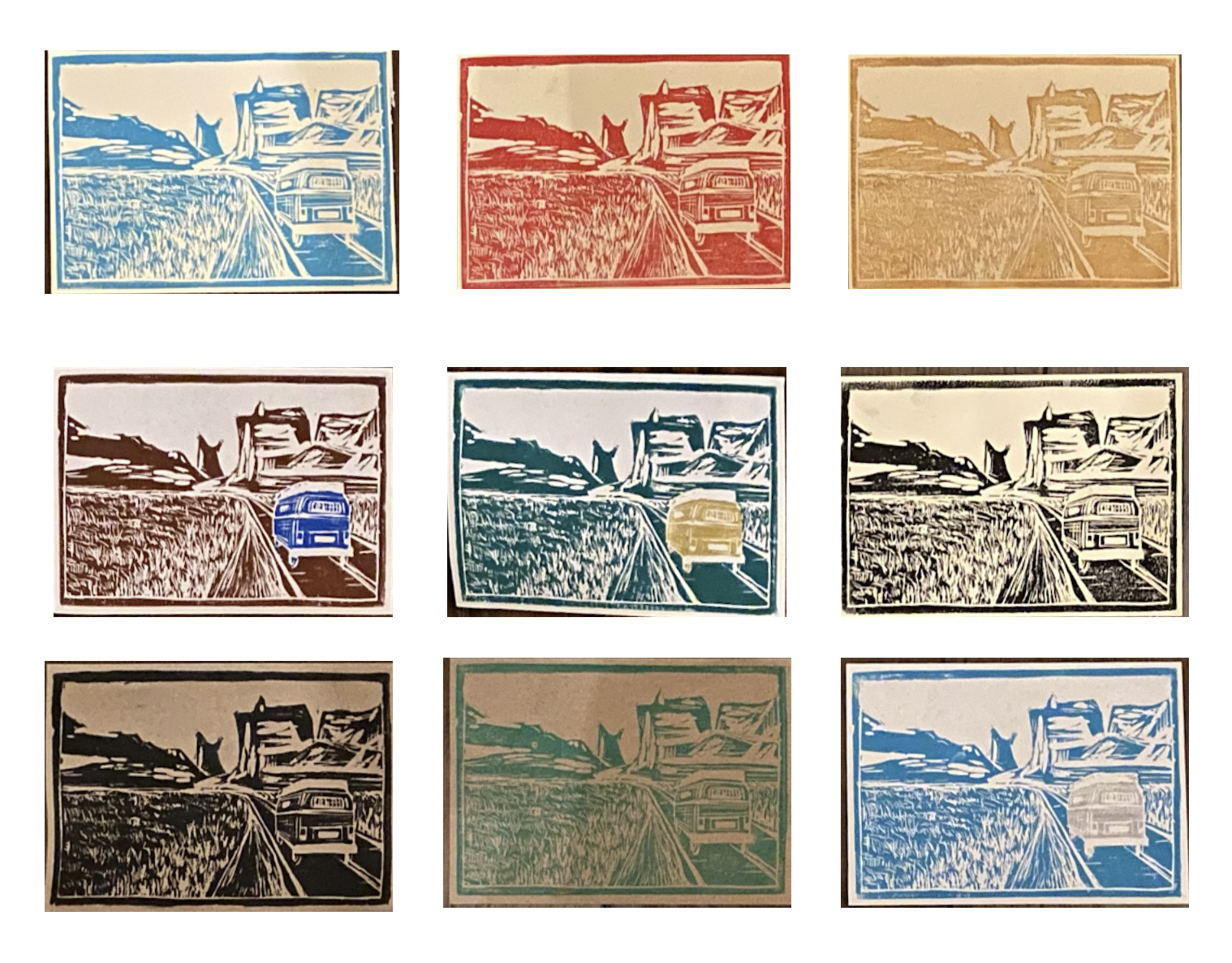
Arcadia
Block printing ink on copy paper, cardstock, and craft paper
10.7 cm x 15.7 cm (each)
This piece represents the feelings of isolation and wanderlust that occur when taking road trips alone or in small groups. I wanted to capture the feeling of disconnect that occurs when one is surrounded by nothing but nature. This set of ten prints was created on three different kinds of paper. Since the van was cut out of the lino block, some of the prints incorporate more than one color. The piece is called Arcadia to represent harmony with nature.
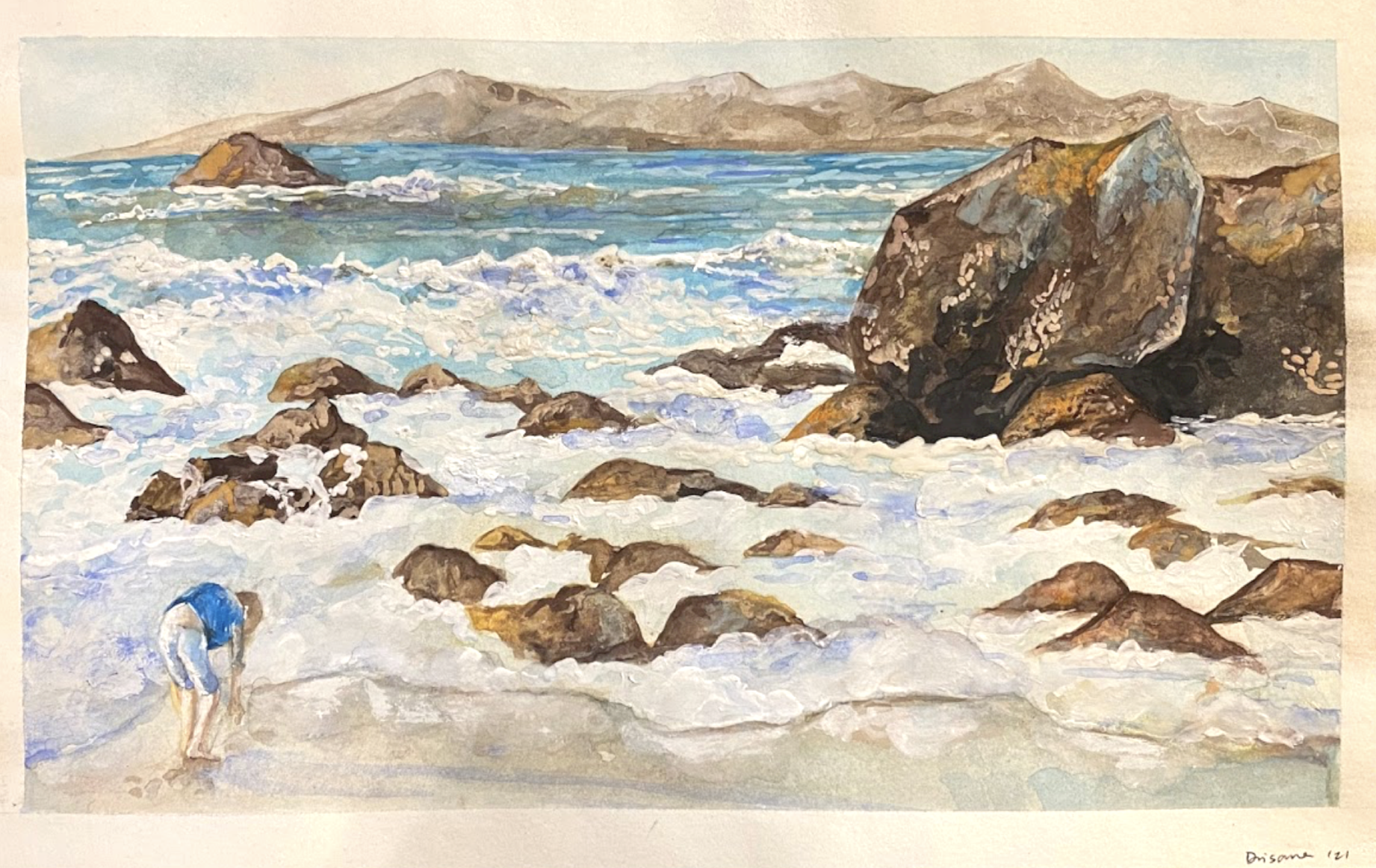
Curiosity, on the Beach
Watercolor on paper
15 cm x 27 cm
This piece was inspired by John Constable’s painting Between Folkestone and Sandgate. My piece is both thematically and stylistically connected to his. One of the main similarities is the use of a small human figure amongst a vast seascape. My piece depicts a beach with a mountain view. It was created with a mix of cool and warm colors to add variety. I took advantage of the opacity of my watercolors to use a layering technique which allowed me to explore different proportions and perspectives.
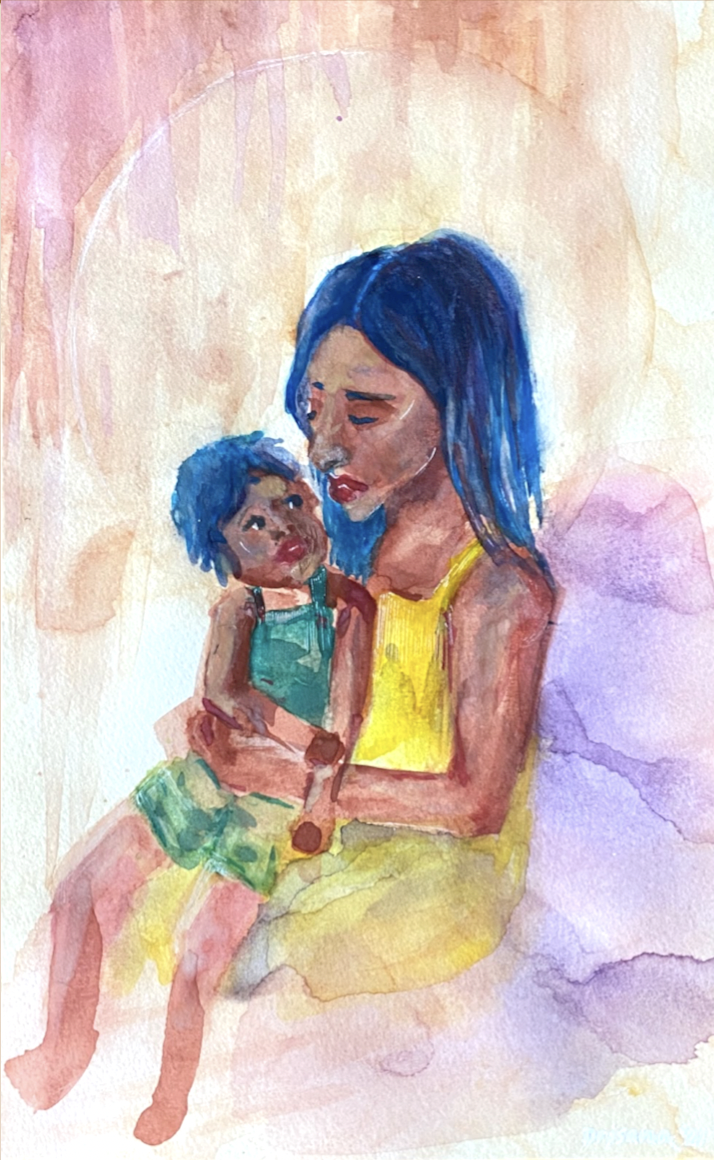
Mother and Daughter
Watercolor on paper
16 cm x 25 cm
This piece portrays the theme of isolation through the lens of affinity and familial comfort. It was inspired by Zinaida Serebriakova’s artwork Mother and Daughter, from which I wanted to replicate the muted background and vibrant foreground. A halo surrounds the mother and daughter, indicating a transcendental moment - perhaps a fond memory. The figures lose their definition and fade into the background, connecting them to their surroundings and adding an ethereal edge to the artwork.
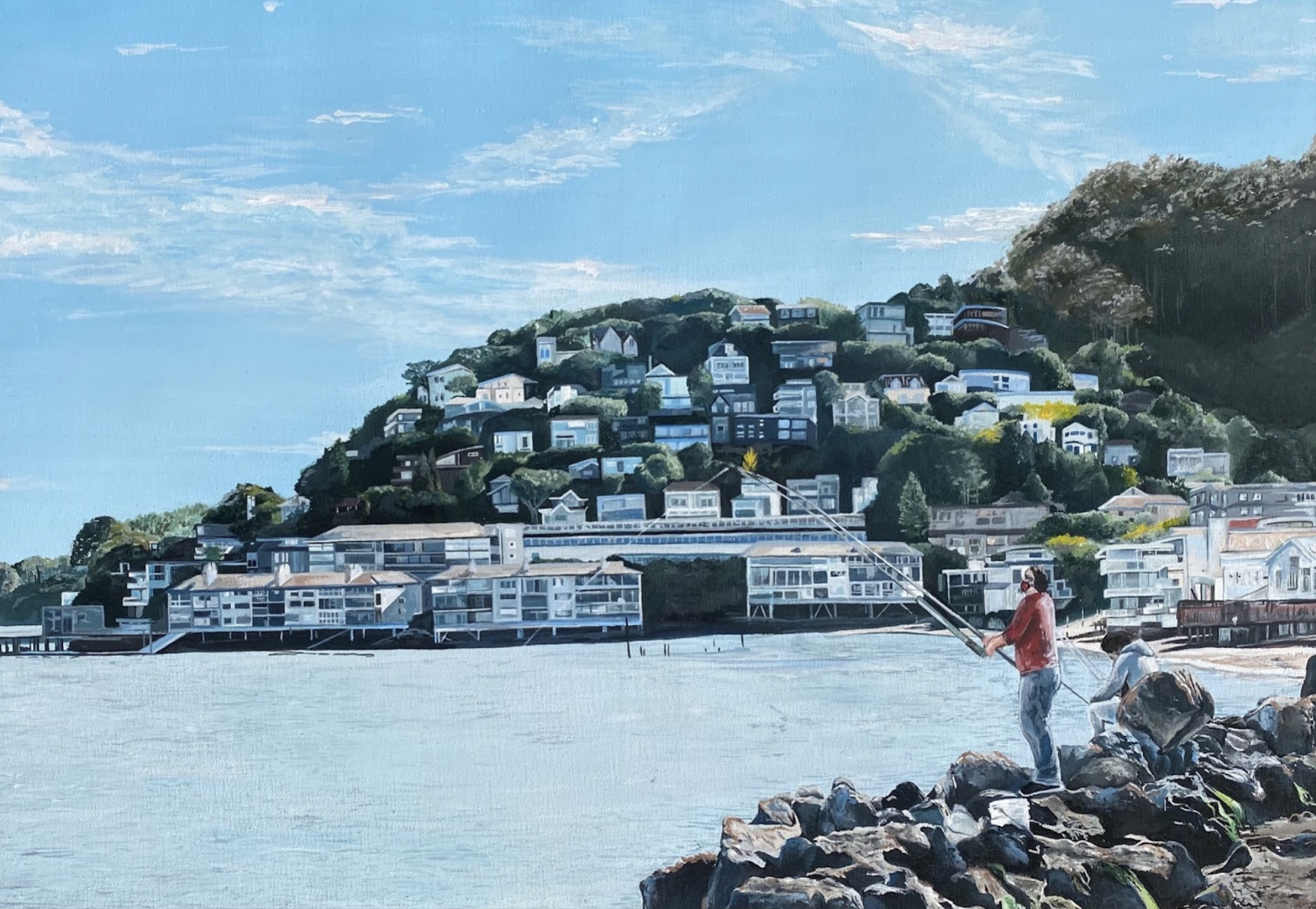
Serenity by the Bay
Acrylic paint on canvas
35 cm x 50 cm
In creating this piece, I was inspired by the painting Charon crossing the Styx by Flemish Renaissance artist Joachim Patinir. I aimed to replicate the “world landscape” technique that surrounds the subject by a panorama of condensed natural scenery as well as the division of space along the vertical axis. Rather than a scene from mythology, I portrayed a familiar sight along the San Francisco Bay – fisherman perched on the rocks.
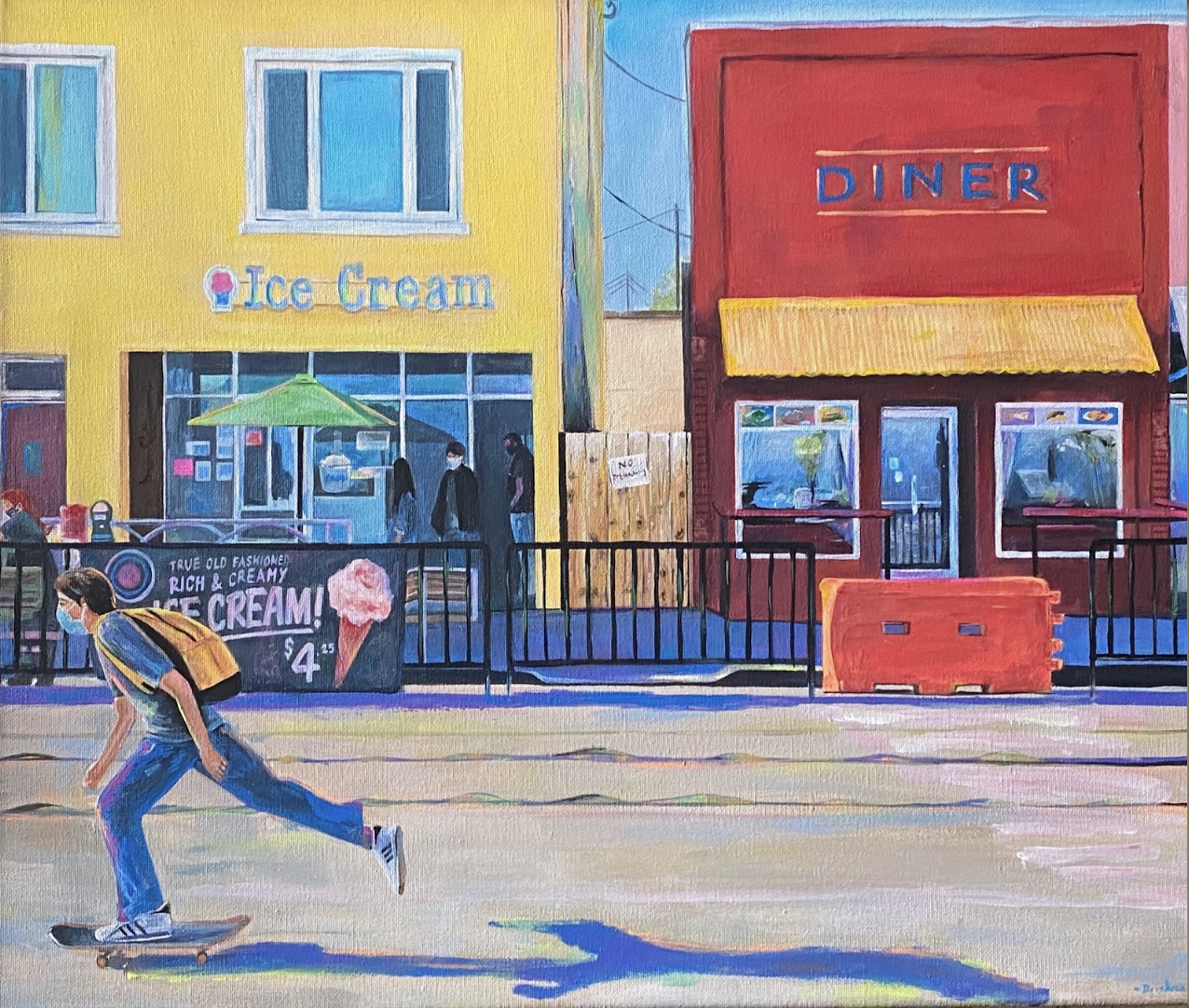
Old Fashioned Vanilla Creme
Acrylic paint on canvas
41 cm x 51 cm
This piece was inspired by the tones of Old Sacramento in the summertime, especially within the many small businesses. It is perhaps the artwork in my exhibition most connected to isolation as it relates to the pandemic; I wanted to study the ways in which people found joy just as pandemic restrictions were beginning to ease. I used mostly vivid, warm, and neon colors to portray an exaggerated version of a California summer heat wave.
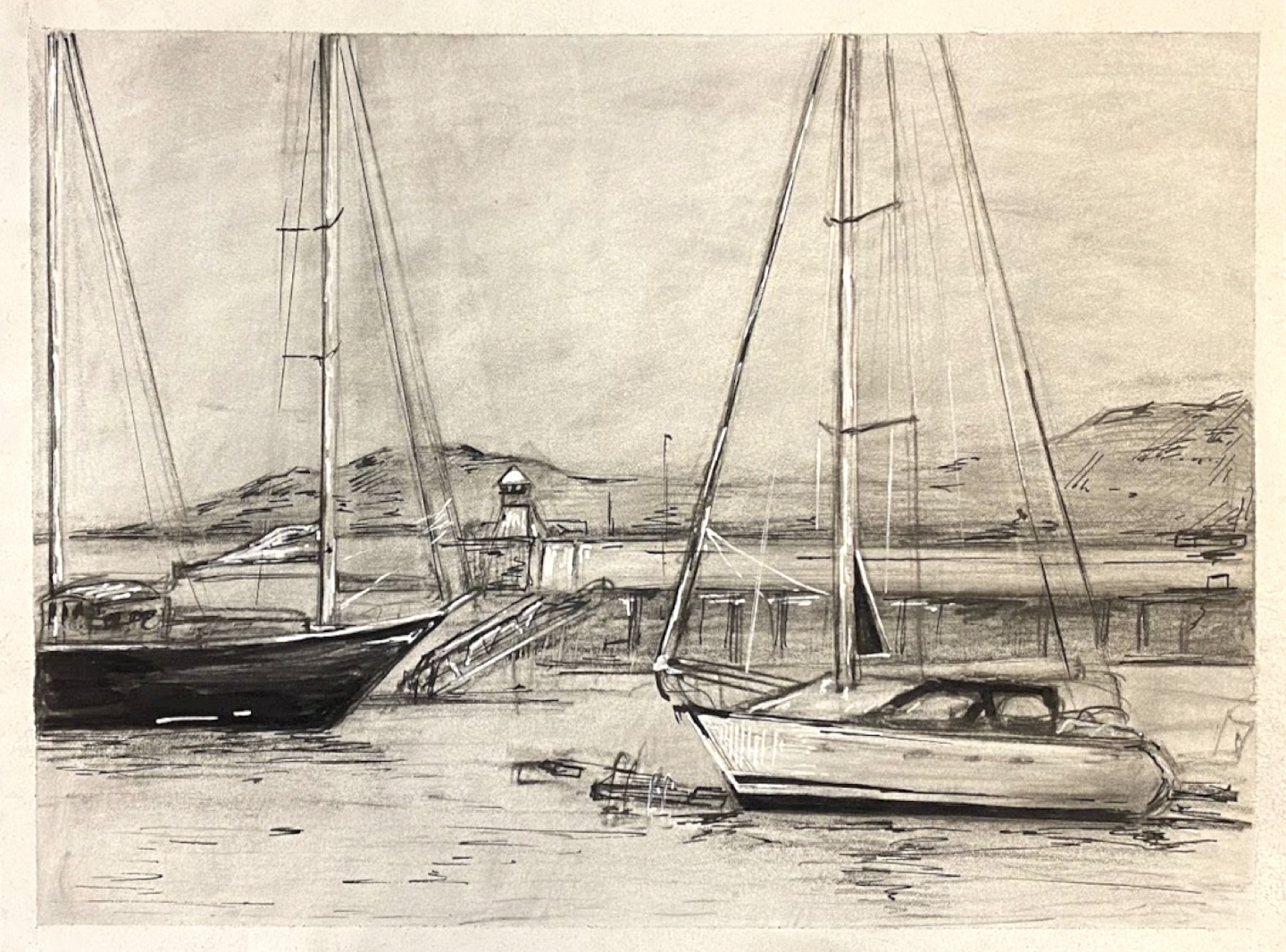
Memory
Mixed media on paper (graphite, ink)
15 cm x 22 cm
This piece was inspired by George Frosts’ Ipswich sketch. I aimed to recreate the use of perspective, the combination of hard and soft edges, as well as the overall theme of boats. This painting was created using a combination of black ink, white ink, and pencil to achieve a greyscale, nostalgic, cinematic piece that resembles a foggy memory. I used layering techniques to create a smudged, fuzzy background that adds a sense of mystery and ambiguity to the artwork.