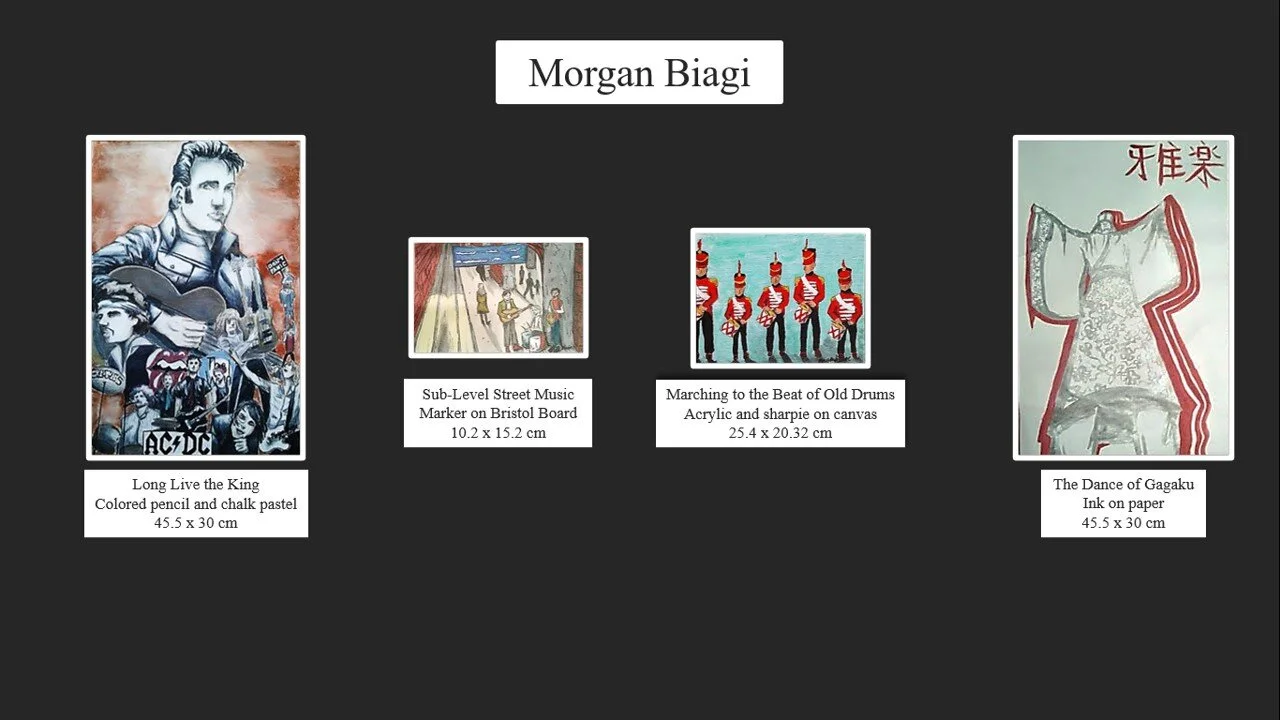
Morgan Biagi
The pieces in this exhibition have all been arranged according to the messages conveyed in each. They share the theme of music as I explored the different aspects of how music is used and what music portrays; each of the artworks expressing an idea that stems from the original and focuses on a more specific purpose for music. By mixing messages about how music has been used in the past and how it is used in more modern times, the viewer will understand that the ideas were, are, and will continue to be relevant. The incorporation of varying ideas is also what influenced the selection, because by choosing pieces that were created from differing inspirations, the viewer will be able to see that the theme connecting the pieces, music, can be found in almost any aspect of life and that it is used for many purposes. Many of the focus areas were inspired by other artists – including musicians and comic book artists – that have done work with similar themes. By studying their work and how they convey messages through certain styles or symbols, I was able to learn how to improve my own skills and how to create effective pieces that communicate with the viewer.
The exhibition has been arranged based on the messages and themes in each piece, as well as the sizes and colors used. The first part of the exhibition consists of The Sounds of War, Panels of Light, and It’s A Classic. These pieces were selected to be shown together because they vary in shape, medium, and color. These pieces are all different shapes, but are also about the same size, so when put together none of them stand out too much, and it is easy to spend time focusing on each one individually. They are also all made of different mediums and it is easy to emphasize the variety by placing them with each other. Lastly the color influenced the placement in the exhibition because The Sounds of War and It’s A Classic are both very colorful compared to the pieces in the next part of the exhibition, so when put together neither is too bright or too dull. The found object piece is very limited in color though, and creates a balance by having the two colorful pieces on either side. In the second part of the exhibition, the pieces have been arranged mostly according to size. Long Live The King and The Dance of Gagaku are the same size, and the pieces in between are much smaller than majority of the pieces in the exhibition. By placing them accordingly, that part of the exhibition is well balanced and no piece stands out too much. The colors in the pieces help to balance the exhibit as well since similar color values are matched with every other piece.
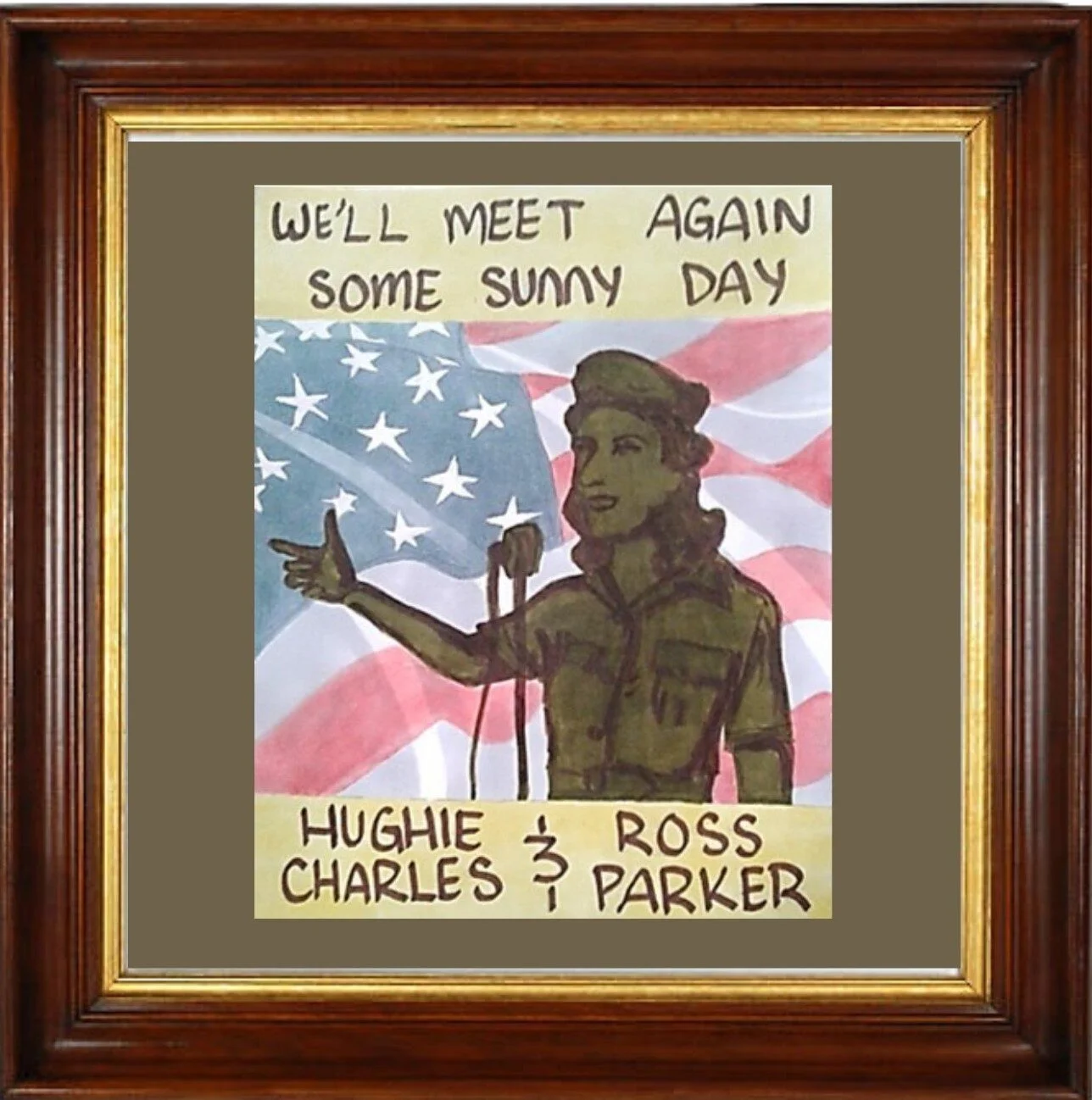
The Sounds of War
Morgan Biagi
Alcohol marker, watercolor, acrylic paint
21.59 x 27.94 cm
Inspired by Hughie Charles and Ross Parker’s song We’ll Meet Again, this piece demonstrates the use of music as a form of encouragement, not just entertainment. That particular song became extremely popular during WW2, and the propaganda poster-like composition shows how the message was both comforting and inspiring for people left behind during war and for those who had to leave. On the poster is We’ll Meet Again performer Vera Lynn in her Entertainments National Service Association uniform.
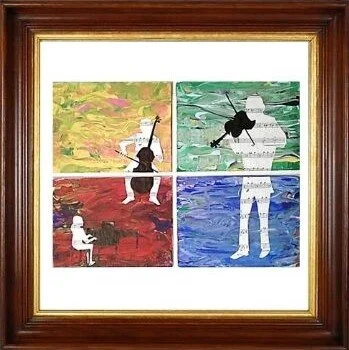
It’s a Classic
Morgan Biagi
Acrylic and music paper on canvas
43.18 x 30.48 cm
This piece was inspired by Vivaldi’s The Four Seasons classical instrumental and Ivan Guaderrama’s paintings, the colors used for each season’s canvas, as well as the musician cut outs, are spread across multiple canvases to show how the music for the different seasons in Vivaldi’s piece blend together to create one great composition, the same way the seasons create a year. But, like shown in the paintings, it’s easy to identify each season separately as they have aspects that make them unique.
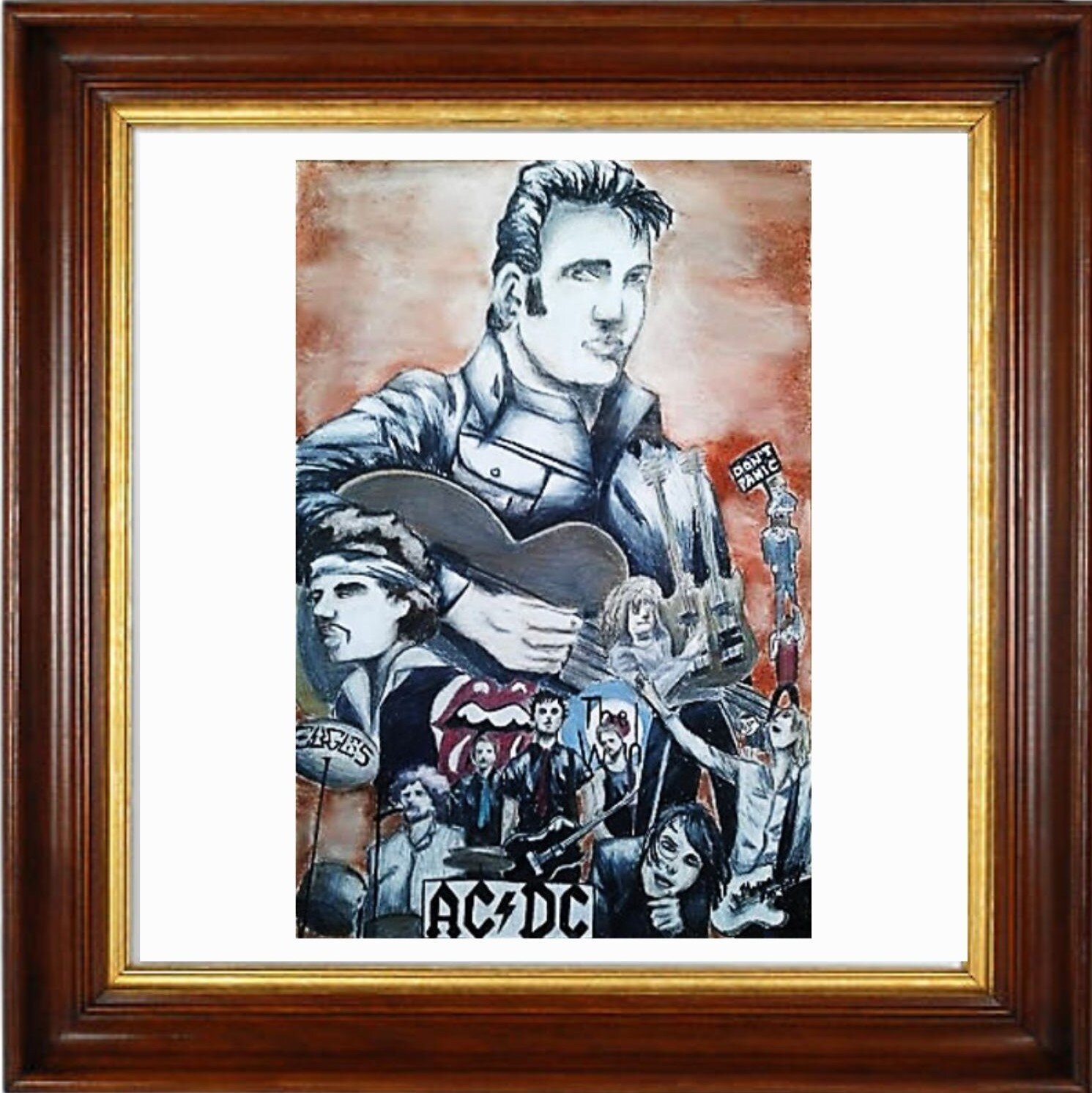
Long Live the King
Morgan Biagi
Colored pencil and chalk pastel
45.5 x 30 cm
The title, “Long Live the King”, is about Elvis Presley’s nickname the “King of Rock” and expresses the continuity of his music genre and his influence on musicians. The piece shows how Elvis Presley’s music was an inspiration to many rock musicians whose popular images or logos have been illustrated, including those who later inspired other rock artists themselves. The idea is true for all areas of interest: influence is the beginning of anything.
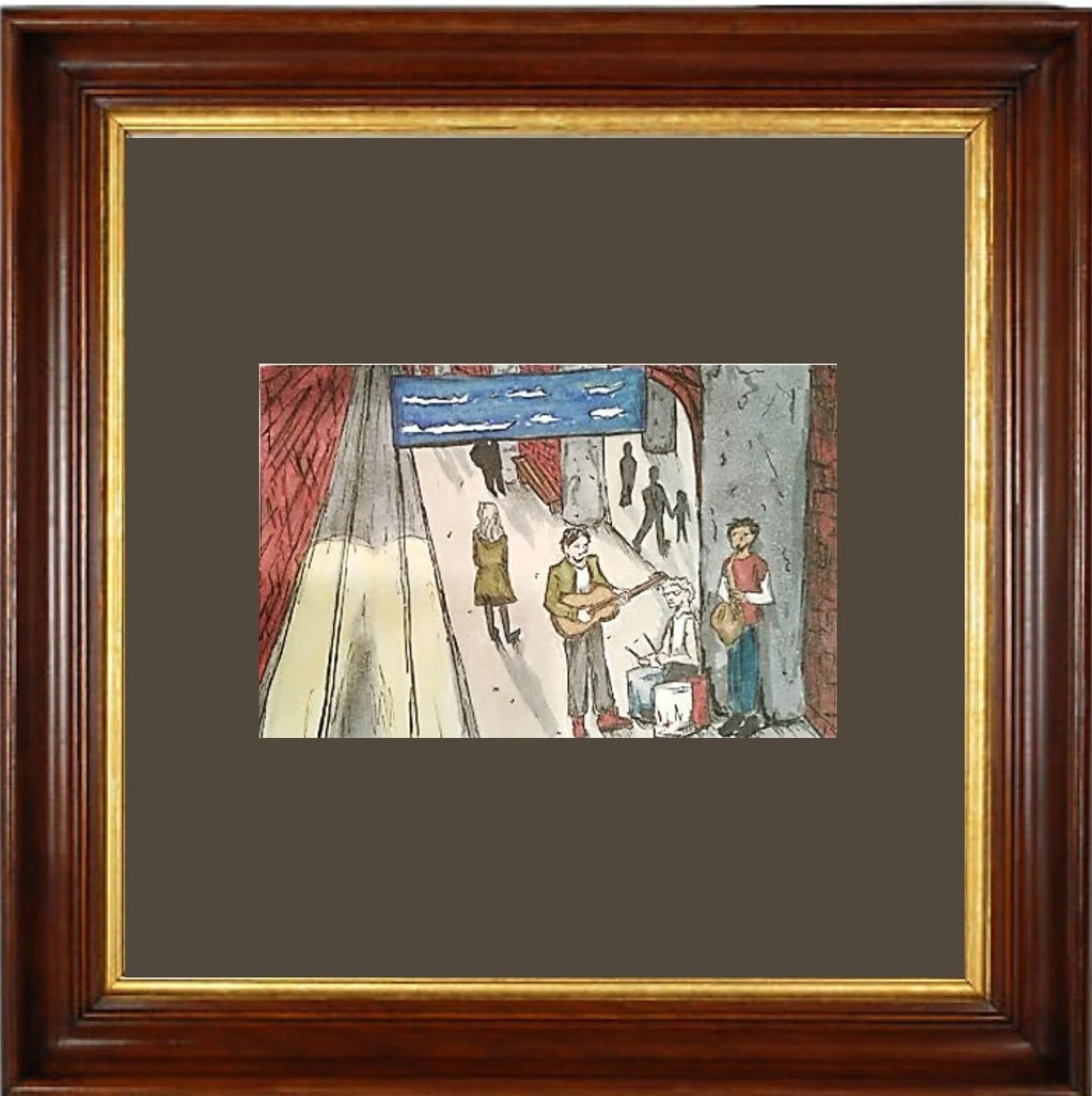
Sub-Level Street Music
Morgan Biagi
Marker on Bristol Board
10.2 x 15.2 cm
Inspired by Jim Lee’s comic book work, the piece demonstrates how the little things can go unnoticed. The piece shows street performers playing music at a subway station underground, and the title suggests that music can be heard at a subconscious level, like white noise. The comic style is used because important details can easily be missed, like in music. It can be taken for granted or overlooked because people grow up listening to and learning from music, represented by the young performers.
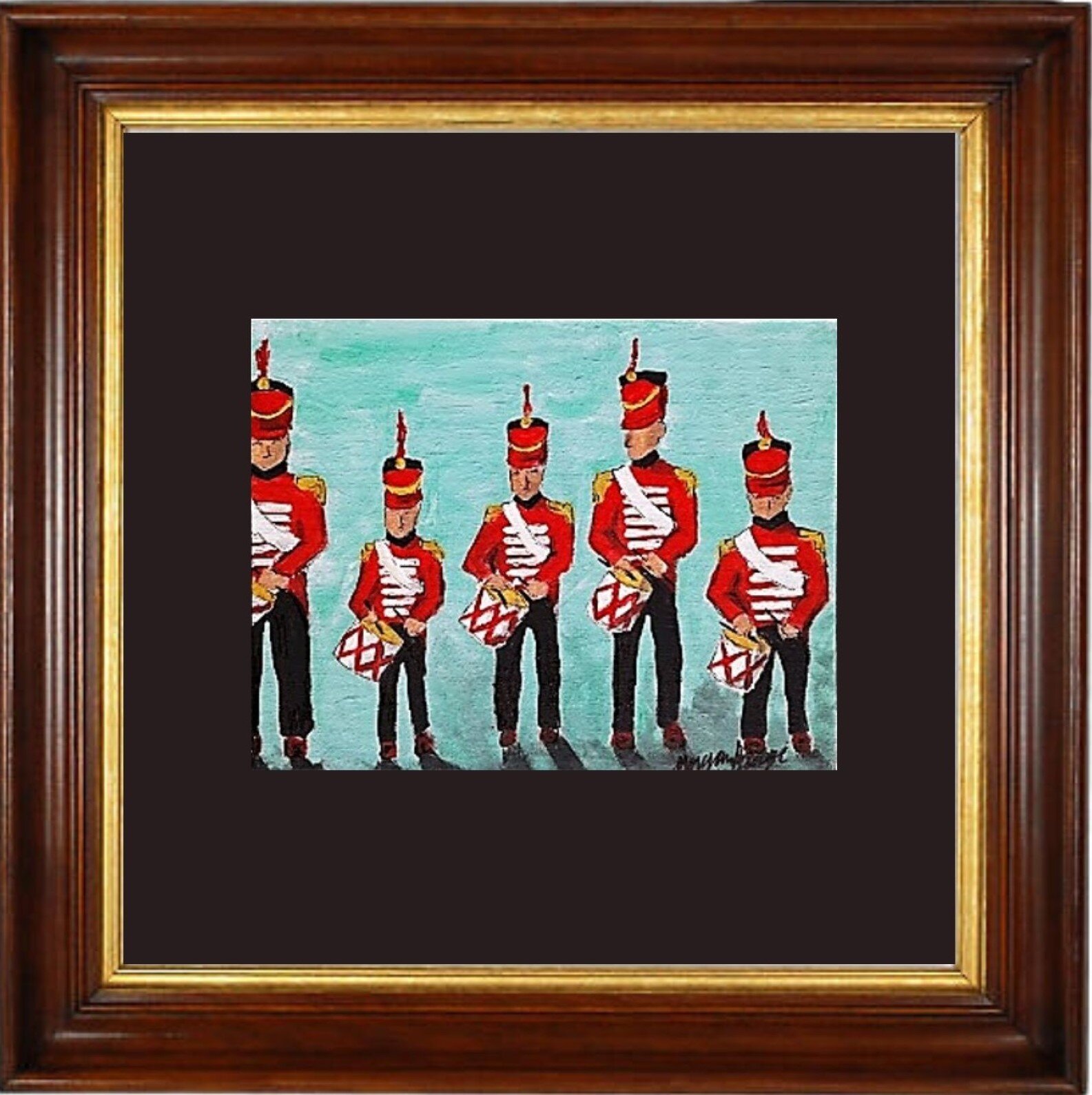
Marching to the Beat of Old Drums
Morgan Biagi
Acrylic and sharpie on canvas
25.4 x 20.32 cm
In this piece I wanted to show that music influences our lives in simple ways demonstrated by the use of basic shapes and shading, as well as a simple composition. The piece is also portraying the Spanish drum festival La Tamborrada, which uses drum music and marches to celebrate Saint Sebastian and uphold old war traditions. The festival is an example of how music can play a role in something meaningful, even if it’s as simple as tradition.
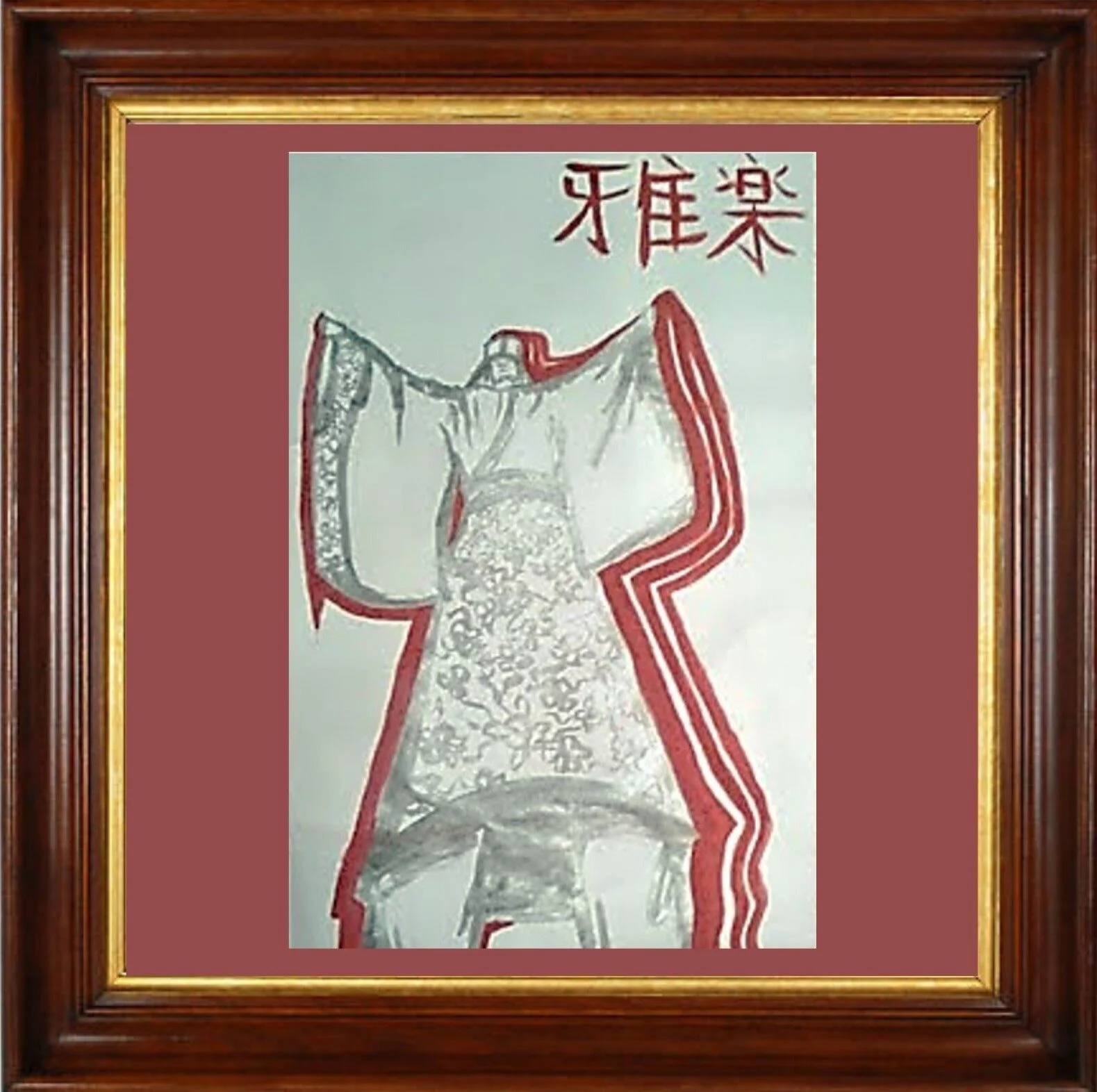
The Dance of Gagaku
Morgan Biagi
Ink on paper
45.5 x 30 cm
This piece was created to express dancing as a form of performance art that, along with music, helps to carry tradition. The ancient music and performances of gagaku are part of why Japan has a unique culture that mixes old traditions with new innovations, and music is one of the best examples of that. The dance and costumes are just as important as the songs and instruments, but without the music it would be harder to keep the tradition and the culture alive.
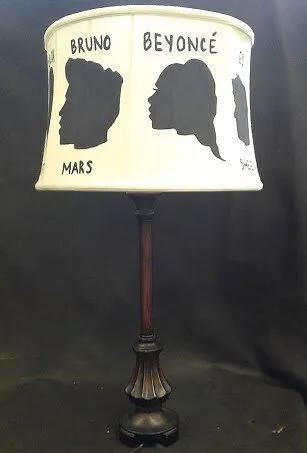
Panels of Light
Morgan Biagi
Acrylic on found object
35.56 x 35.56 x 78.11 cm
Otto Bohler was an Austrian artist who specialized in making silhouettes of composers and classical musicians. On a found lamp, I wanted to create a piece using silhouettes, and was inspired by Bohler’s theme of musicians, only I painted modern pop music artists rather than classical, also included the names of each artist. Overall the piece is symbolic of how musical artists shed light on and address new ideas as well as lighten moods.