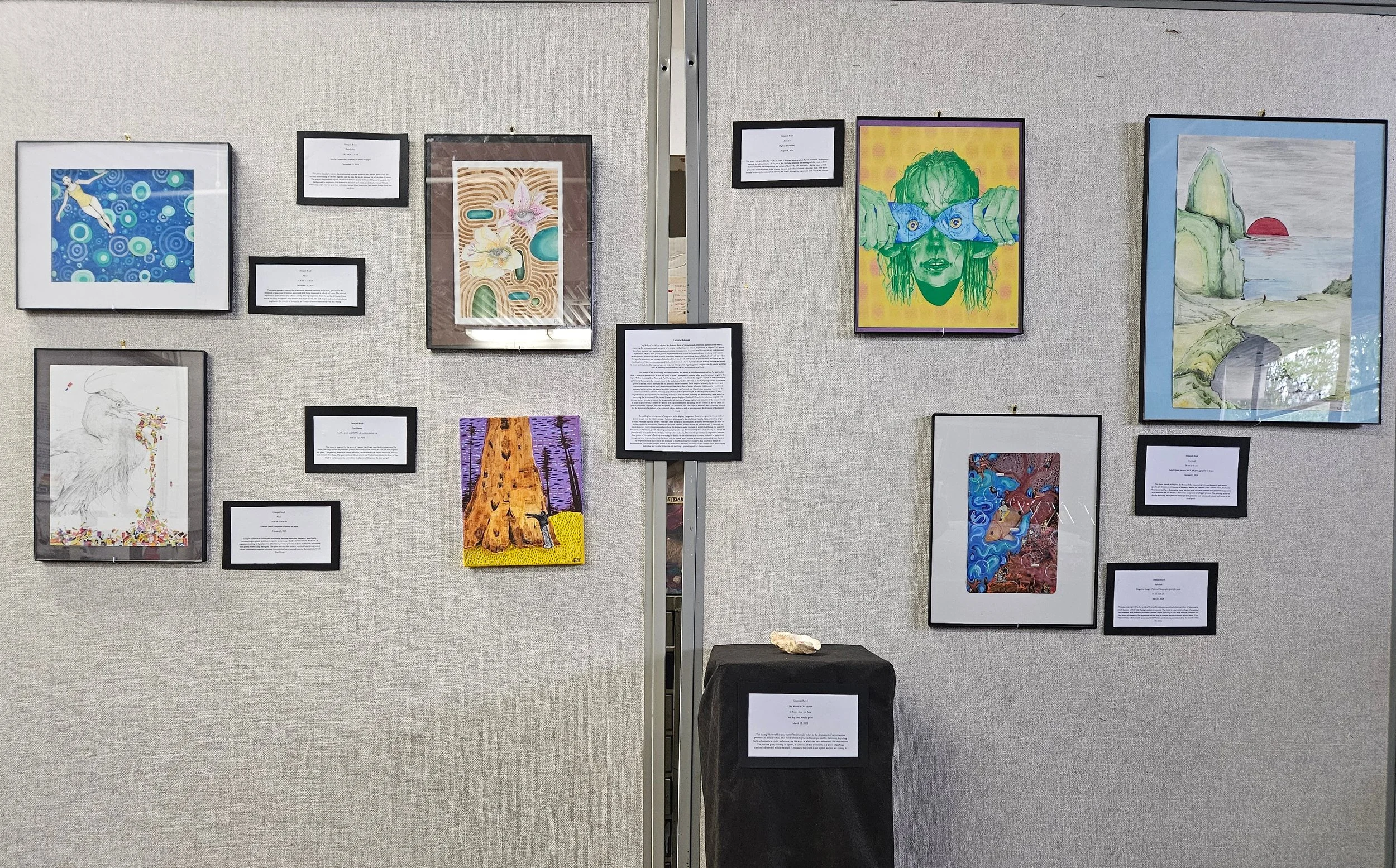
Gitanjali Boyd
“What is your favorite artwork?”
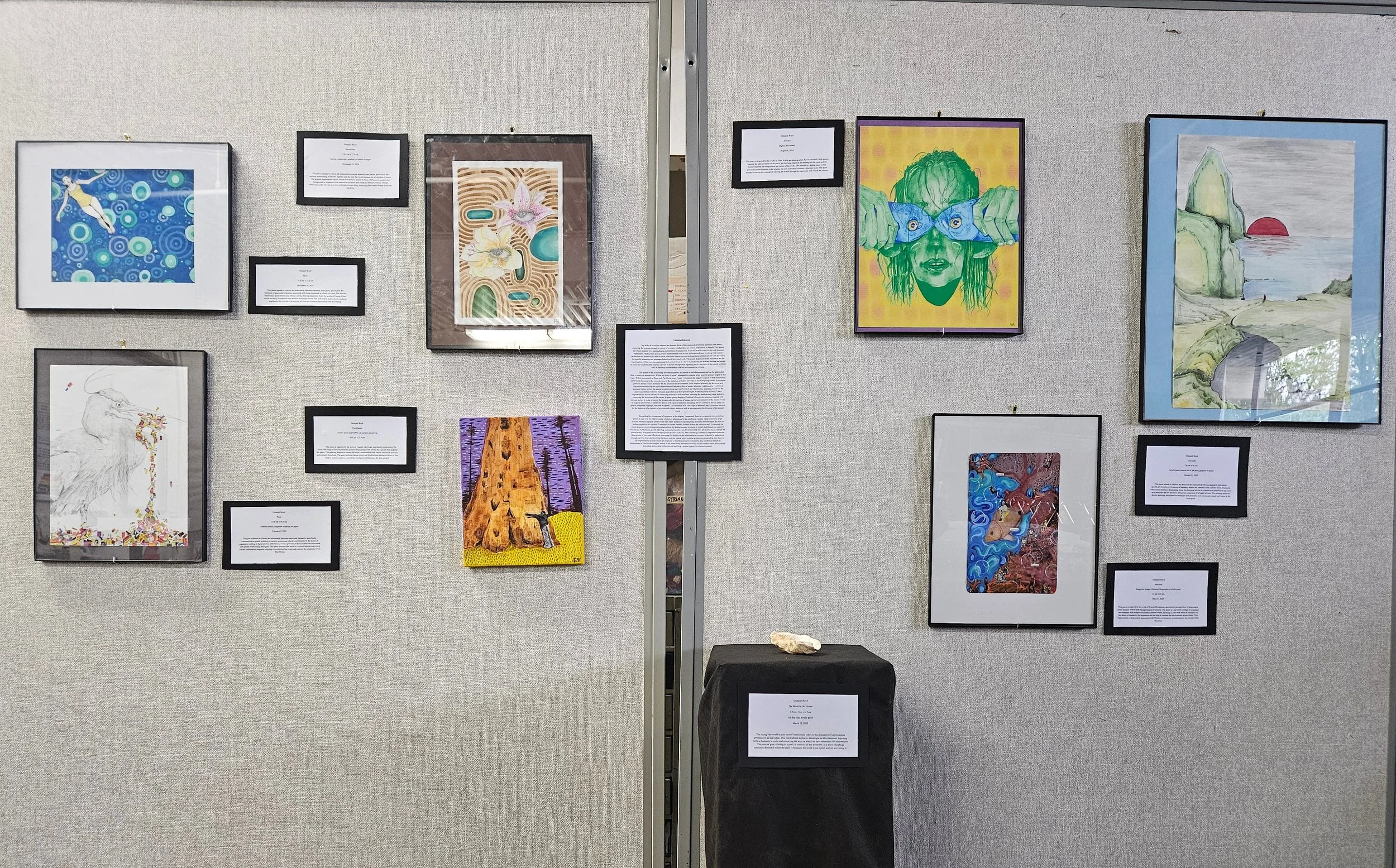
Curatorial Rationale
My body of work has adopted the thematic focus of the relationship between humanity and nature, exploring this concept through a variety of avenues, whether they are critical, inquisitive, or hopeful. My pieces have been inspired by a multitudinous combination of inspirations, from real world events to my own personal experiences. Within these pieces, I have experimented with several different mediums, working with various techniques and materials in order to most effectively convey the overarching theme of the body of work as well as the specific intentions and messages behind each individual work. The pieces displayed in this exhibition are the manifestation of this experimentation and its best outcomes, as I have expanded my art making abilities and aimed to create an exhibition that inspires viewers to pursue introspection regarding their own place in the natural world as well as humanity's relationship with the environment as a whole.
The theme of the relationship between humanity and nature is multidimensional and can be approached from a variety of perspectives. Within my body of work I attempted to examine a few specific primary angles to this topic. Within pieces such as Waste and The World is our Oyster, I examined the negative aspects of this relationship, particularly focusing on the consequences of the pollution of bodies of water, an issue plaguing aquatic ecosystems globally, and an overall disregard for the health of the environment. I was inspired primarily by discourse and discussion surrounding the rapid deterioration of the planet due to human influence. Additionally, I examined humanity's place within the natural world in pieces such as Overlook and Thumbelina, intending to convey the interconnectedness between humanity and nature in a more positive light. Within my body of work, I have implemented a diverse variety of art making techniques and mediums, selecting the methodology most suited to conveying the intentions of the pieces. In many pieces displayed I utilized vibrant color schemes coupled with intricate texture in order to mimic the diverse colorful qualities of nature and various elements of the natural world. In order to achieve this, I created my pieces with various mediums, including, but not limited to, acrylic paint, oil pastels, magazine clippings, and even sculpture. The utilization of a vast scope of materials and techniques allowed for the depiction of a plethora of textures and subject matter as well as encompassing the diversity of the natural world.
Regarding the arrangement of my pieces in the display, I organized them in two general rows with four pieces in each row. In order to create a balanced appearance to the exhibition visually, I placed my two larger primary pieces in opposite corners from each other and placed the remaining artworks between them. In order to further emphasize this balance, I attempted to create thematic balance within the pieces as well. I dispersed the pieces depicting nautical inspirations throughout the display in order to create an evenly distributed and cohesive exhibition. Furthermore, pieces depicting a critical perspective on the relationship between humanity and nature are placed evenly alongside those conveying more positive outlooks, hence creating a constant juxtaposition between these points of view and effectively conveying the duality of this relationship to viewers. It should be understood through viewing this exhibition that humanity and the natural world possess an intricate relationship, one that it is our responsibility as individuals and a species to healthily preserve. Ultimately, this exhibition intends to demonstrate to viewers the complex nature of the relationship between humanity and the natural world, encouraging individual and societal reflection and instilling a greater respect for the environment.
Anjali’s Artwork
-
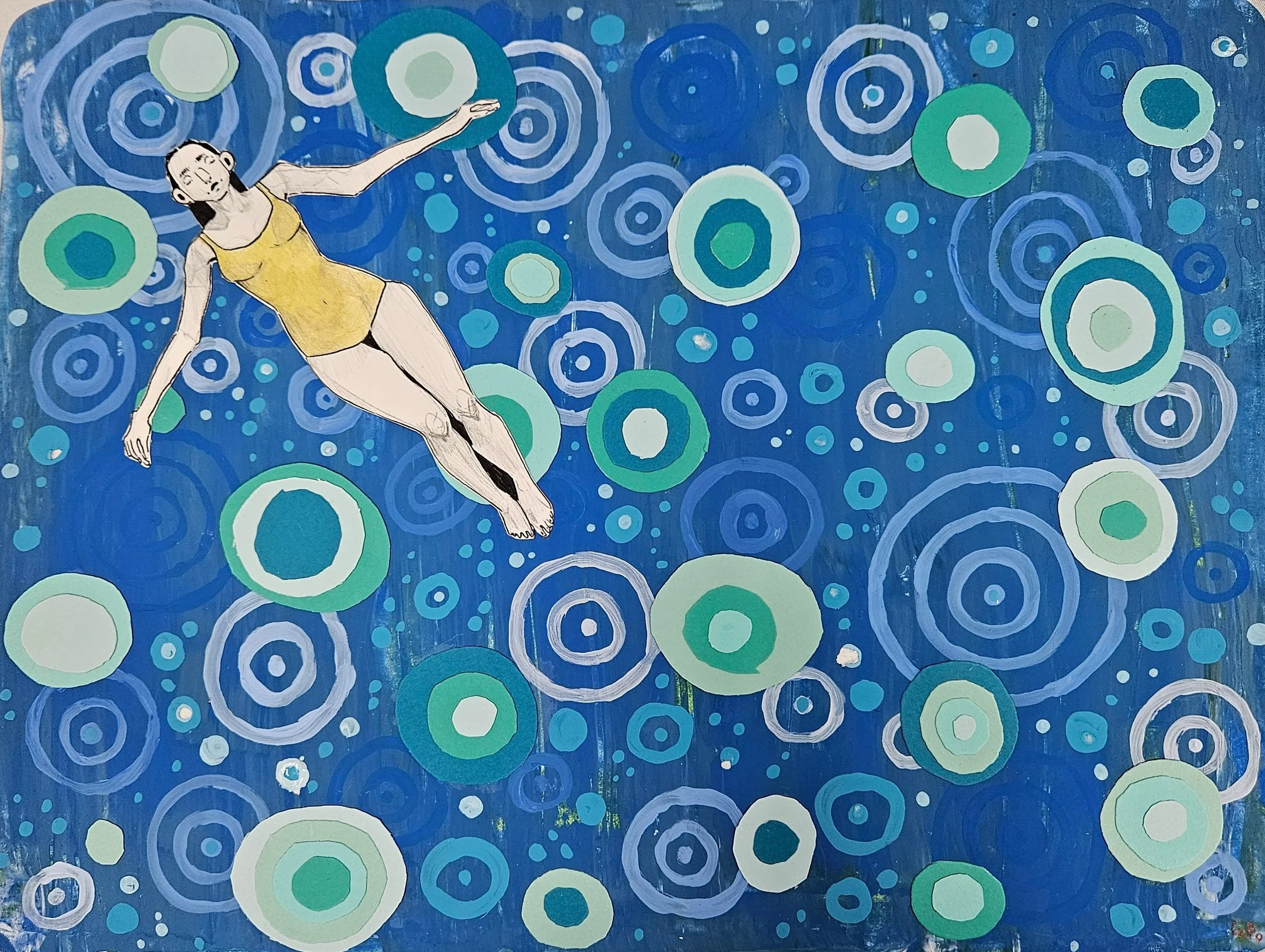
Float
Paper Mache and graphite on paper
35.0cm x 18.0cm
This piece intends to convey the relationship between humanity and nature, specifically the sensation of peace and relaxation associated with being immersed in a body of water. The artwork implements dense texture and vibrant colors, drawing inspiration from the works of Gustav Klimt which similarly incorporate busy textures and bright colors. The soft shapes and cool color scheme emphasizes the concept of tranquility as these are elements associated with this feeling.
-
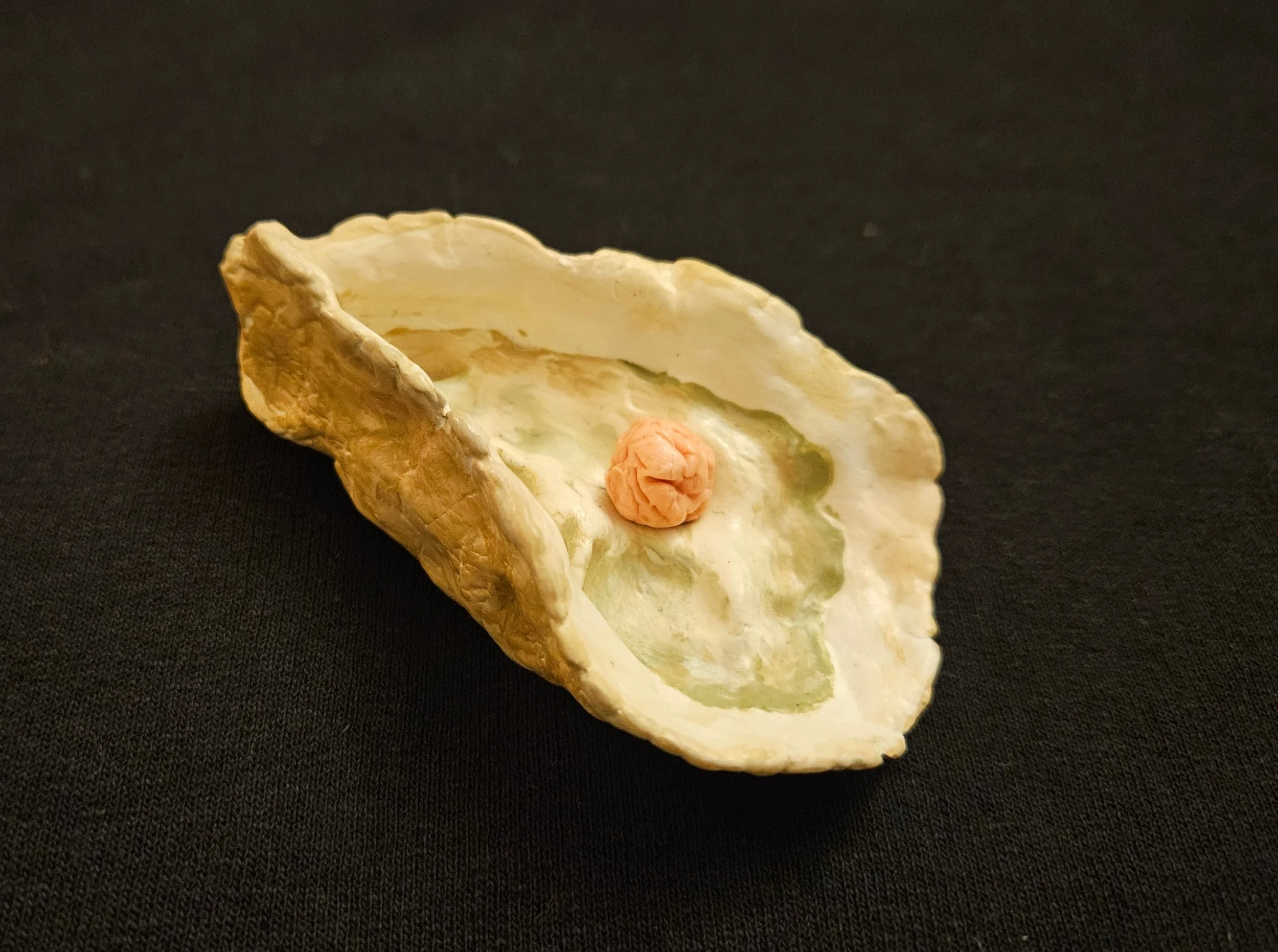
The World is Our Oyster
Air dry clay, acrylic paint
9.5cm x 5cm x 3.5cm
The saying “the world is your oyster” traditionally refers to the abundance of opportunities presented to an individual. This piece intends to place a literal spin on this statement, depicting Earth as humanity’s oyster and conveying the ways in which we have mistreated the environment. The piece of gum, alluding to a pearl, is symbolic of this treatment, as a piece of garbage carelessly discarded within the shell. Ultimately, the world is our oyster, and we are ruining it.
-
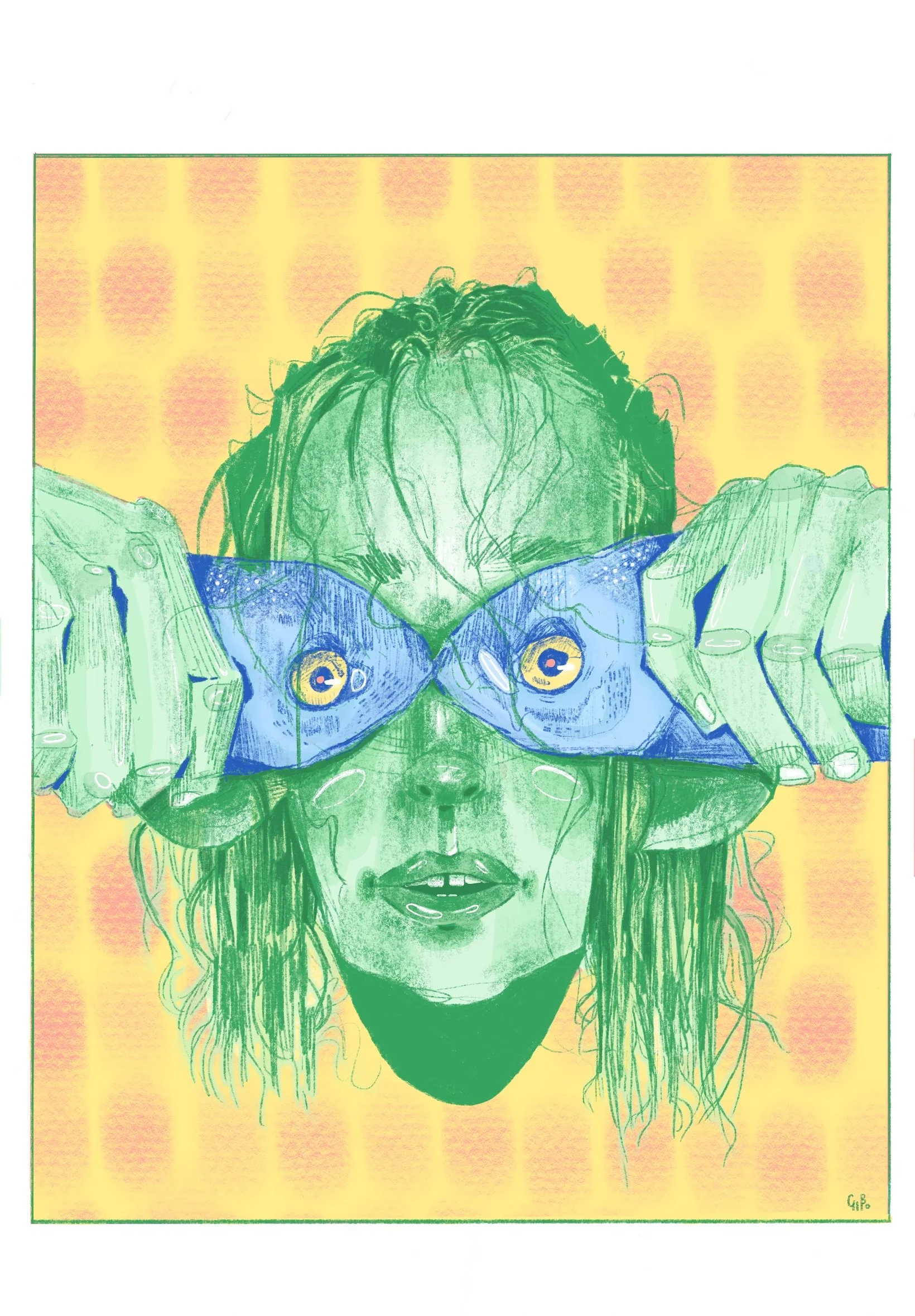
Fisheye
Digital (Procreate)
This piece is inspired by the works of Frida Kahlo and photographer Kevin Meredith. Both pieces inspired the subject matter of the piece, but the latter inspired the message of the piece and the former inspired the composition and colors of the work. The artwork is a digital piece with a primarily monochromatic color scheme for each individual element within the work. The piece intends to convey the concept of viewing the world through the organisms with which we coexist.
-
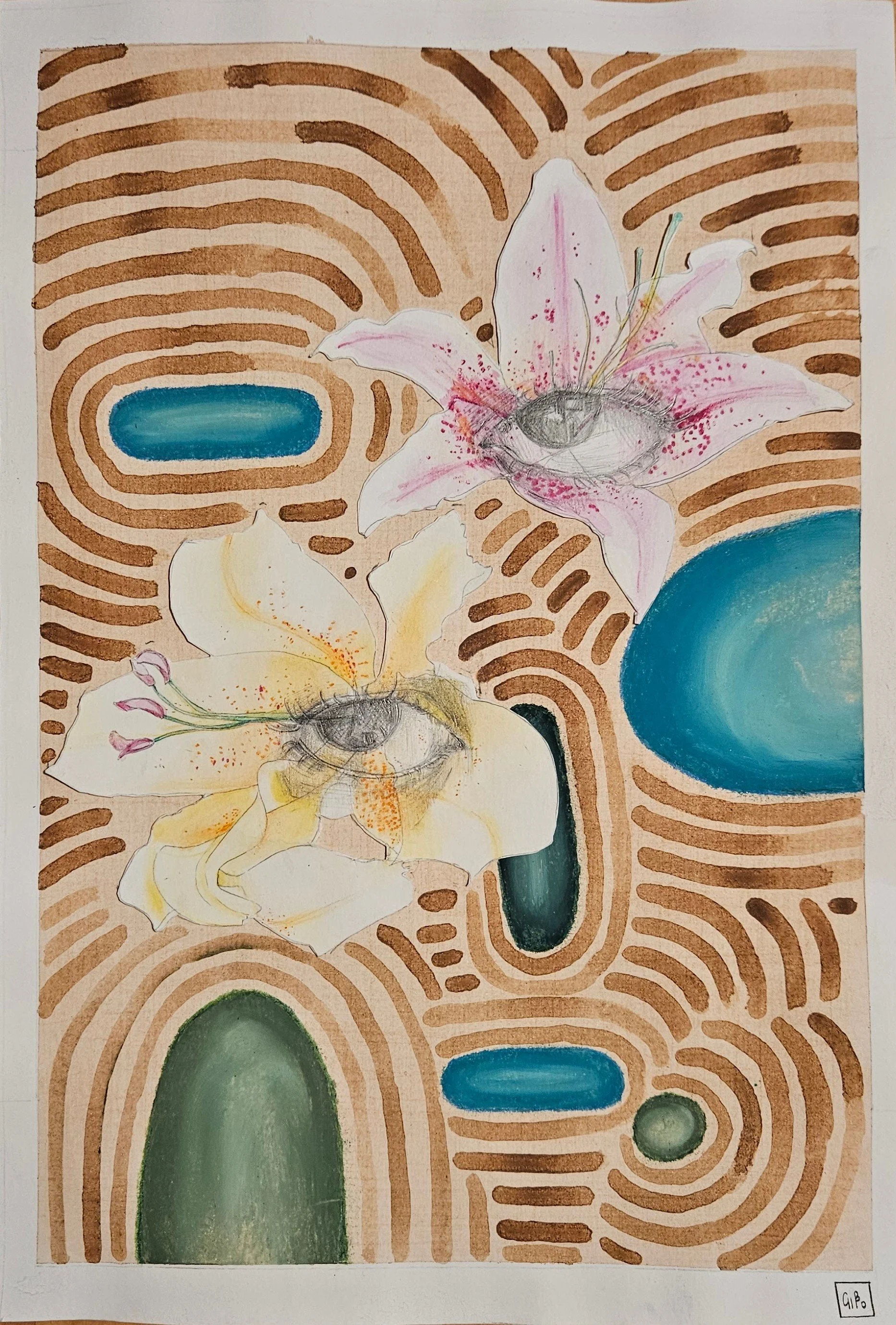
Thumbelina
Acrylic, watercolor, graphite, oil pastel on paper
18.5 cm x 27.0 cm
This piece intends to convey the relationship between humanity and nature, particularly the intrinsic intertwining of the two together and the idea that we as humans are all children of nature. The artwork implements organic shapes and textures similar to those of Picasso’s works in the background to emphasize this immersion in nature and create an abstract portrait. Vibrant watercolor seeps into the grey eyes embedded in two lilies, conveying how nature brings color into our lives.
-
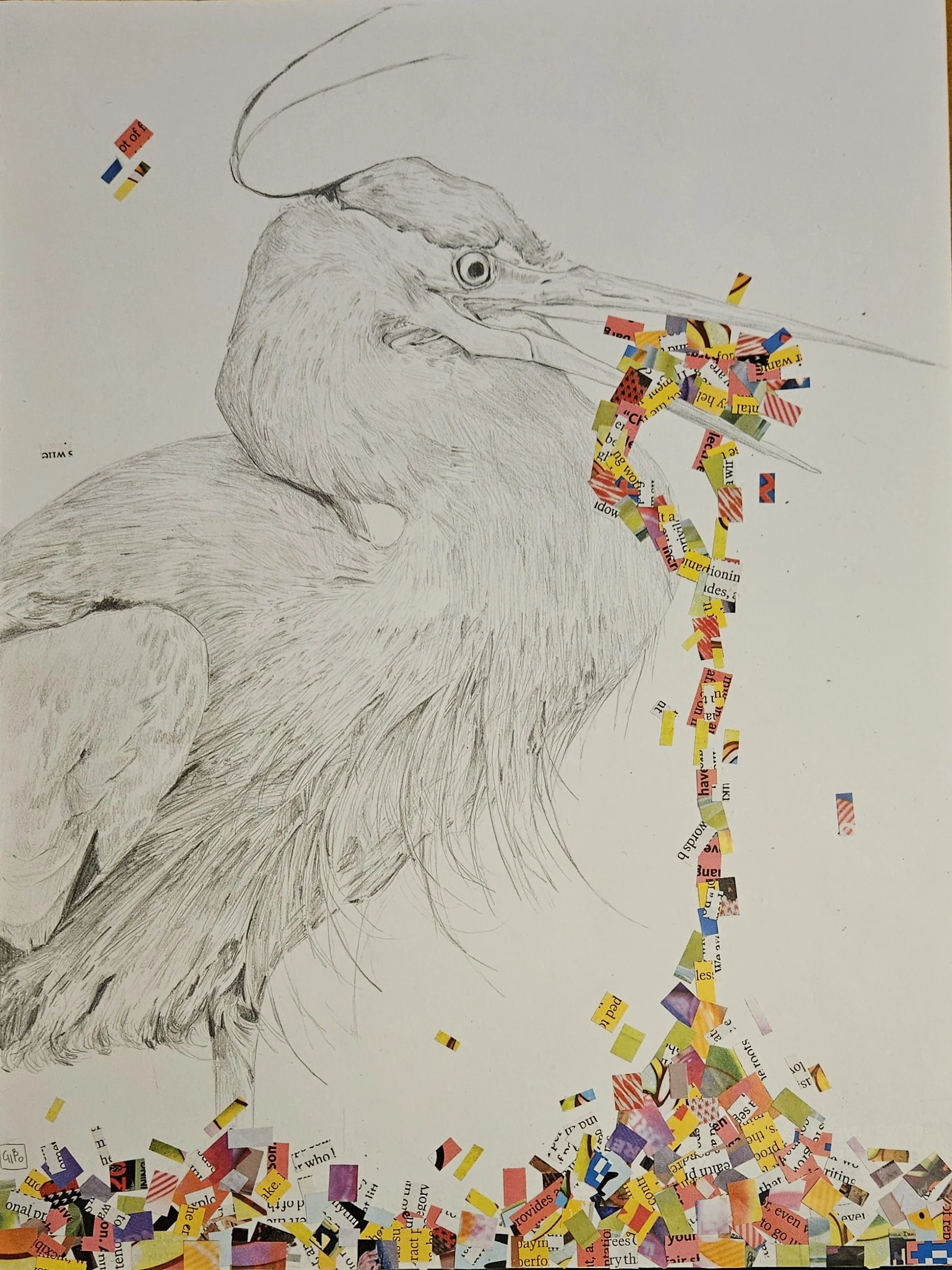
Waste
Graphite pencil, magazine clippings on paper
23.0 cm x 30.5 cmThis piece intends to convey the relationship between nature and humanity, specifically commenting on plastic pollution in aquatic ecosystems which is detrimental to the health of organisms residing in these habitats. Oftentimes, avian organisms in these biomes are discovered with plastic waste filling their guts. This piece conveys this issue in a critical lens through using vibrant consumerist magazine clippings to symbolize this waste and contrast the simplistic Great Blue Heron.
-
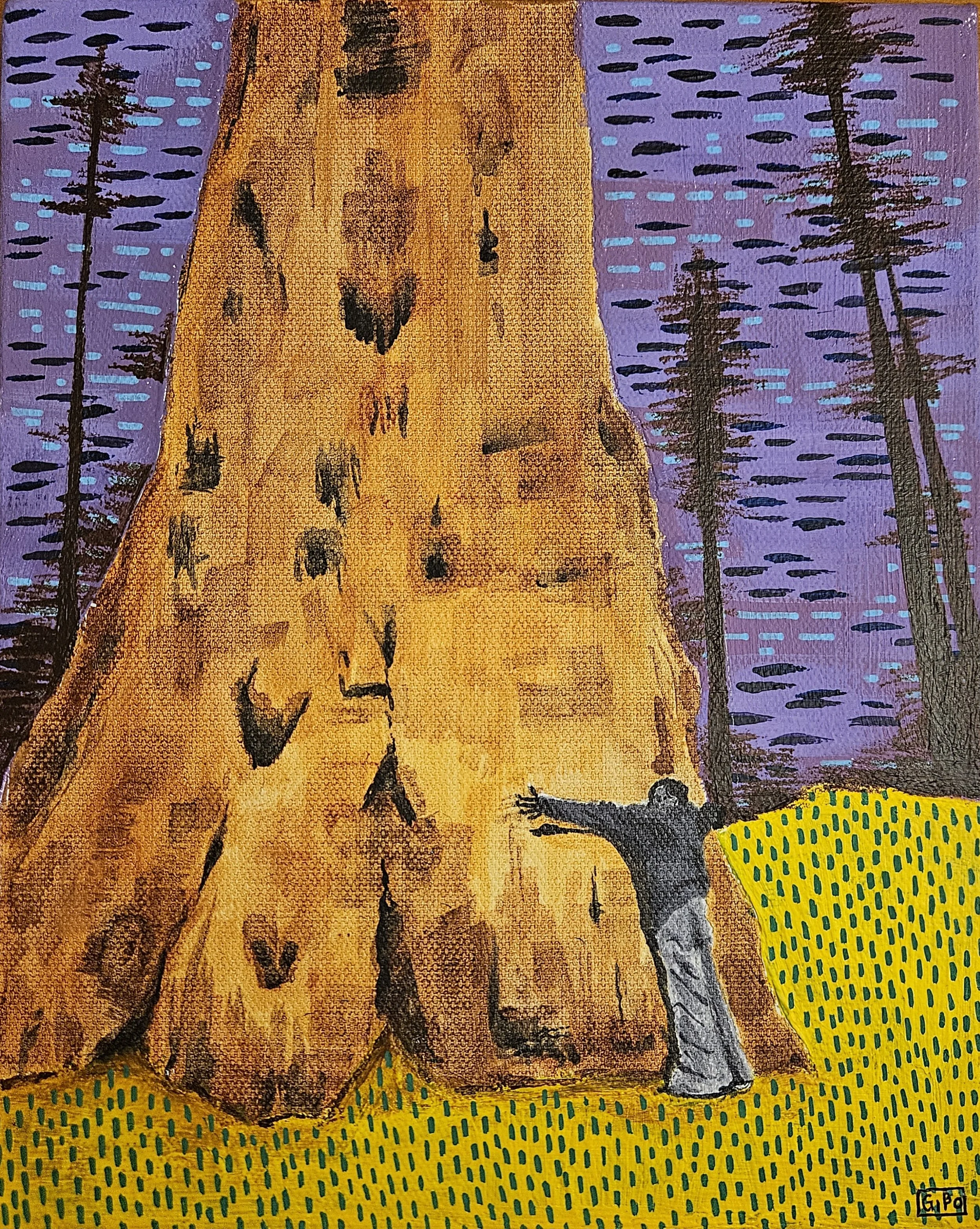
Tree Hugger
Description goes here -
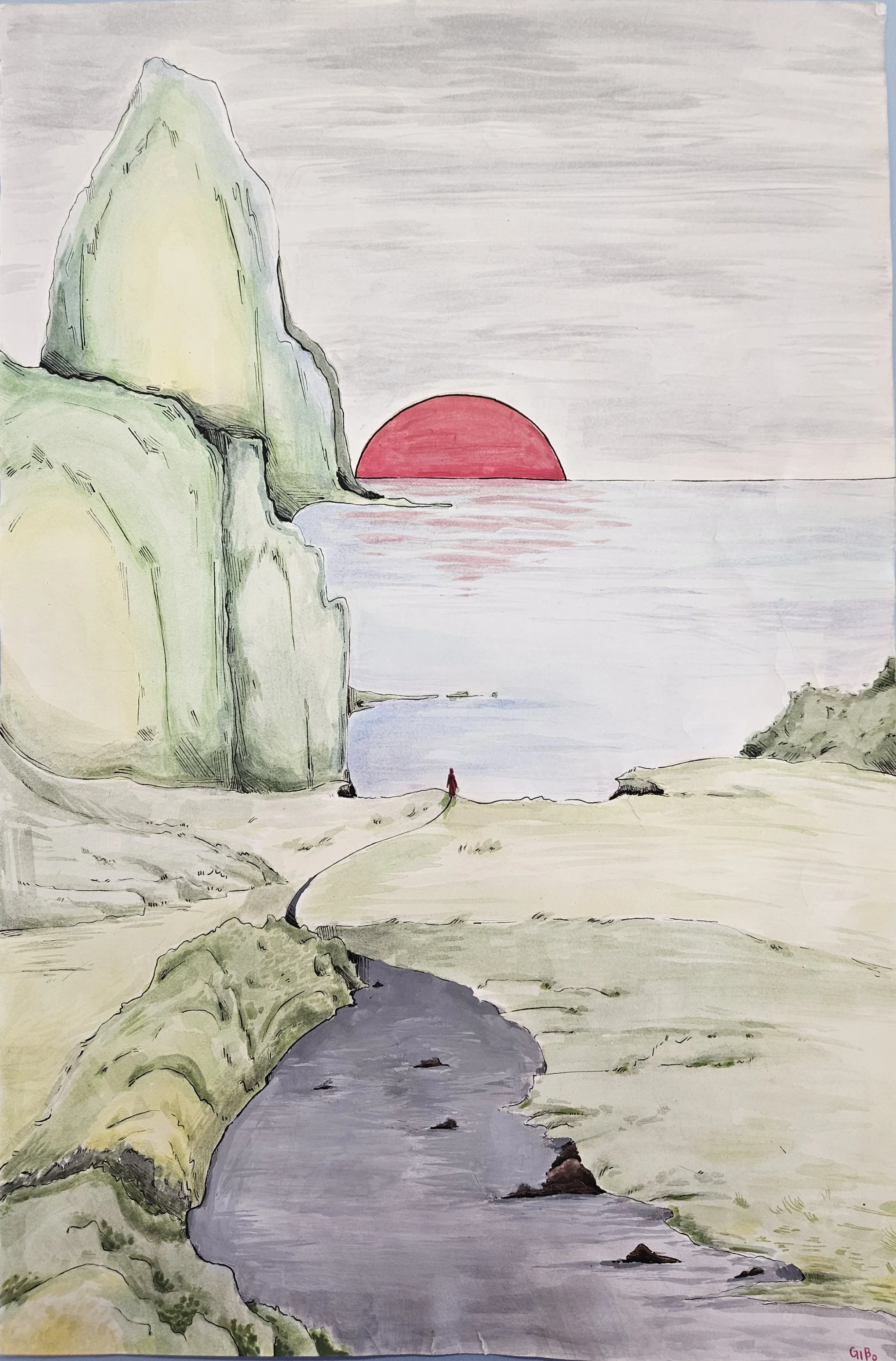
Overlook
Acrylic paint, micron black ink pens, graphite on paper
30 cm x 45 cm
This piece intends to explore the theme of the relationship between humanity and nature, specifically the minute existence of humanity amidst the vastness of the natural world. Humanity often views itself as a dominating force, but this piece strives to contrast that perspective and serve as a reminder that we are but a minuscule component of a bigger picture. The painting achieves this by depicting an expansive landscape with primarily cool colors and a small red figure at the focal point.
-
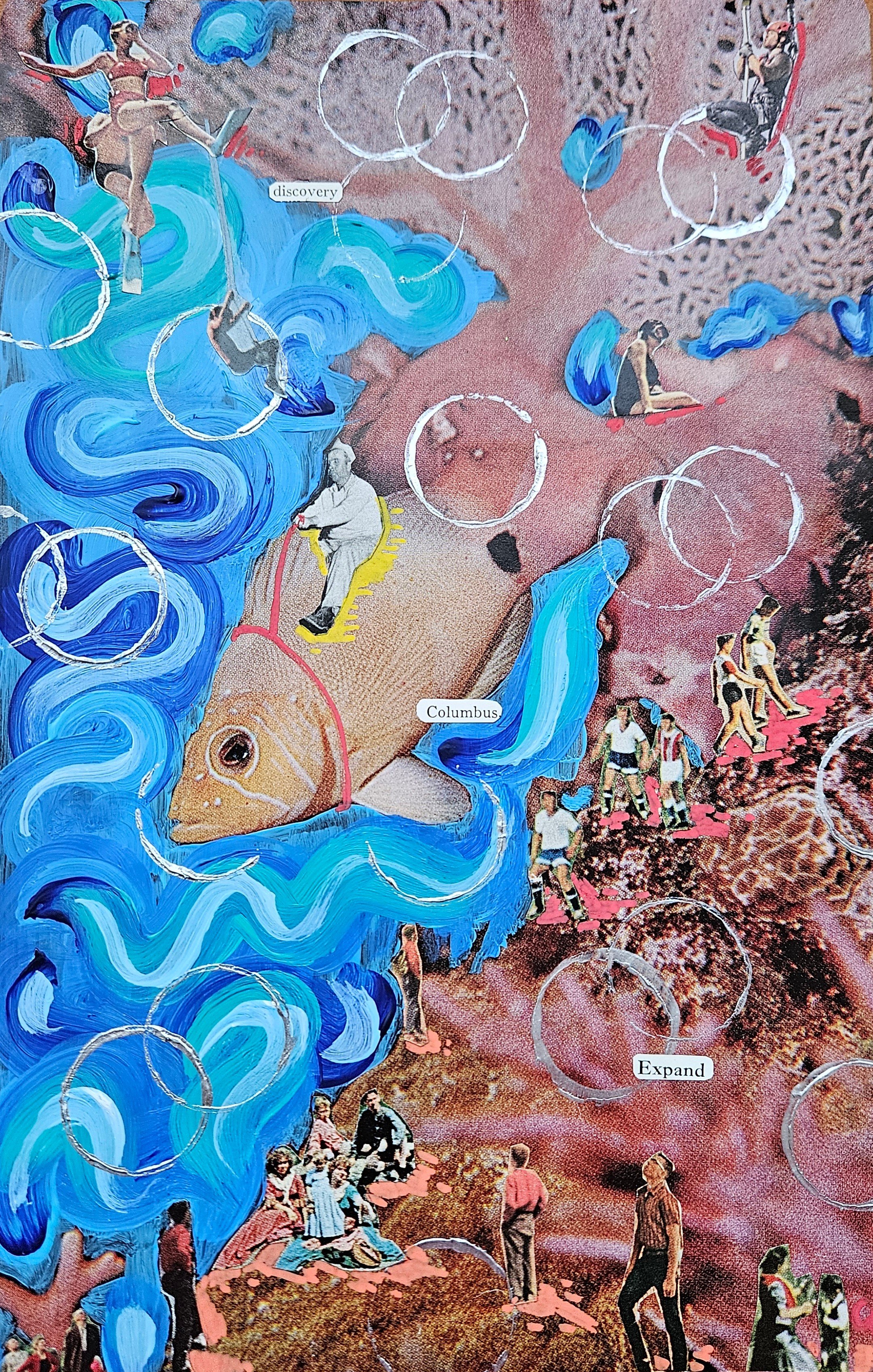
Infection
Magazine images (National Geographic), acrylic paint
15 cm x 23 cm
This piece is inspired by the work of Werner Bronkhorst, specifically his depiction of abnormally small humans within large background environments. The piece is a surrealist collage of a nautical environment with images of humans scattered within. In doing so, the work aims to comment on the desire of humanity for expansion and the urge to conquer the environment around them. This characteristic is historically associated with Western civilizations, as indicated by the words within the piece.