Flynn Ng
“What is your favorite artwork?”
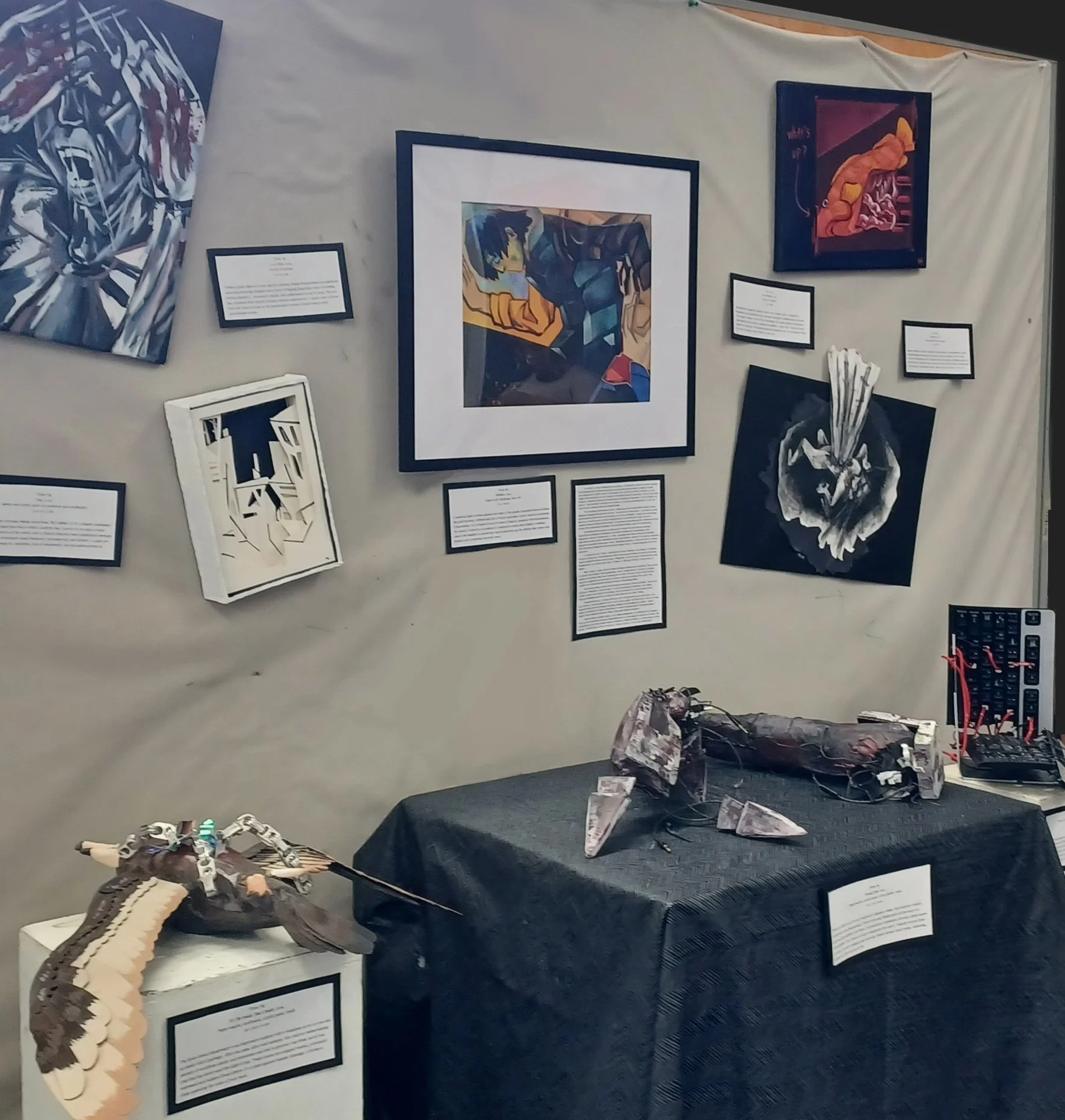
Curatorial Rationale
My exhibition is about vulnerability and repression. It confronts the shame and embarrassment felt when asking others for help and approaches the emotional depths a human can spiral towards: alone, helpless, and too afraid to reach out for support. This collection of artwork chronicles my own struggles with mental health and the reluctance I felt towards sharing it with anyone. After so much time shoving my emotions and experiences into the ground, the thought of displaying it in such a public way scares me. I hope my exhibit can bring you, the audience, to your lowest emotional points, so you can connect with my artwork and share that helpless feeling.
This overarching theme was not my first. I created many pieces under dierent labels, always shifting and changing from each idea to the next. I was never sure of what exactly I was trying to convey, and felt unsatisfied with the lack of unity between my artworks. Eventually, I realized I was repressing large parts of myself and my life, as well as ignoring that all my artworks were really a way to be vulnerable without ever talking about my issues. The resistance to processing my life, combined with the fact that I’d been unknowingly confessing my hurt into these artworks, created my actual theme.
My artmaking skills have gone on a journey since I started this collection two years ago. Vulnerability and loneliness are represented in a variety of mediums and compositions. Active breakdowns are shown in Possession and 3-3-3 Rule, using aggressive brush strokes and contrasting values. Many pieces have intense chiaroscuro and hard-edged shadow, pointing to the extreme emotional highs and lows experienced during panic. Passive, begrudging acceptance of pain can be seen in pieces like Self-portrait and Missing Item, each depicting something in decay; a situation long past, with worry already spent.
As I added to my body of work, I experimented with new mediums, most notably 3D sculpture. The ability to portray hurt in three dimensions allowed me to ground feelings in the real world, giving them more tangible form than a canvas or paper. Missing Item, my first sculpture, frames the arm as an abandoned object. Its 3D nature adds a layer of intrigue to it, like you could find it thrown away in a dumpster.
While creating my works, I aimed to capture feelings of solitude and desperation. Thus, most of my work takes heavy influence from expressionism, which is characterized by the intent to express thoughts and experiences rather than illustrating the real world. The genre is seen in the distorted human forms, suggesting how repression and loneliness can warp perception of the world. Vivid, unrealistic colors invoke thoughts and emotions instead of representing reality. Each artwork portrays a facet of an extremely personal issue. During my exhibit, I want you to feel like you’re witnessing—or going through—the end of an emotional breakdown. Everything’s o-kilter, someone’s/your shoulders are shaking, and the air around you is just starting to settle. They/you are beginning to patch the cracks in the dam where the river broke through.
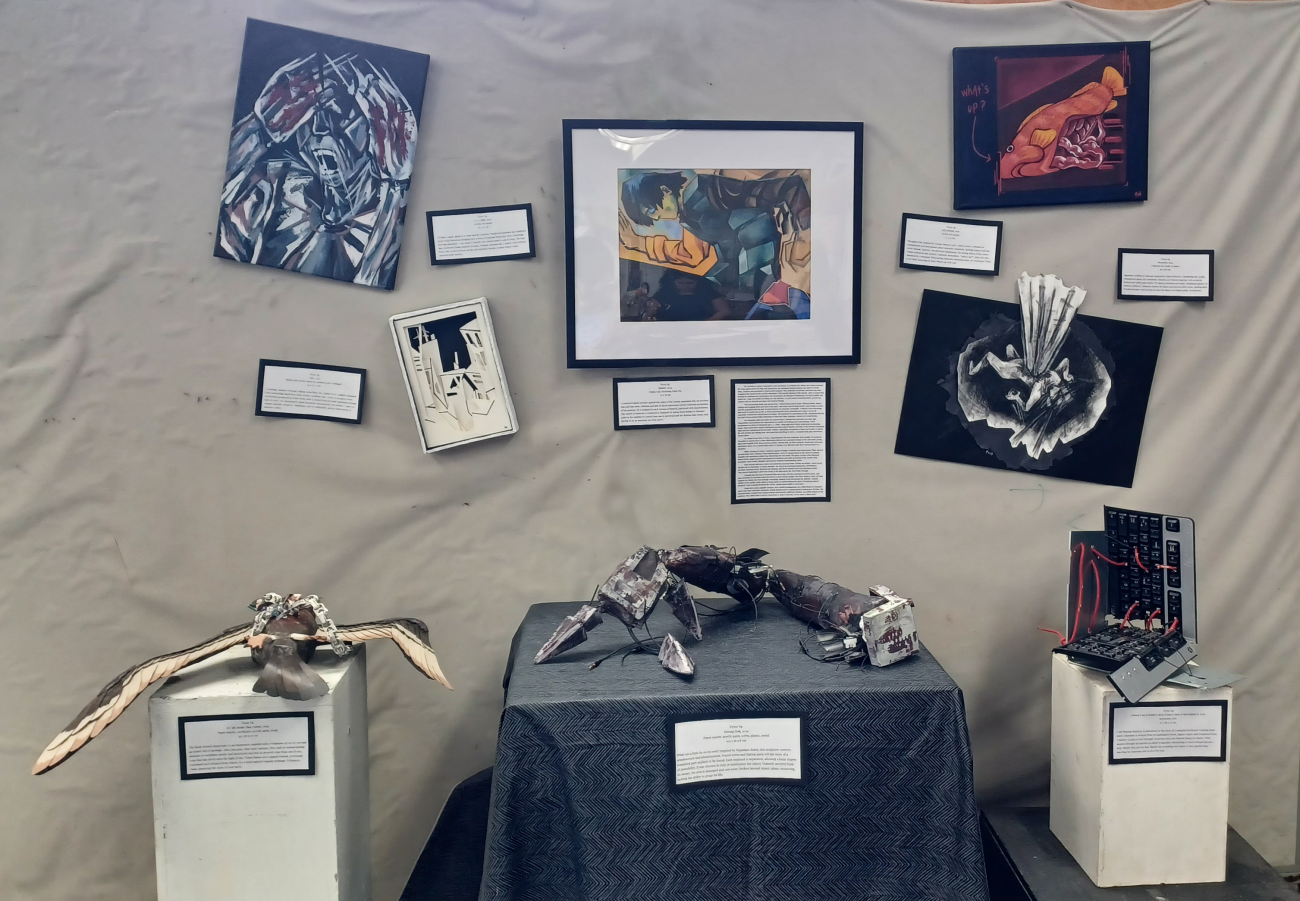
I thought the best way to represent this was to play with the orientations of each piece and place artworks in a way that pulled the viewer to each corner equally. The tilted nature of each 2D work suggests the display has been through something, shaking it and decreasing the stability. I placed Splinter in the middle, as the figure is being drawn to various forms and parts of loneliness placed around it. Color is balanced across the exhibit, giving equal weight to each piece.
Using vivid colors, palpable textures, and a rattled arrangement, my exhibit hopes to transport you to your most vulnerable moments, feeling helpless and too embarrassed to ask anyone for help. The personal nature of each work, baring wounds and showing unfiltered emotion, is a subtle request to the audience. The exhibit asks to form a connection: it shared with you. Do you want to share back?
Flynn’s Artwork
-
Splinter
Digital with Medibang Paint Pro
30 x 38 cm
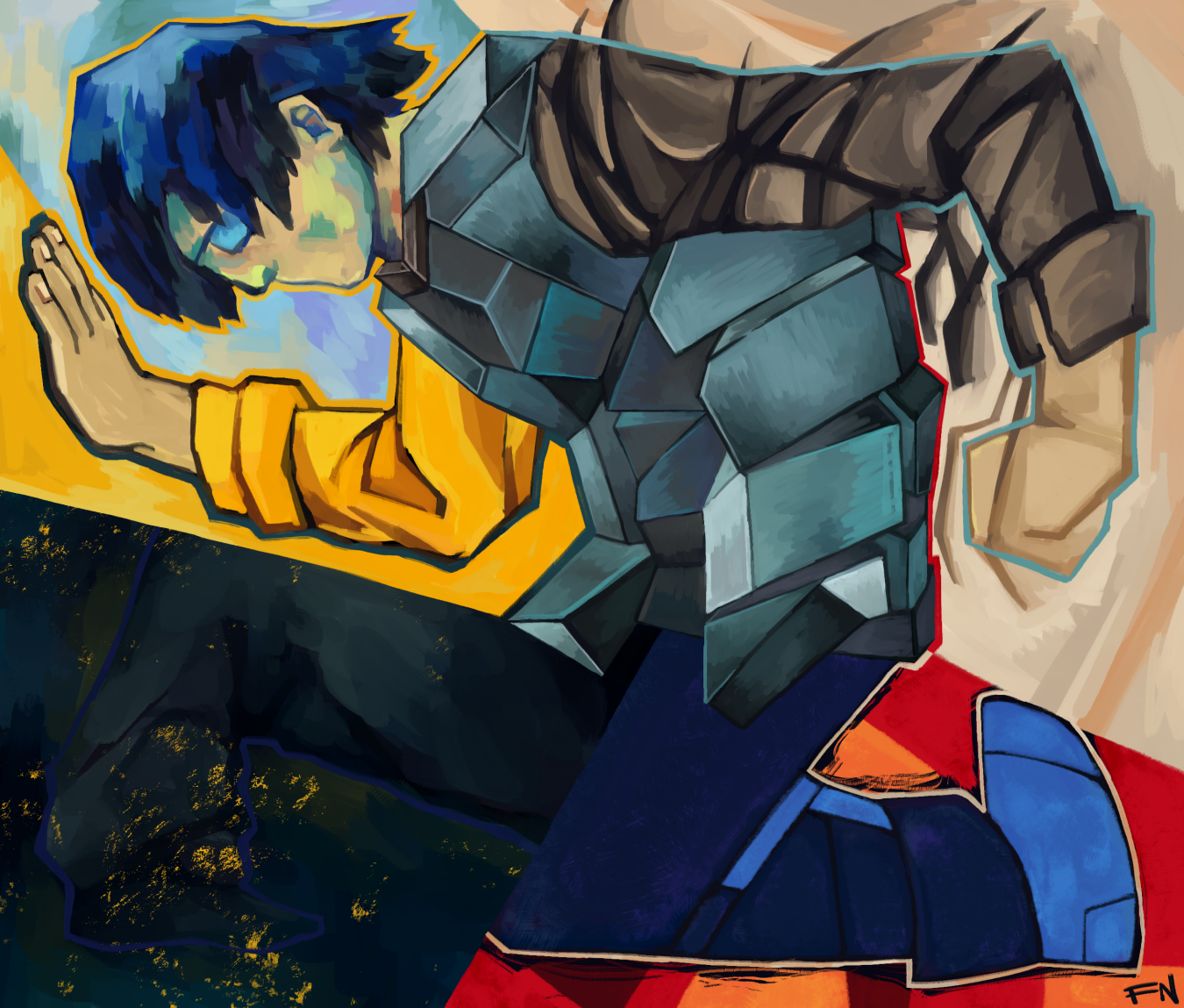
A contorted figure presses against the edges of the canvas, separated into six sections that pull him away. Stillness and lack of facial expression convey reluctant acceptance of his position. He is trapped in each version of himself, paralyzed with hopelessness. The variety of styles he is rendered in (inspired by artists from Rothko to Matisse), point to the inability to control how one is perceived and the distress that comes with having to act as someone you truly aren't.
-
Missing Item
Paper mache, acrylic paint, wires, plastic, metal
102 x 16 x 8 cm
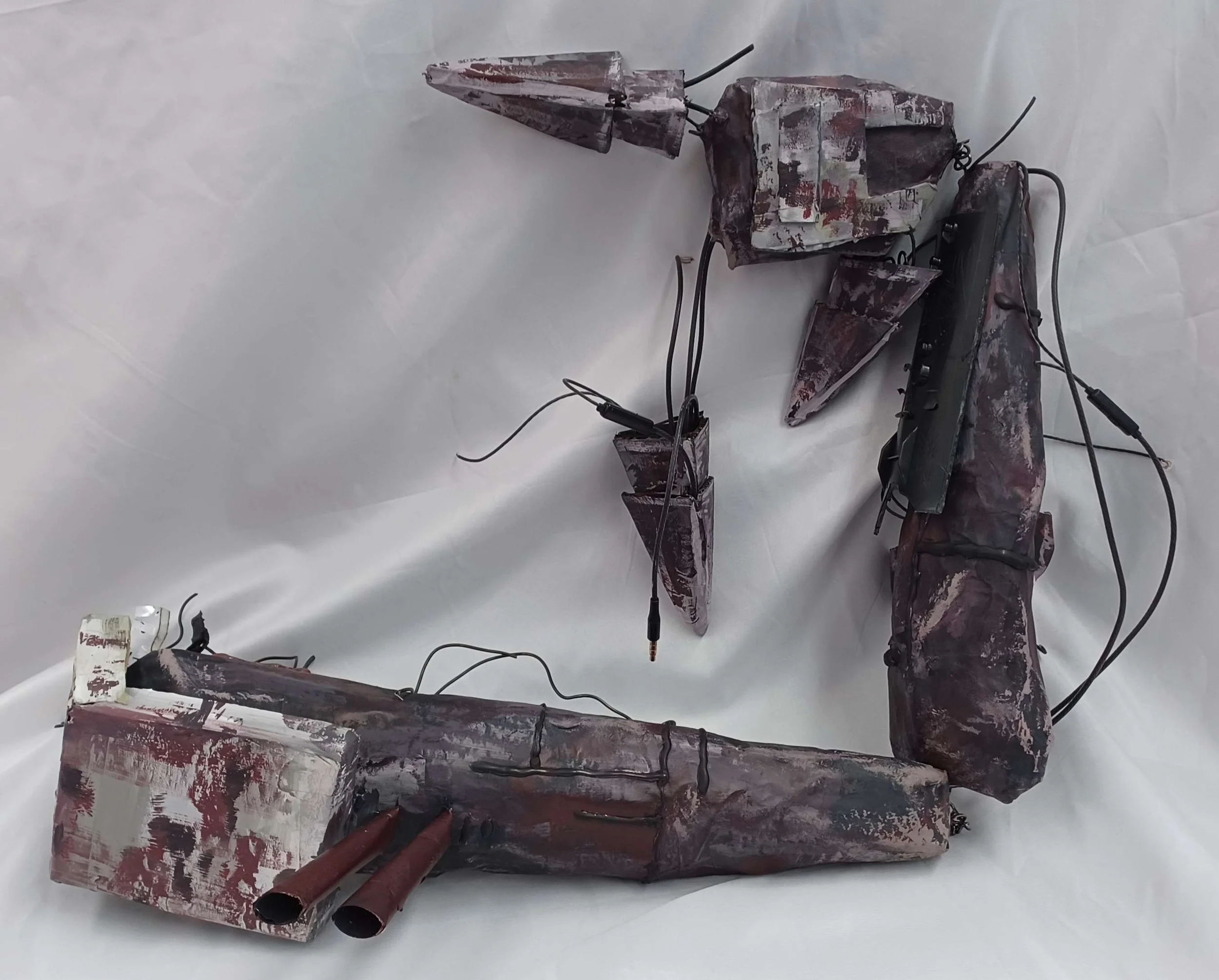
What can a limb do on its own? Inspired by Hapaska's Robot, this sculpture conveys obsolescence and abandonment. Frayed wires and flaking paint tell the story of a separated part unlikely to be found. Each segment is separated, allowing a large degree of poseability, if one chooses to help or manipulate the object. Violently severed from its owner, the arm is damaged and cast away; broken beyond repair; alone, unmoving, lacking the ability to grasp for life.
-
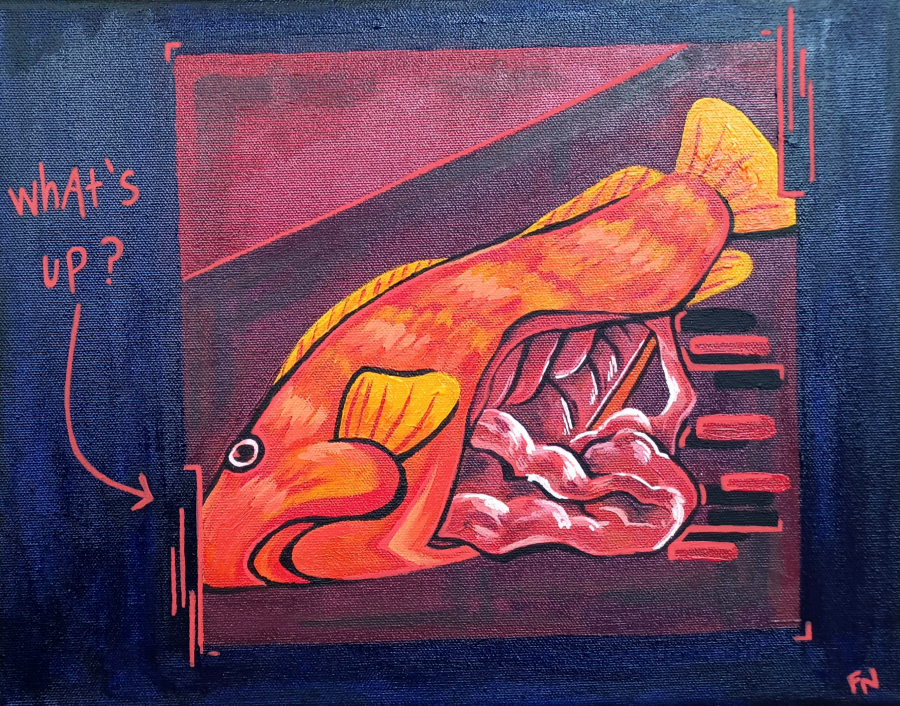
Self-portrait
Acrylic on canvas
23 x 31 cm
This gutted fish, inspired by Georges Braque’s pre-Cubist works, is steeped in normalization and nonchalance about traumatic situations. Spilling organs indicate severe damage. However, red and black bloodstains, the lasting effects of the injury, remain abstracted and unclear. A sardonic annotation—”what’s up?”—lines the side, annotated by a bystander. What lasting traumatic symptoms have we repressed? What is our brain protecting us from? What’s up with you?
-
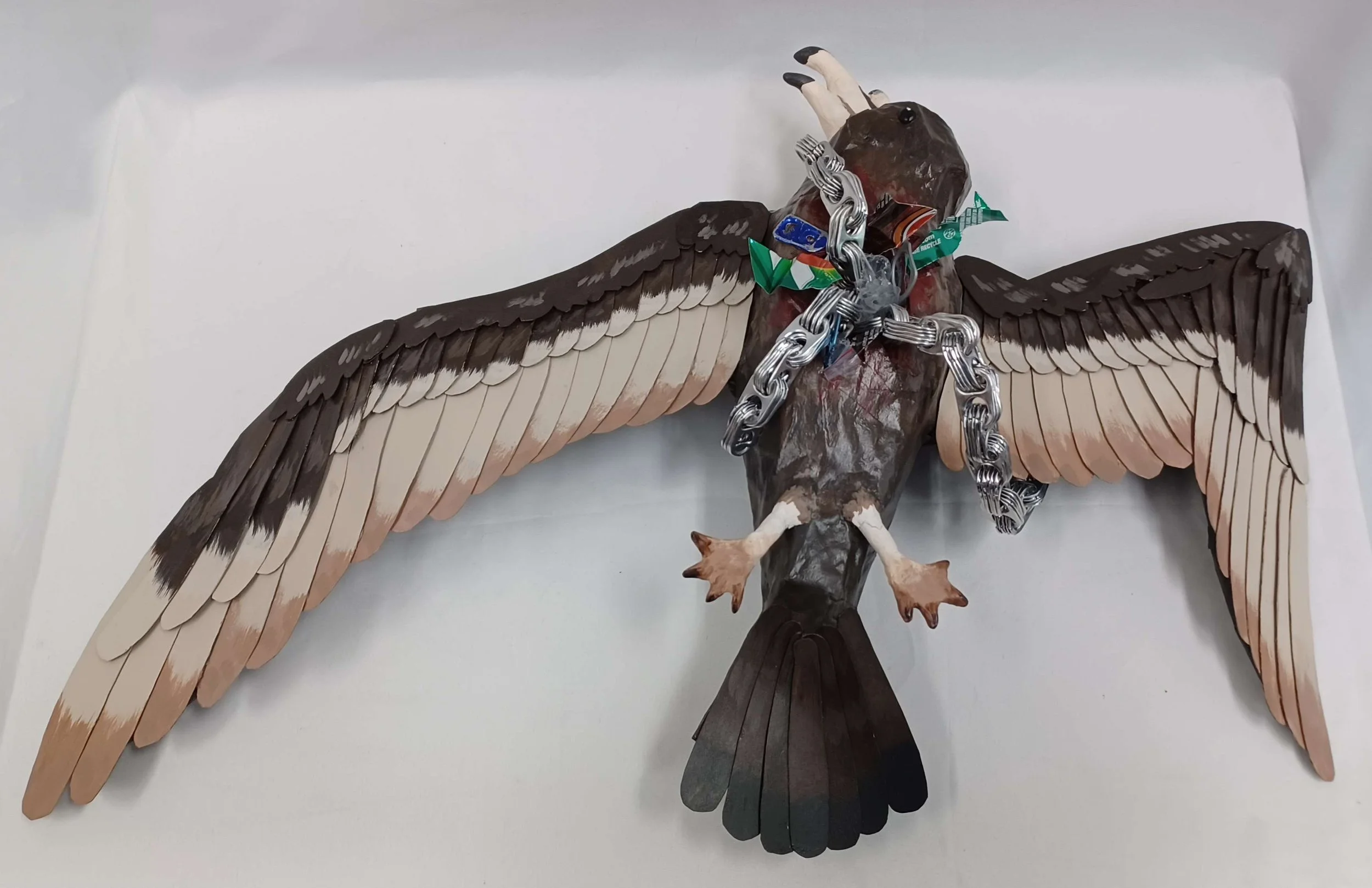
It's The Inside That Counts
Paper mache, cardboard, acrylic paint, trash
39 x 56 x 10 cm
The flesh-footed shearwater is an impressive seabird with a wingspan up to 107 cm and an inside full of garbage. After you pass, after your autopsy, they pull an embarrassing amount of worthless plastic and aluminum and just in general crap from out of you, crap that has never seen the light of day. Trash foams out a jagged wound, previously repressed and isolated from others. It's a stain against regular plumage. It forms a chain spanning the sides of your neck.
-
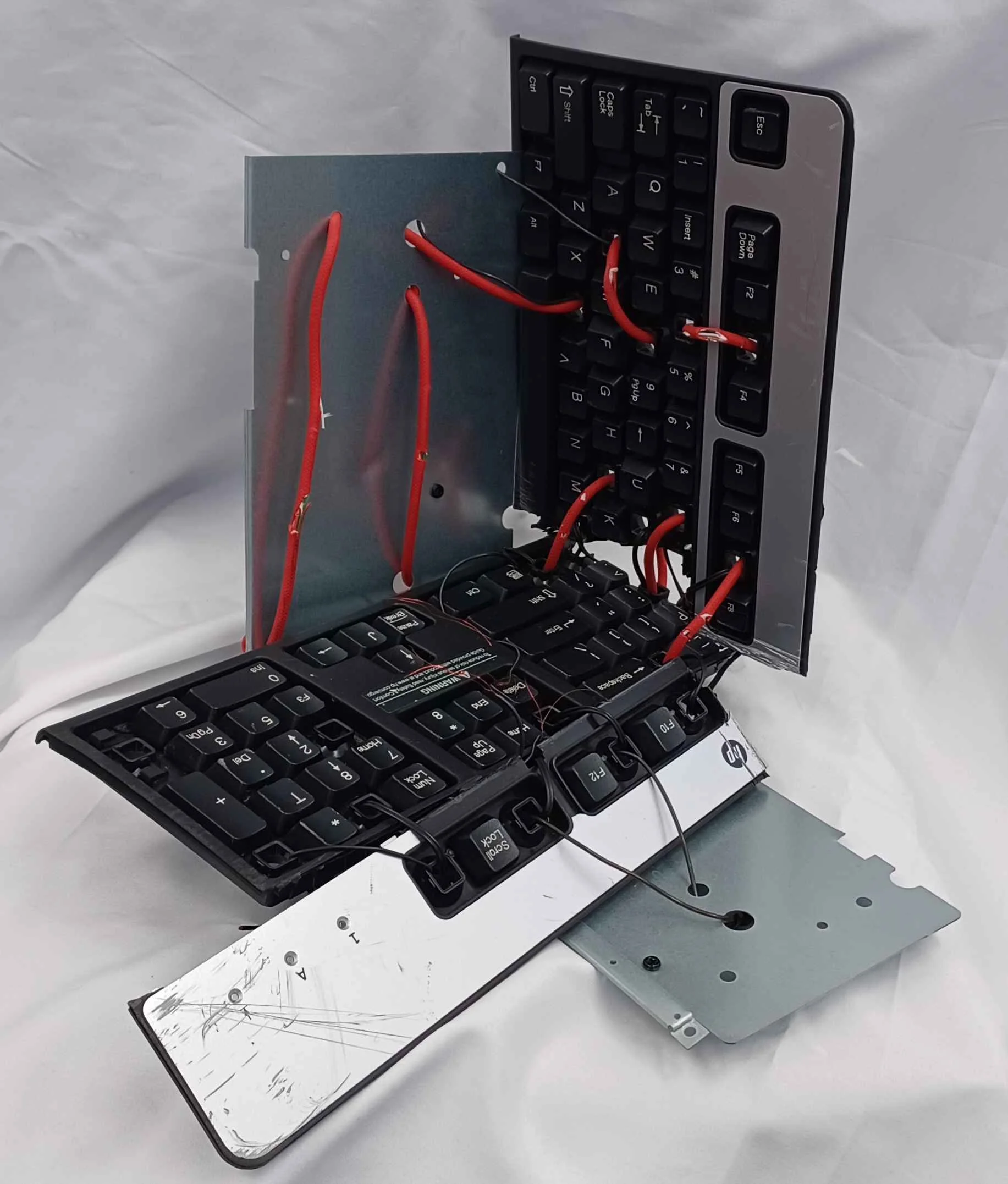
Drown it use it break it shock it hurt it burn it melt impale it
Keyboard, wire
21 x 28 x 25 cm
Cold limping machine is presented in the form of a mangled keyboard twisting upon itself. Disrepair is evident from its haphazard wires, jagged edges, and misplaced keys. A history of pain is told through scratches and cuts littered along its plastic. Wire weaves through its injuries to stitch it together, attempting to heal without anyone's help. Maybe this isn't so bad. Maybe the scabbing over alone is less painful than reaching for someone else to do it for you.
-
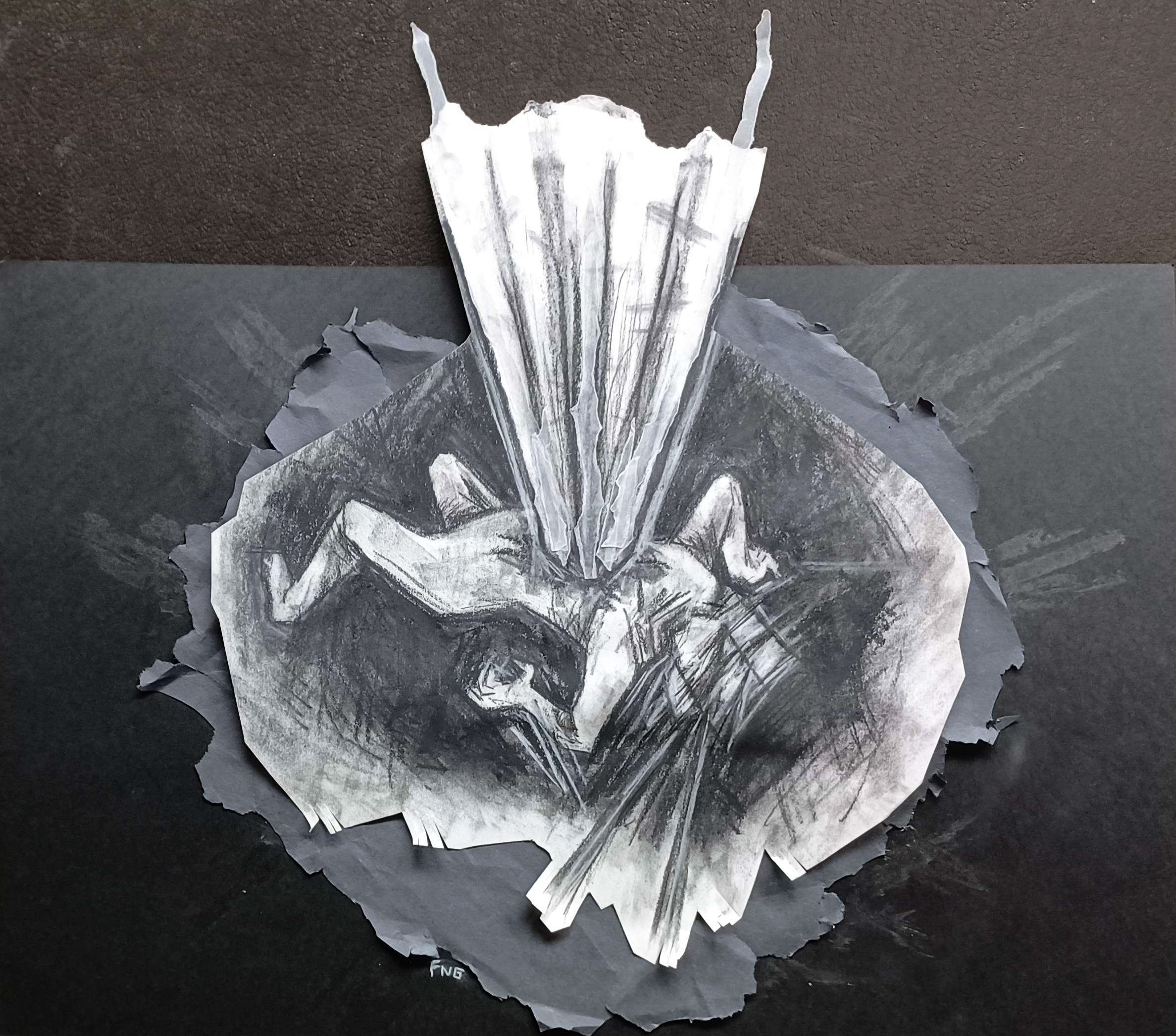
Possession
Charcoal and chalk on paper
40 x 46 cm
Aggressive scribbles of charcoal, inspired by Käthe Kollwitz's Sharpening the Scythe, communicate agony and movement. Features are blurred together with scratchy textures and visible paper grain. The figure is helpless and alone, thrashing against an unknown presence. Darkness encases the figure and pierces their chest, spilling light. Translucent paper and layering elevates the figure to a higher plane of existence.
-
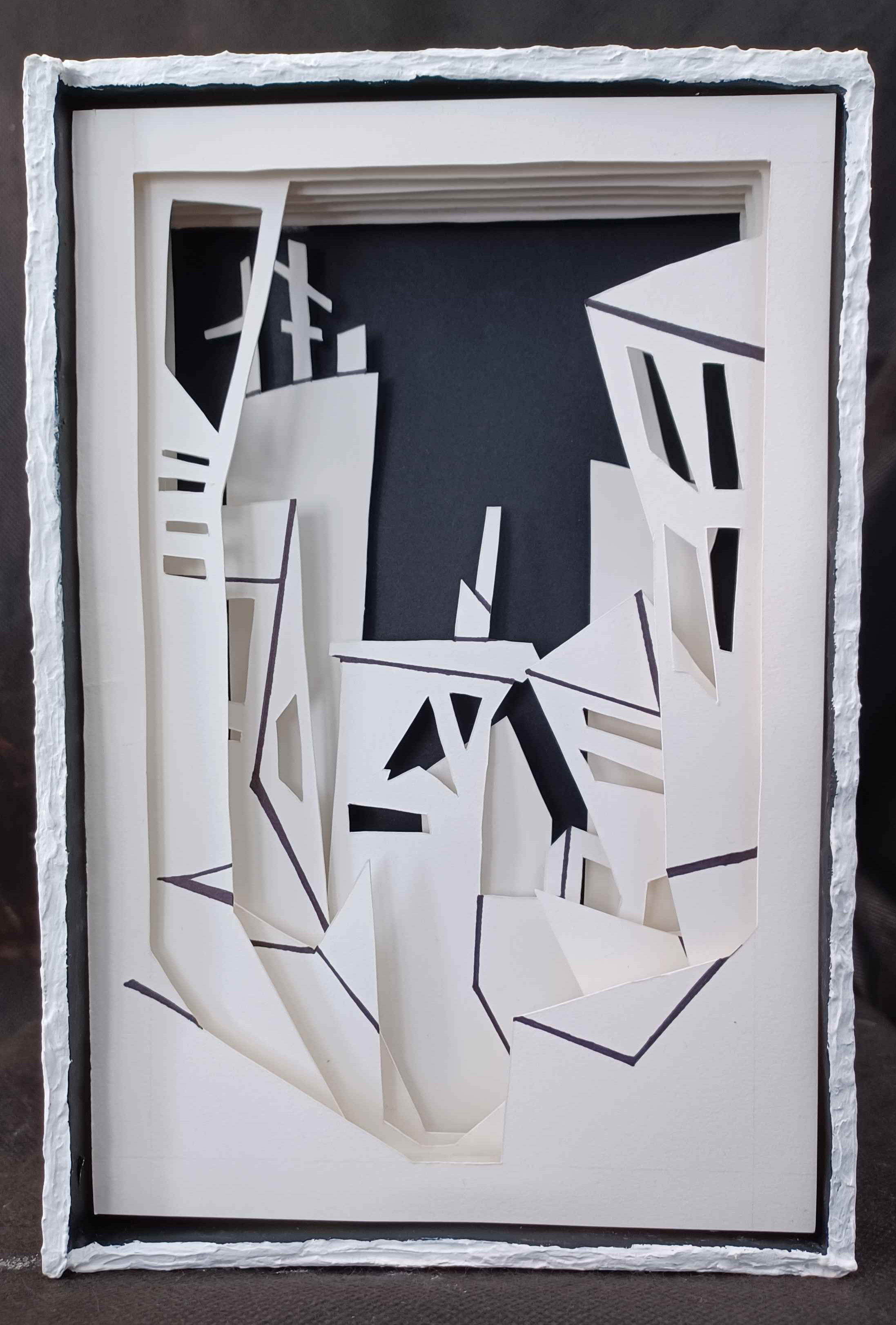
View
Marker and acrylic paint on cardstock and cardboard
24 x 17 x 5 cm
A twisting, angular cityscape (taking notes from The Cabinet of Dr. Caligari) enmeshed with contrasting black lines hides within a uniform box. Layers of cut paper create conflicting perspectives of the world, with a clinical detached tone established through lack of color. The skyscrapers stand distanced, unconnected, and solitary. A quiet yet uneasy solitude creeps in—loneliness, lack of community, and an undercurrent of unseen conflict.
-
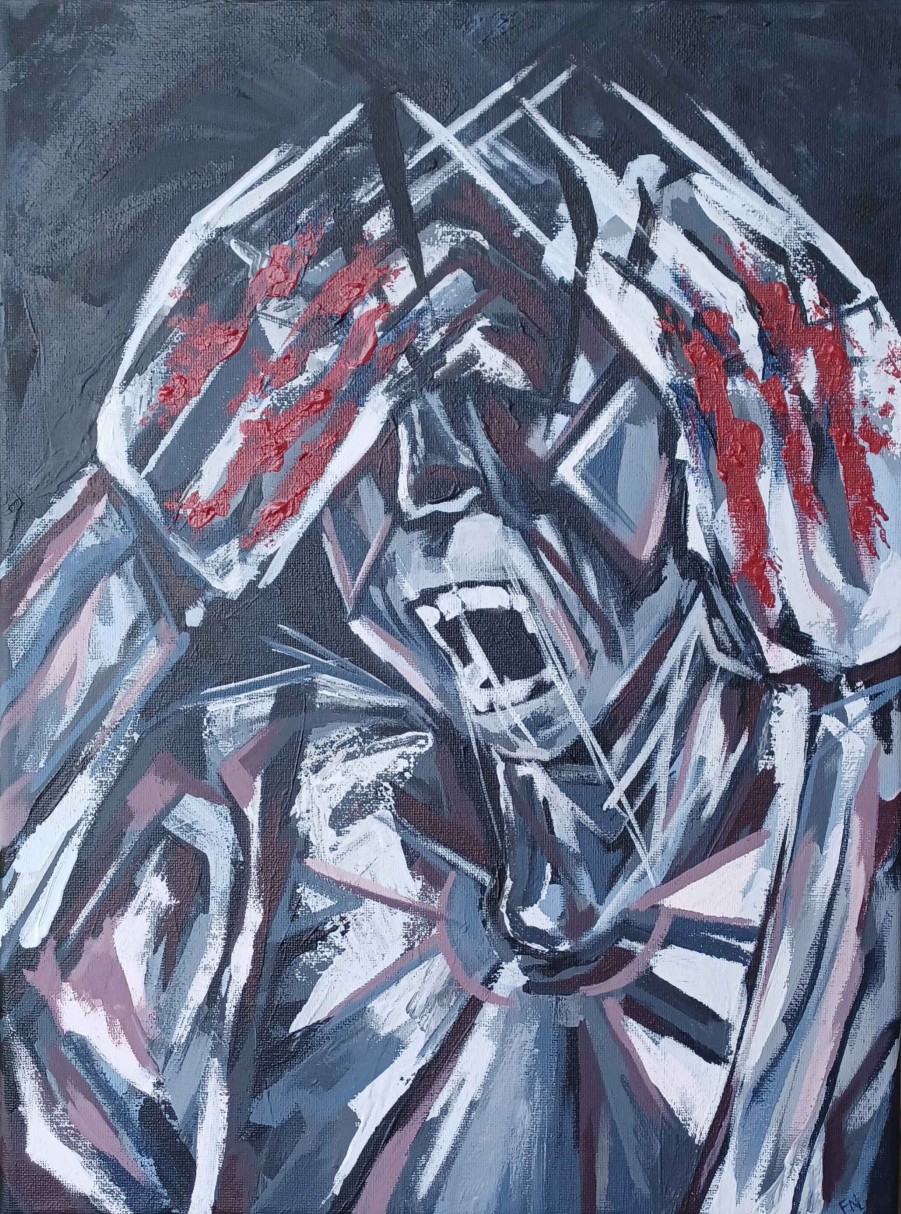
3-3-3 Rule
Acrylic on canvas
30 x 41 cm
To have a panic attack is to have and be a burden. Rough brushstrokes and slathered grays whip frenzying thoughts into a flurry of tingling fingertips, heavy breathing, heaving shoulders— too much to handle, too embarrassed to ask for help. The taut face, borrowed from Munch's Scream, remains unanswered. A sparse color scheme forces the viewer to focus on the uncontrolled streaks of paint which create unpredictable motion.