
Emma Yao
“What is your favorite artwork?”
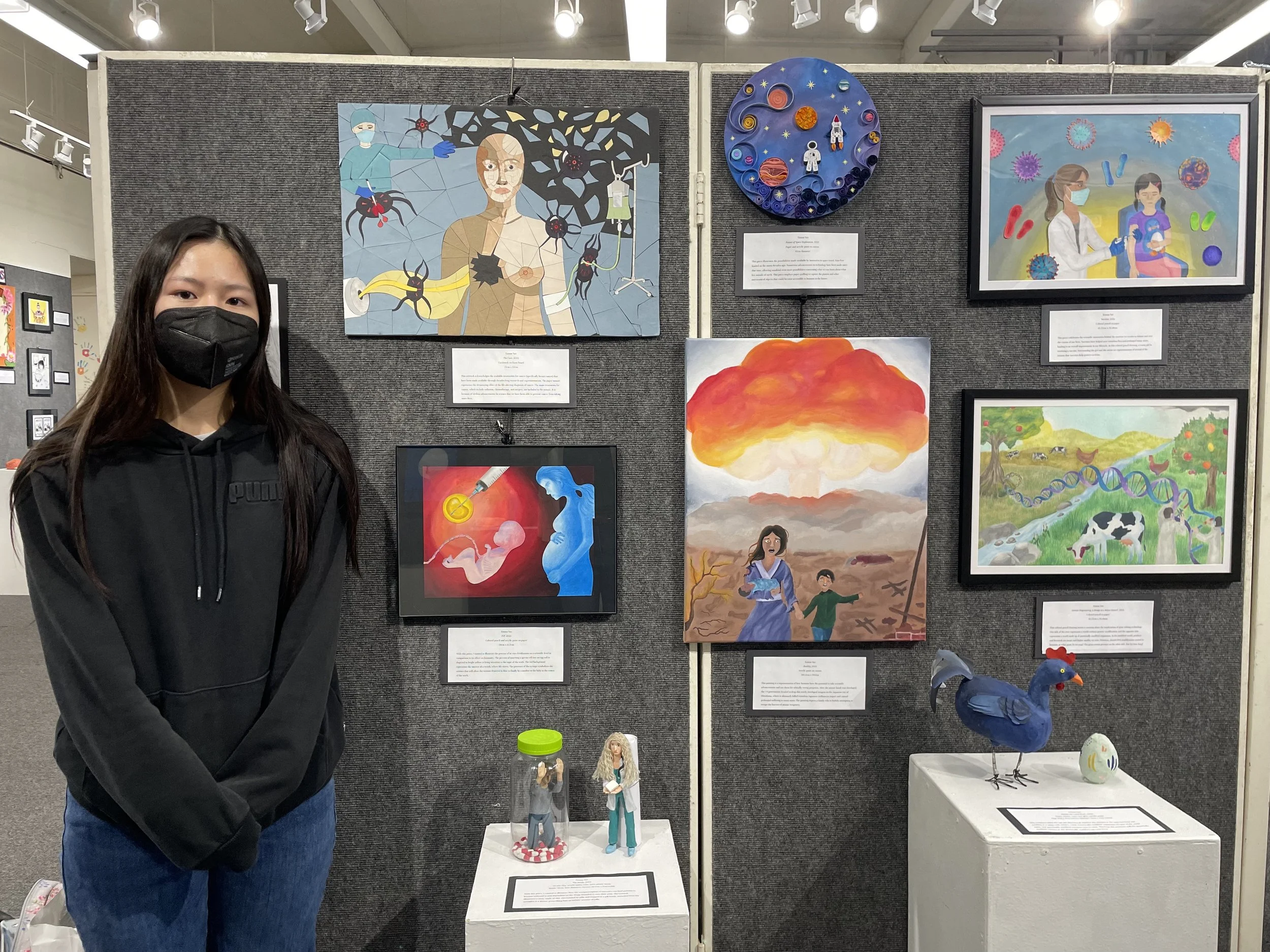
Curatorial Rationale
The overarching theme for this collection of works is science and humanity. I chose this theme because I have always been interested in science and hoped to explore the intersection between scientific advancements and its impact on humankind. I hoped to not just celebrate advancements fueled by human ingenuity but also comment on instances when scientific knowledge has caused harm or has the potential to cause harm. With my body of work, I hoped to impart my audience with further knowledge on how specific scientific advancements resulted in certain consequences or led to great improvements in our lives. I wanted to visually convey all at once the positive and negative aspects of what humans have achieved through scientific advancements and help viewers form a better understanding of the ethical questions we must ask when regarding scientific knowledge.
Through exploring my theme, I employed a variety of media to convey certain messages to the audience. Several of the pieces that are less abstract were made using colored pencil. This is largely because I wanted to include certain microscopic processes to represent concepts like vaccinations or in vitro fertilization. For these pieces, I felt that a medium that would allow me to illustrate certain viruses or processes in great detail would be most suitable. For my piece, Futility, in which I hoped to illustrate the immense destruction and human suffering caused by the atomic bombing of Hiroshima, I intentionally chose acrylic paint as my medium. I hoped for the mushroom cloud in the background to be as blinding as possible, and I thought that this would be best achieved with acrylic paint. Furthermore, I wanted to play with brushstrokes to achieve a three dimensional appearance of the piece. For my piece on breast cancer, I wanted to visually show the vast impact serious diagnoses can have on an individual’s life. Because I imagined a cancer diagnosis would feel like your life and body is breaking, I used paper to create a shattered mosaic effect. For my remaining pieces, I continued to select my media based on the concepts I hoped to convey.
I tried to arrange my works in a way that was both visually and conceptually balanced. The Hiroshima painting is the largest in size and the only vertical painting. Furthermore, the atomic bomb is extremely bright and draws the eye. Therefore, I placed this painting in the center of all the works. Above this, I placed the space travel piece because this is the smallest piece in the collection, and if it was placed elsewhere, the display appeared unbalanced. Furthermore, because the piece is about space travel, I thought placing it at the highest point would be suitable. Following this, I placed the IVF piece to the bottom left and the genetic engineering drawing on the bottom right so that there would be visual balance between the dark colors used in these pieces. Then, I placed the breast cancer piece on the top left and the vaccination drawing on the top right. Both of these pieces have roughly the same saturation and visual weight. Lastly, I placed the two three-dimensional pieces on display stands equally distant from the center. Both of the three-dimensional artworks are roughly the same size, so placing one on the right and one on the left side maintained the visual balance of the exhibition. As I was arranging these pieces, I also made sure to stagger the pieces celebrating science with the pieces that are less positive. I briefly considered dividing the celebratory pieces from the negative ones but ultimately felt that this was visually imbalanced and gave the impression that science was strictly good or bad. As the audience views my body of work, I hope for them to be able to compare and contrast each piece with the others, acknowledging different ways science has impacted humans positively, negatively, or questionably throughout time. My goal is for viewers to ultimately come to their own conclusions on each of the topics represented by each piece and form their own opinion on how science as a whole has shaped humanity today, as well as how science will eventually shape the future.
Emma’s Art Work
-
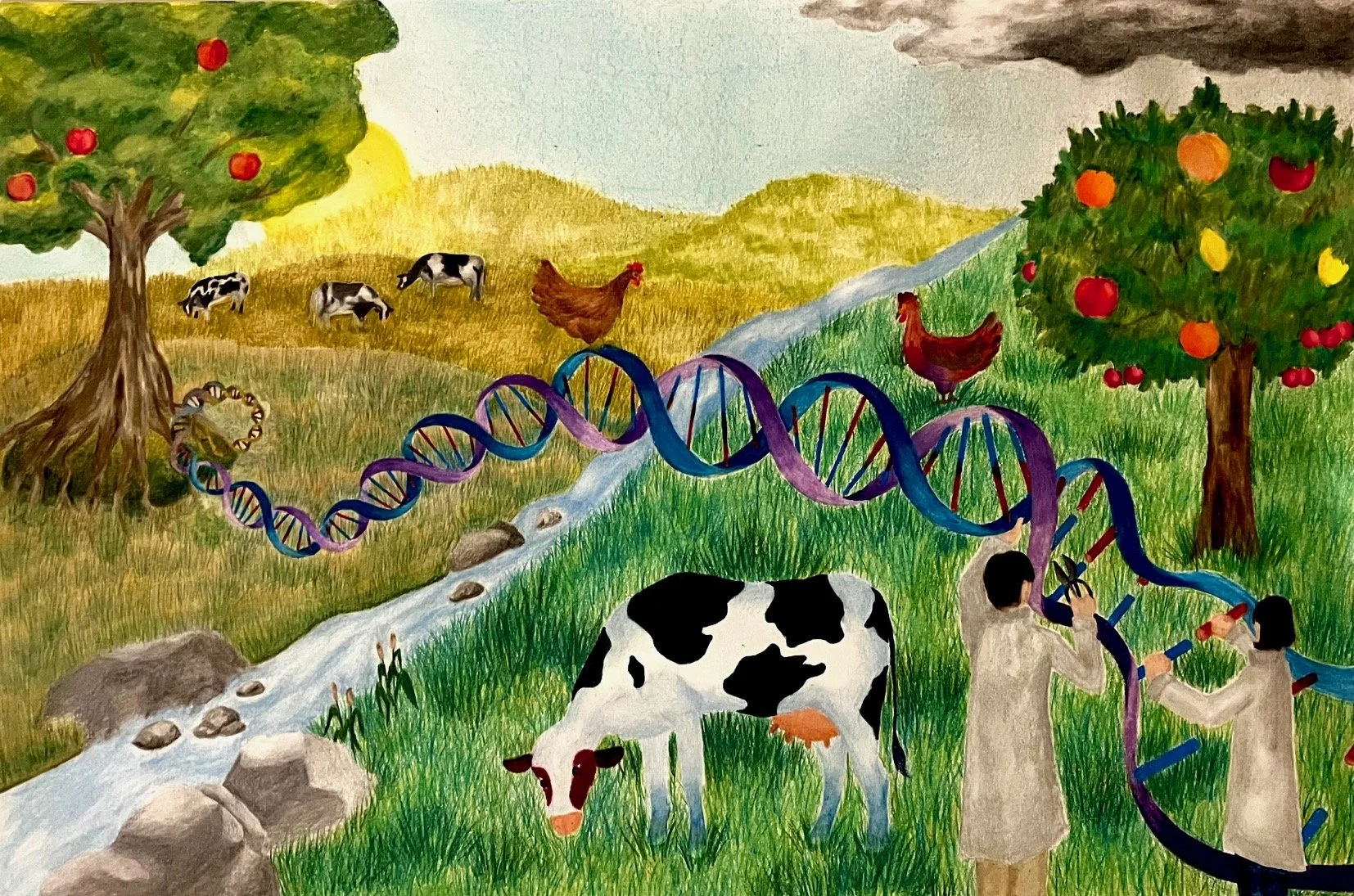
Genetic Engineering: A Bridge to a Better Future?, 2023
Colored pencil on paper
45.72cm x 30.48cm
This colored pencil drawing issues a warning about the implications of gene editing technology. One side of the river represents a world without genetic modification, and the opposite side represents a world made up of genetically modified organisms. In the modified world, produce and livestock are larger and higher quality for now. However, should DNA modification extend to humans, at what point do we stop? The grass seems greener on the other side, but for how long?
-
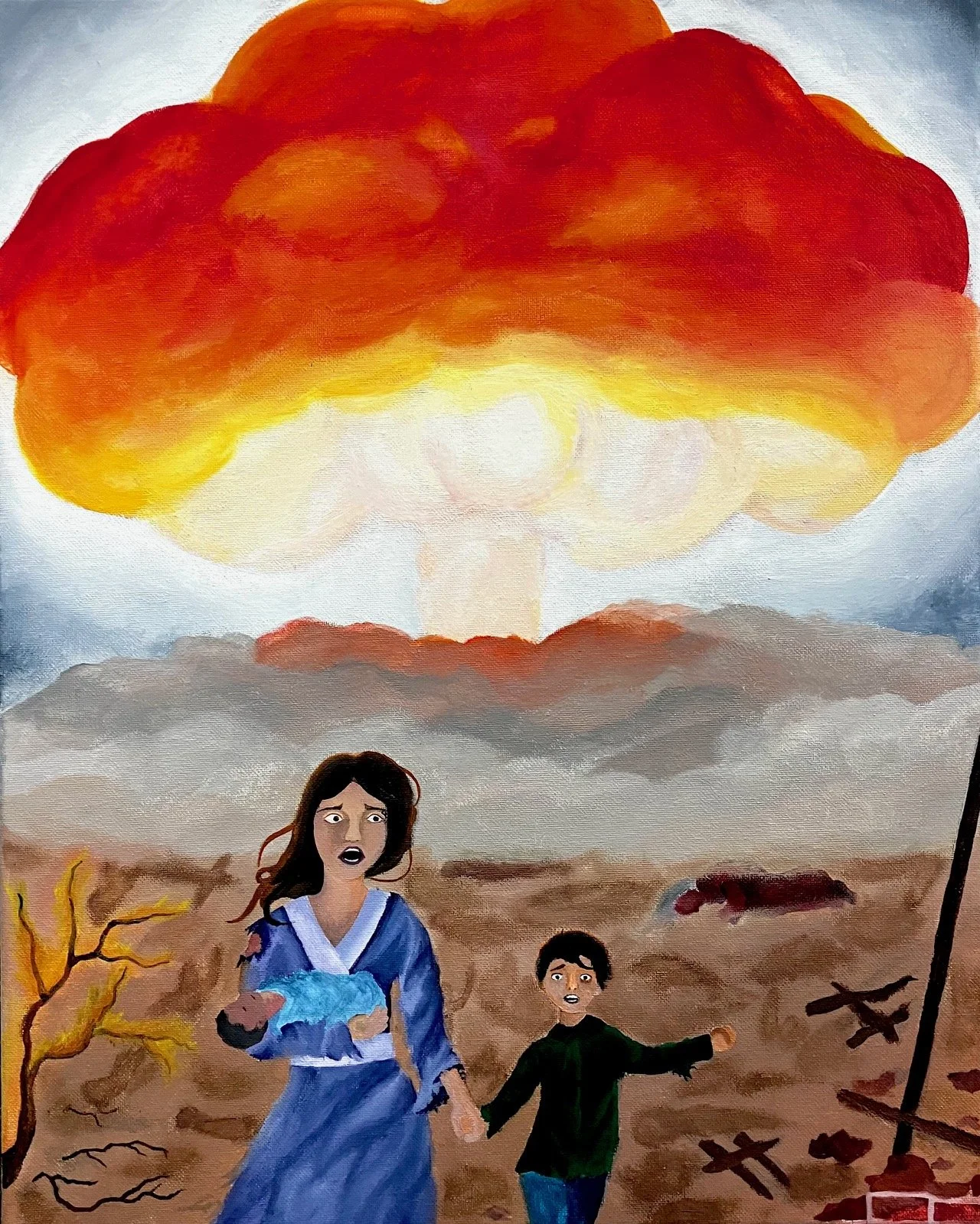
Futility, 2023
Acrylic paint on canvas
390.5cm x 500cm
This painting is a representation of how humans have the potential to take scientific advancements and use them for ethically wrong purposes. After the atomic bomb was developed, the US government decided to drop this newly developed weapon on the Japanese city of Hiroshima, where it ultimately killed countless Japanese civilians on impact and caused prolonged suffering to many more. The painting depicts a family who is futilely attempting to escape the horrors of atomic weaponry.
-
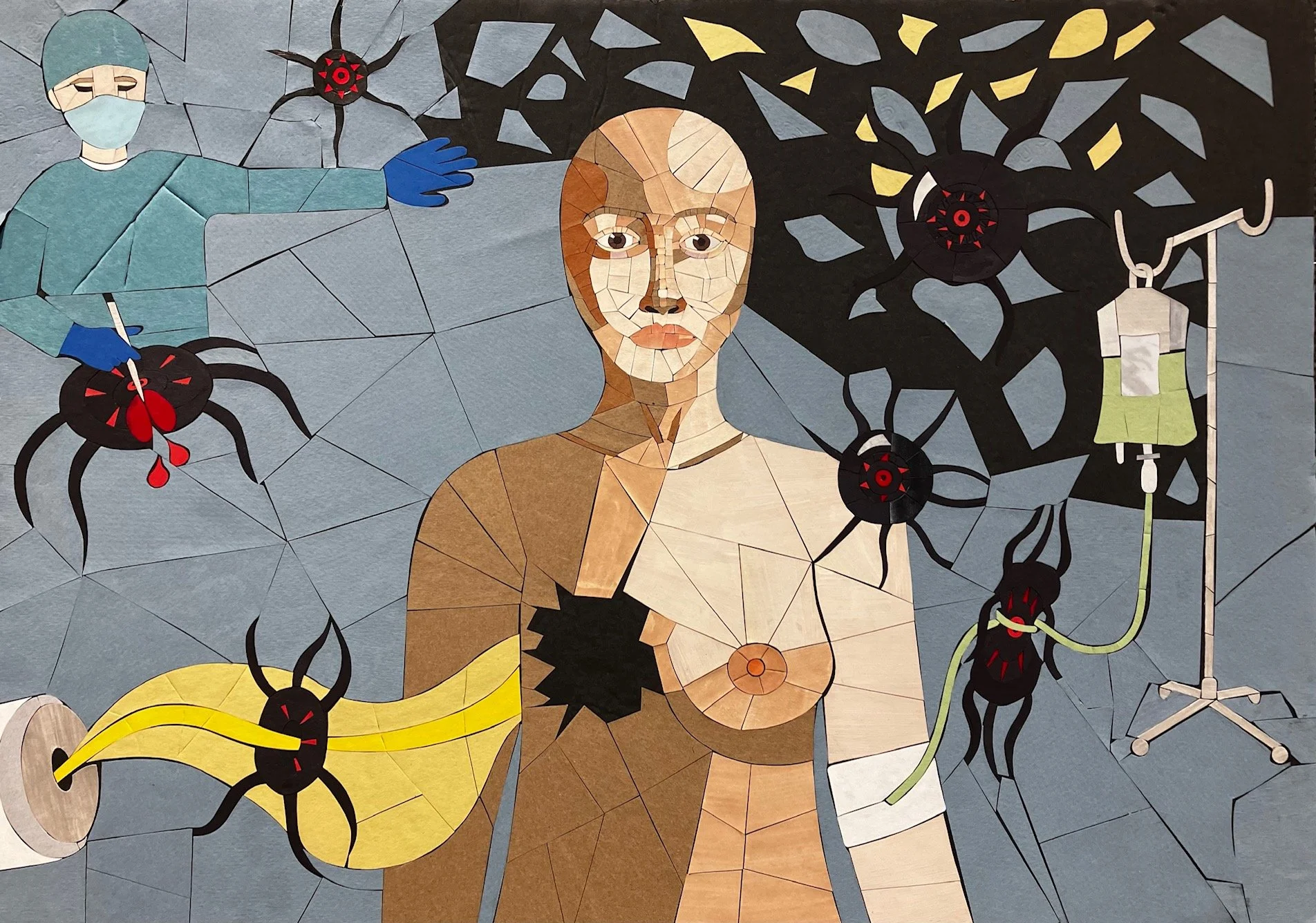
The Cure, 2023
Cardstock on foam board
15cm x 20cm
This artwork acknowledges the available treatments for cancer (specifically breast cancer) that have been made available through decades-long research and experimentation. The paper mosaic represents the devastating effect of the life-altering diagnosis of cancer. The main treatments for cancer, which include radiation, chemotherapy, and surgery, are included in the mosaic. It is because of tireless advancements in science that we have been able to prevent cancer from taking more lives.
-
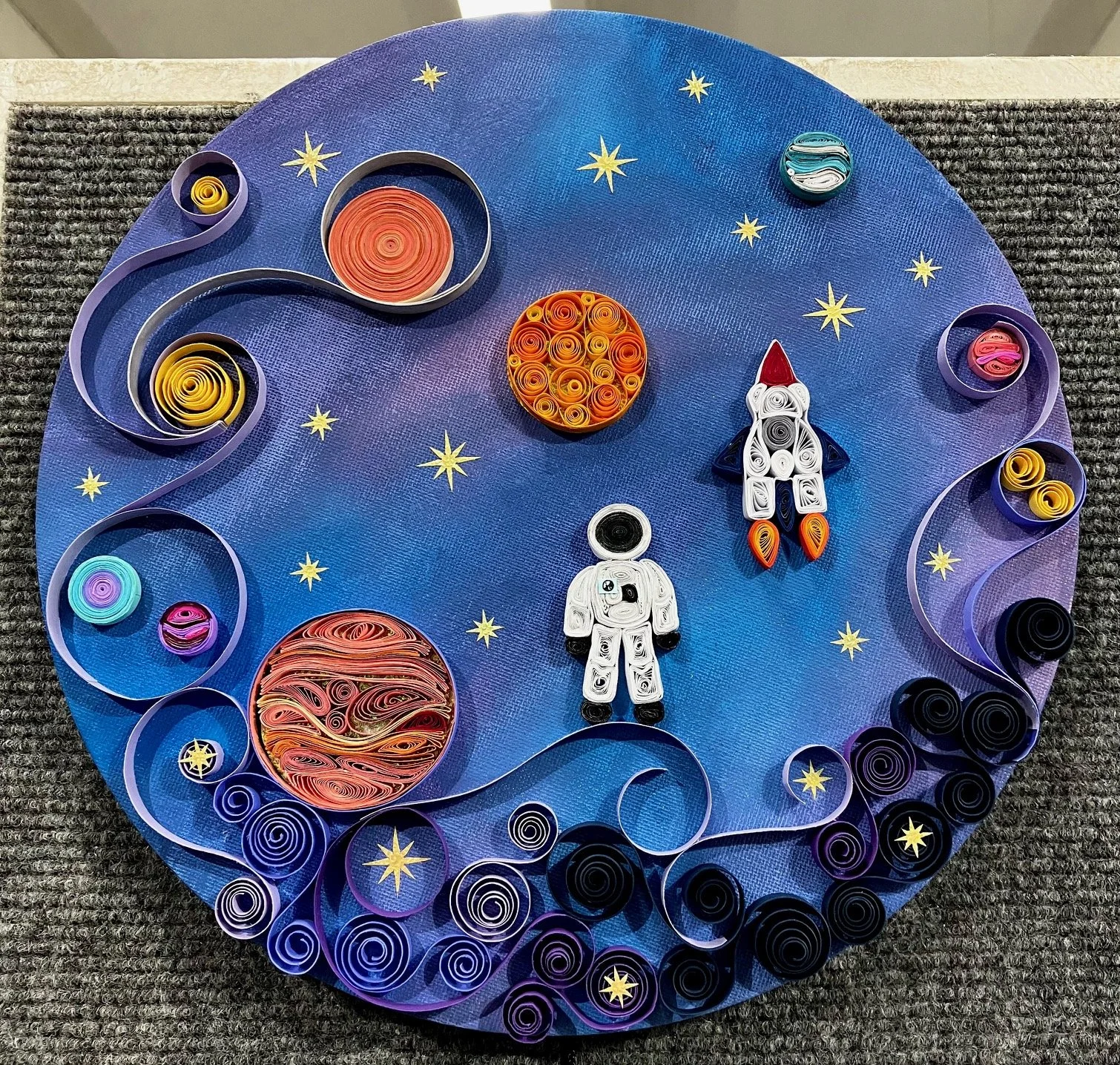
Future of Space Exploration, 2023
Paper and acrylic paint on canvas
10cm diameter
This piece illustrates the possibilities made available by innovation in space travel. Man first landed on the moon decades ago. Numerous advancements in technology have been made since that time, allowing mankind even more possibilities concerning what we can learn about what lies outside of earth. This piece employs paper quilling to capture the planets and other astronomical objects that could become accessible to humans in the future.
-
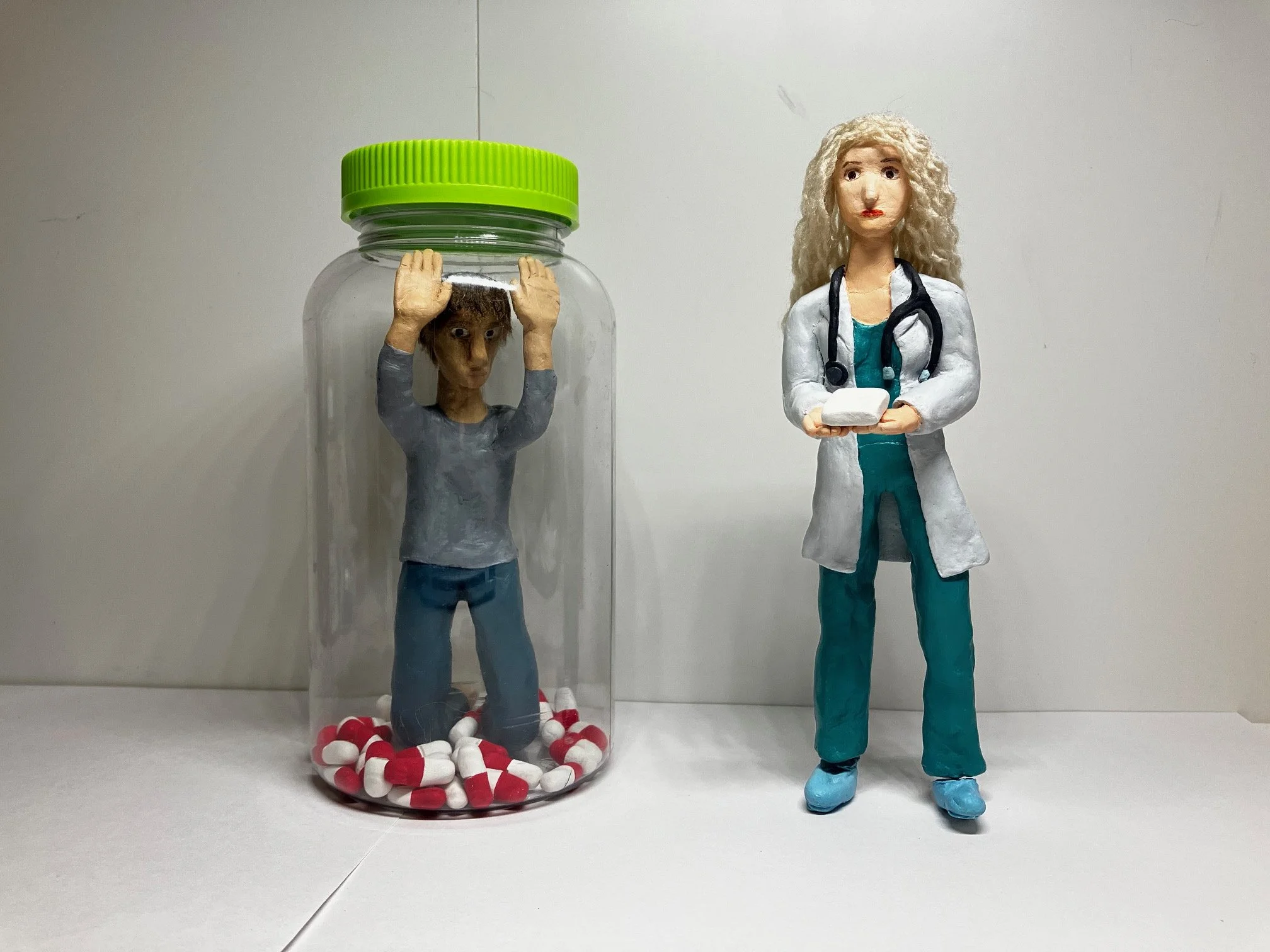
The Bottle, 2023
Air dry clay, acrylic paint, wire, yarn, plastic bottle
Bottle: 19cm, 9cm diameter; Doctor: 18.5cm x 5cm width
With this piece, I wanted to illustrate how the overprescription of narcotics can lead patients to become addicted to and dependent on the drugs intended to ease their pain. The artwork illustrates a man, made of clay, surrounded by pills and trapped in a pill bottle. Detached from his struggles is a doctor, prescribing him an infinite amount of pills.
-
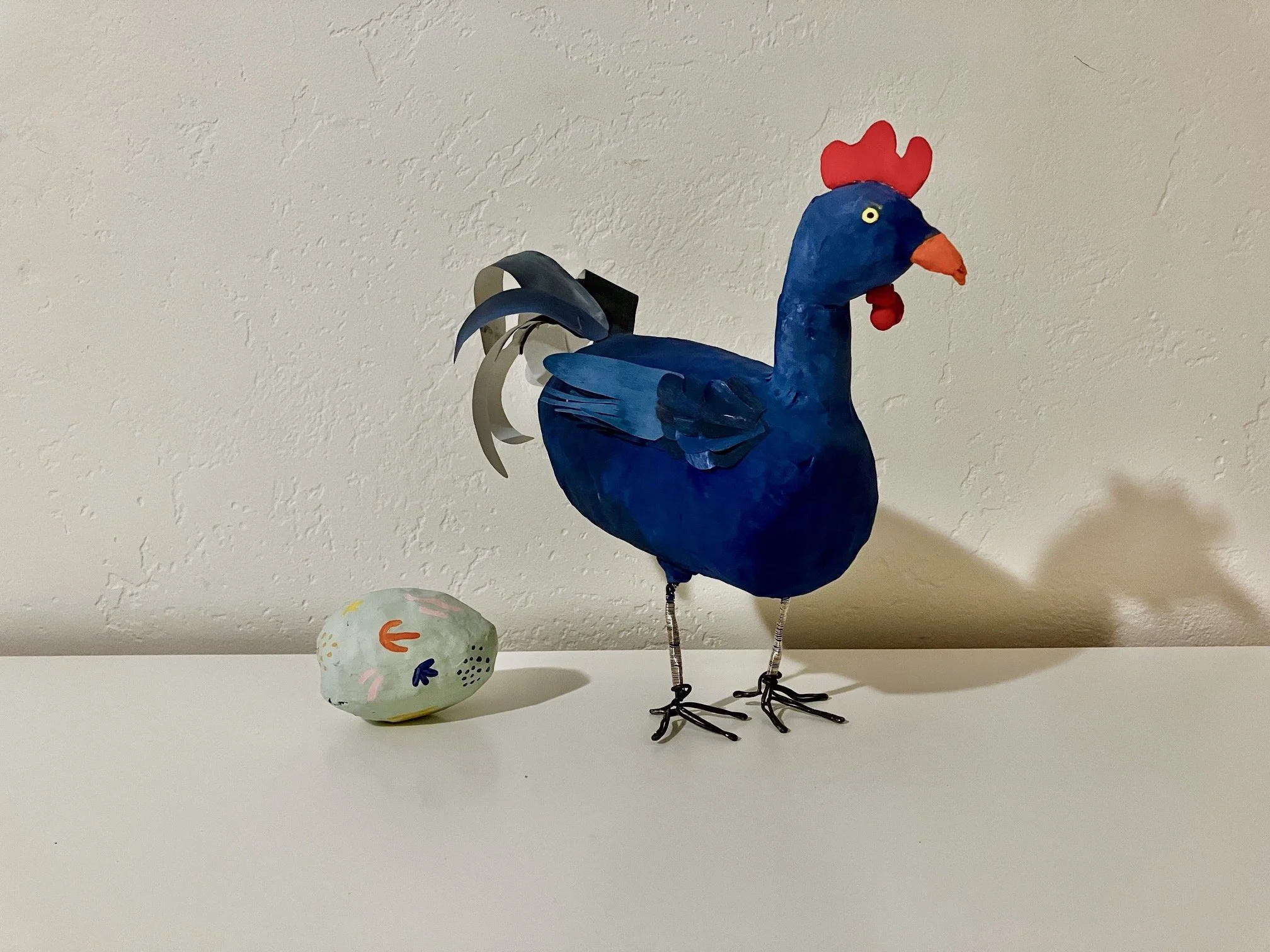
Which one came first?, 2023
Paper mache, wire, hot glue, acrylic paint
Egg: 4cm x 4cm x 8cm; Chicken: 12cm x 7cm x 18cm
This sculpture takes the age-old dilemma of whether the chicken or the egg came first and modifies it to align with today’s world. Genetically modified organisms are part of the world today, and genetically modified chickens may be next. This begs the question: will the genetically modified chicken or the genetically modified egg come first?
-
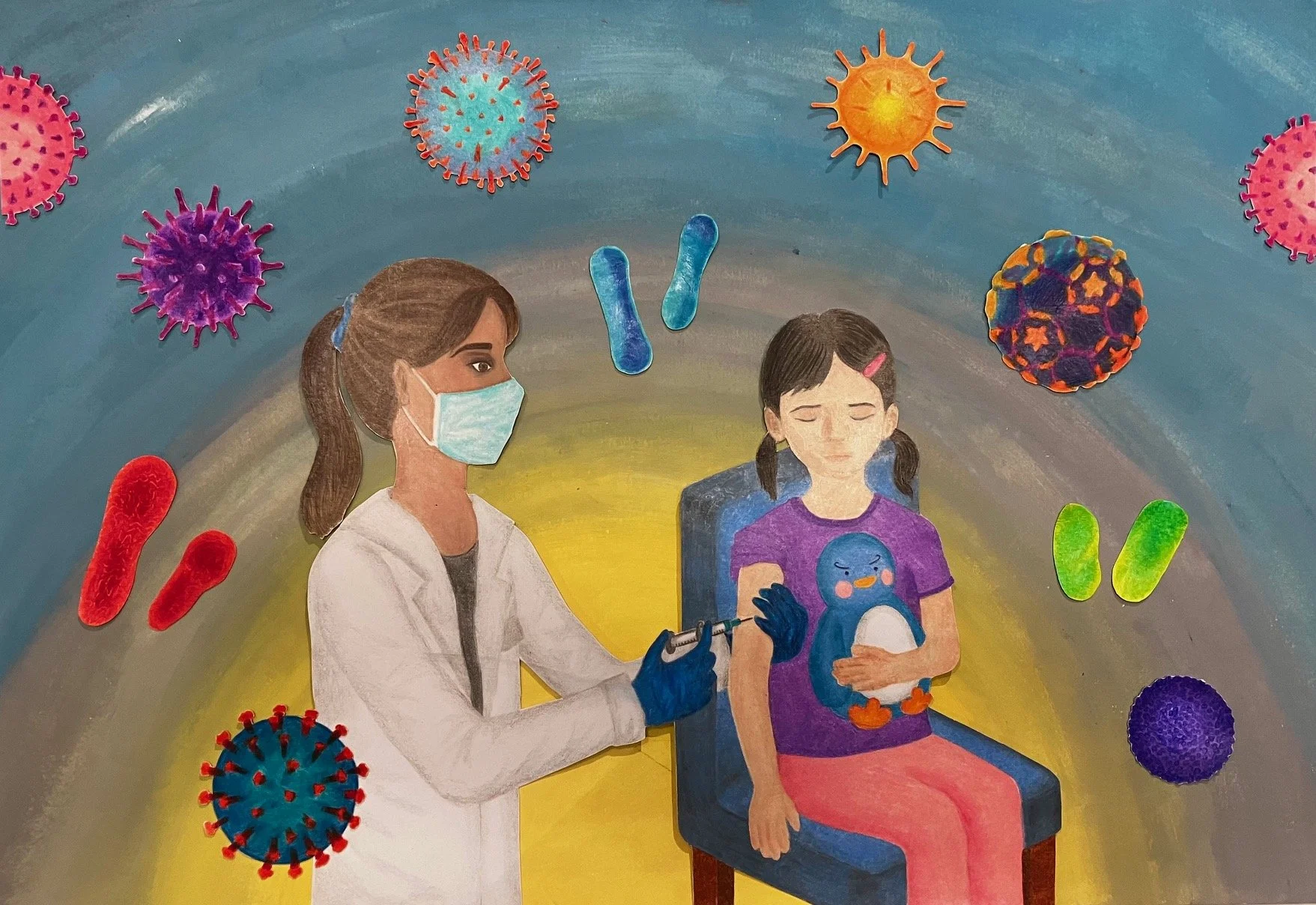
Vaccine, 2024
Colored pencil on paper
45.72cm x 30.48cm
This piece celebrates the scientific innovation behind the vaccines we receive as infants and over the course of our lives. Vaccines have helped save countless lives and prolonged many more, leading to an overall improvement in our lifestyle. In this colored pencil drawing, a young girl is receiving a vaccine. Surrounding the girl and the nurse are representations of several of the viruses that vaccines help protect us from.
-
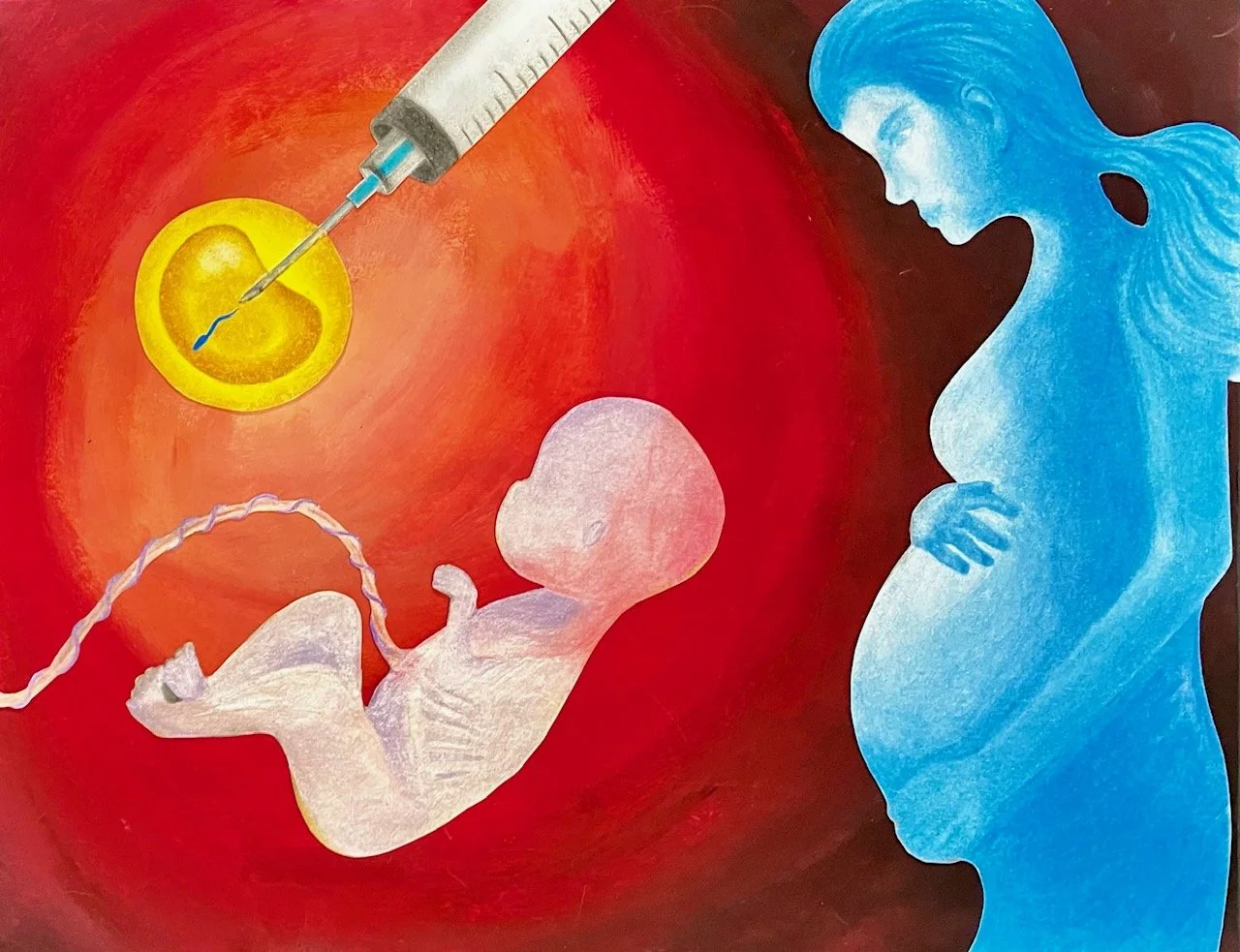
IVF, 2023
Colored pencil and acrylic paint on paper
28cm x 21.7cm
With this piece, I wanted to illustrate the process of in vitro fertilization on a scientific level in comparison to its effect on humanity. The process of inserting a sperm cell into an egg cell is depicted in bright yellow to bring attention to the topic of the work. The red background represents the interior of a womb, where life starts. The presence of the syringe symbolizes the science that will allow the woman depicted in blue to finally be a mother to the baby in the center of the work.